
The Church of England has withdrawn its interfaith honour from a Pakistani cleric six days after presenting it, on the 25th anniversary of 9/11. The recipient referred to "Palestinian freedom fighters" in remarks about the 7 October attack and has defended Pakistan's blasphemy laws.
Lambeth Palace has withdrawn an award for reconciliation and interfaith cooperation given to a Pakistani cleric who praised Osama bin Laden.
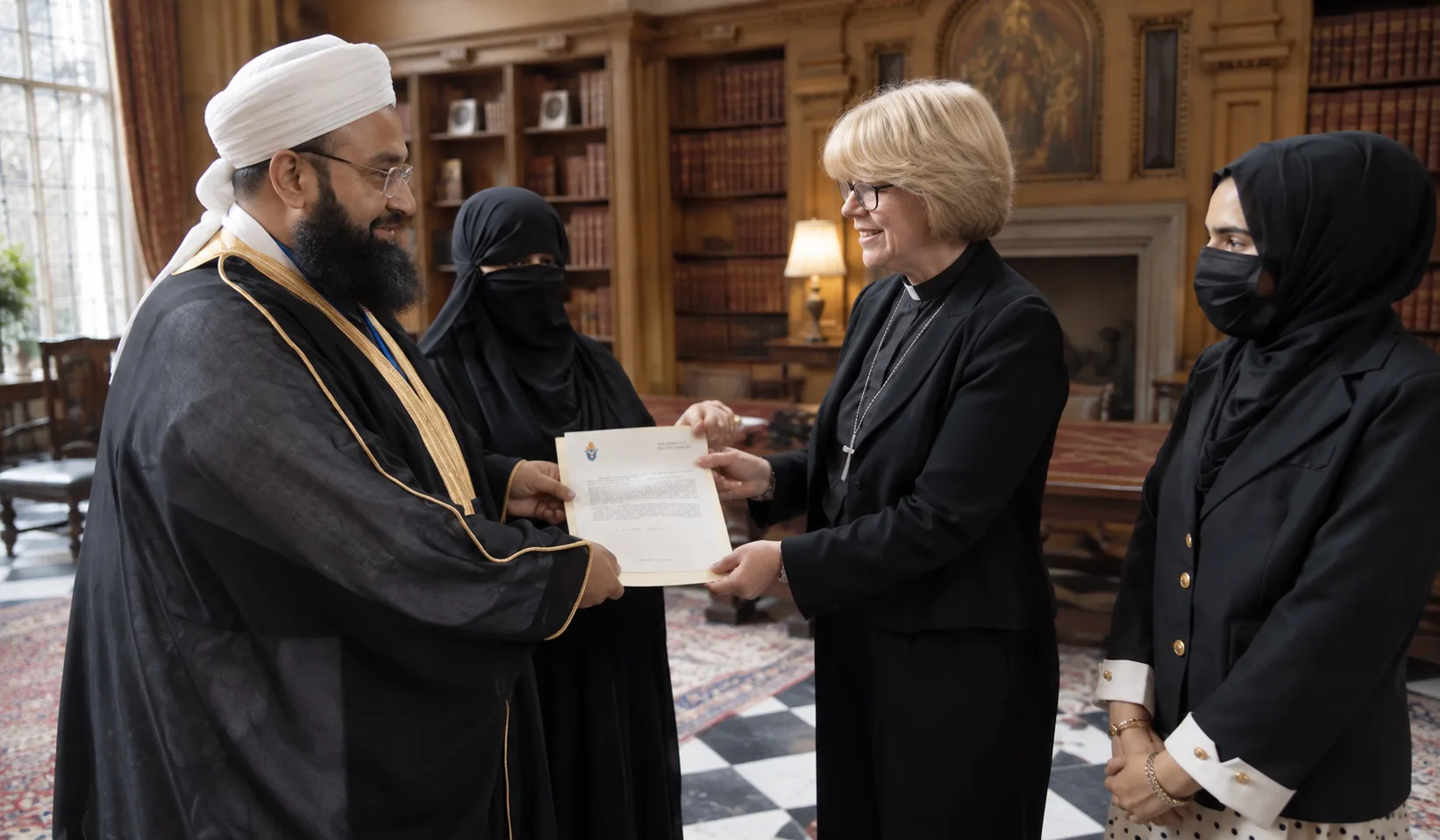
Hafiz Muhammad Tahir Mehmood Ashrafi, chairman of the Pakistan Ulema Council, was presented with the Hubert Walter Award by the Archbishop of Canterbury, Dame Sarah Mullally, at Lambeth Palace on 11 September. The ceremony fell on the 25th anniversary of the 9/11 attacks, which killed 2,977 people, including 67 British citizens.
The award was withdrawn six days later, on Thursday evening.
"Previous comments made by Imam Ashrafi have come to light that have led Lambeth Palace to reconsider this award and we can now confirm today that the award has been withdrawn," the palace said. "We have contacted Imam Ashrafi to make him aware of this decision. We continue to pray for the Christian community in Pakistan."
Lambeth Palace had originally said the award recognised Ashrafi's "longstanding support for religious minorities in Pakistan, particularly the Christian community", citing his intervention in the 2012 case of Rimsha Masih, a Christian girl in Pakistan falsely accused of blasphemy.
Public criticism began when Nick Timothy, the shadow justice secretary, drew attention to Ashrafi's comments about bin Laden. "The naivety of the Archbishop in presenting an award to someone who openly praised Osama bin Laden is staggering, and on the anniversary of 9/11, too," he said.
Those comments are on the record. In 2007, Ashrafi announced that his council was awarding bin Laden its highest honour in response to Britain's decision to knight Salman Rushdie.
"We are pleased to award the title of Saifullah to Osama bin Laden after the British government decides to bestow the title of Sir on blasphemer Rushdie," he told the AFP news agency. "This is the highest title for a Muslim warrior." He told Reuters that "a mujahid who has been fighting for Islam against the Russians, Americans and British must be given the lofty title of Islam, Saifullah." The Daily Mail reported that Ashrafi has told the BBC he met bin Laden many times.
He now says the remarks have been misrepresented. He told the BBC they had been "totally taken out of context" and described the reaction as "an unfair campaign" against him. A spokesman said the comparison "was not an endorsement of bin Laden", but was made to explain the hurt felt by Muslims over the Rushdie knighthood. The same spokesman said: "Our position against terrorism, extremism, suicide attacks and the killing of innocent people is clear and unequivocal."
The bin Laden remarks are not an isolated episode.
In 2013, Ashrafi gave a television interview in which, according to contemporary reporting, he said suicide attacks in Afghanistan were permitted while American forces remained in the country. The comments drew condemnation from Nato's then secretary general, Anders Fogh Rasmussen, and from the Afghan government. Ashrafi then said his words had been taken out of context, and that he considered suicide bombing un-Islamic.
On 7 October 2023, the day Hamas killed around 1,200 people in Israel, he told the Pakistani channel BOL: "Hamas's response is an answer to Israel's atrocities", adding in a second interview: "Allah crushed the pride of Israel through the Palestinian freedom fighters."
He has also been a consistent defender of Pakistan's blasphemy laws. The BBC notes that an estimated 2,000 people have been prosecuted under those laws since the late 1980s, a disproportionate number of them Christians and Ahmadis. Ashrafi has argued that the laws "save lives" by stopping people taking the law into their own hands. Human Rights Watch said that the laws "perpetuate religious discrimination and are used to target the poor and minorities in unlawful evictions and land grabs", and called on the Pakistani government to reform them.
The photograph issued after the ceremony showed Ashrafi beside a woman in a full face veil. Lambeth Palace's caption did not name her. The Rev Dr Ian Paul, an Anglican theologian and member of the General Synod, said members of the Church of England would struggle to make sense of the award "in the light of his past statements about blasphemy, the death penalty, and suicide bombings, and how he is accompanied by a woman in a niqab". Ashrafi's spokesman said his wife and daughter observe hijab as "their personal and religious right".
The controversy also comes against the continuing persecution of Christians in Pakistan.
Shama Bibi and Shahzad Masih were a young Christian couple in Kot Radha Kishan, in Punjab. In November 2014, a mob accused them of desecrating the Quran, beat them with fists and sticks, dragged them to a brick kiln and burned them. Shama was pregnant. In July this year, Pakistan's Supreme Court overturned the death sentences of the last three men convicted over the killings and dismissed the state's appeal against the acquittal of 102 other suspects. No one is now serving a sentence for the deaths. Catholic bishops in Pakistan said the outcome denied the couple justice.
Reaction in Britain has been broad. Travis Frain, a survivor of the 2017 Westminster Bridge attack who runs the Resilience in Unity Project, called the award "a grave misjudgement by the Church", made worse by the date it was given. Tim Dieppe of Christian Concern said: "How can a Christian leader give an award for reconciliation to someone who has honoured Osama bin Laden? To someone who supports the draconian blasphemy laws in Pakistan which are a source of persecution of Christians?" Stephen Evans, chief executive of the National Secular Society, welcomed the withdrawal but said the episode revealed "appallingly poor judgement and inadequate due diligence", and argued it strengthened the case for disestablishment.
Claire Bullivant, CEO of Great British PAC, said:
"This episode raises very serious questions about the judgement and priorities at the heart of the Church of England.
"Earlier this year, six Chagossian Christians returned to their ancestral islands, began worshipping together and asked us whether the Archbishop of Canterbury might send them a blessed Bible. We approached Lambeth Palace on their behalf. We were eventually told there would be no personal response from the Archbishop and were directed instead to the Bible Society.
"Yet on 11 September, the 25th anniversary of the 9/11 attacks, the Archbishop personally presented an award for 'Reconciliation and Interfaith Cooperation' to Hafiz Tahir Ashrafi, whose previous comments about Osama bin Laden have now resulted in that award being withdrawn.
"There is something profoundly wrong with that picture.
"Interfaith dialogue is important, but it must never come at the expense of moral clarity, nor should the Church appear more enthusiastic about fashionable gestures than supporting Christians who turn to it for the simplest expression of fellowship.
"These six Chagossians did not ask the Archbishop for money, political intervention or special treatment. They asked for a Bible and a few words of Christian encouragement.
"They deserved better, and I hope the Archbishop will now reflect on what this episode says about the Church's priorities and reconsider our very modest request."
Dame Sarah became the first woman to lead the Church of England when she took office earlier this year, and this month's ceremony was the first Lambeth Awards she has hosted. Lambeth Palace has not explained how the nomination was approved, or what due diligence was carried out before Ashrafi was invited to the Great Hall on 11 September.
The award has gone. The judgement that awarded it is still on the record.