A BILL designed to protect British sovereignty over the Chagos Islands and give the Chagossian people a direct say over the future of their homeland has passed its second reading in the House of Lords without a division, despite the Labour Government making clear it will not support the legislation.
The British Sovereignty Protection (Chagos Islands) Bill, introduced by Democratic Unionist Party peer Lord Weir of Ballyholme, cleared the important parliamentary stage on Friday (23 October), allowing the proposed legislation to proceed to further scrutiny.
However, the Government's refusal to back the Bill has raised fresh concerns among those campaigning for the rights of Chagossians, particularly as one of its central provisions would require their explicit consent before sovereignty over their ancestral homeland could be transferred to another country.
For the Great British PAC, which has been supporting Chagossian-led legal challenges and campaigning against the proposed handover to Mauritius, the development brings renewed attention to a fundamental question: why is the Government unwilling to support legislation that would give Chagossians a legally protected vote on the future of their own islands?
Although the Bill passed without a division, meaning no formal vote was required, it does not yet have the force of law. It must complete its remaining parliamentary stages in both Houses and receive Royal Assent.
What would Lord Weir's Bill actually do?
Introduced on 5 June 2026, Lord Weir's Private Member's Bill seeks to affirm British sovereignty over the Chagos Islands, formally known as the British Indian Ocean Territory, while introducing new statutory safeguards against any future transfer of sovereignty.
Under the proposals, any transfer of sovereignty or lease involving the territory would require three forms of authorisation.
These are approval through an Act of the UK Parliament, the consent of the Chagossian people through a referendum, and approval from any lawfully established and elected government of the British Indian Ocean Territory that exists at the time.
Crucially, the Bill would prevent sovereignty being transferred unless more eligible Chagossians voted in favour of the transfer than voted to remain a British Overseas Territory.
The referendum would be open to British Overseas Territories citizens of the British Indian Ocean Territory aged 18 and over, regardless of where they live.
It does not propose a referendum involving the entire British electorate, but instead places the right to self-determination directly in the hands of eligible Chagossians.
The Bill would also expressly affirm continued British sovereignty over the strategically important UK-US military base on Diego Garcia, notwithstanding any international court ruling or treaty.
Giving Chagossians the right to return home
Beyond sovereignty, the legislation addresses another deeply important issue for Chagossian families: the right to return to the islands from which their parents, grandparents and other relatives were forcibly removed.
Between the late 1960s and early 1970s, approximately 1,400 to 1,700 Chagossians were displaced as Britain and the United States developed military facilities on Diego Garcia.
Many were sent to Mauritius and the Seychelles, while subsequent generations have established communities in Britain and elsewhere.
Lord Weir's Bill would seek to remove longstanding restrictions on residence and create a framework allowing eligible Chagossians to visit and settle on specified islands.
Under the proposals, qualifying islanders would generally be entitled to permits to visit and reside on Île du Coin and Île Boddam, subject to reasonable security considerations.
Residence on Diego Garcia would also be permitted if the island was no longer required for defence purposes, while eligible Chagossians could obtain permission to work at the military base if they met the relevant requirements.
The Government would be required to hold discussions with Chagossian representatives about resettlement, representative local government, cultural heritage and the territory's future administration.
Annual reports to Parliament would be required to account for progress.
Further provisions would strengthen parliamentary oversight of financial commitments connected to agreements with Mauritius and require measures to protect the islands' surrounding waters from illegal fishing and security threats.
The legislation also includes environmental conservation measures, including fisheries protection patrols, habitat monitoring and efforts to eradicate invasive species.
These provisions mean the Bill goes considerably further than simply opposing the sovereignty deal. It proposes a statutory framework for Chagossian participation, resettlement, parliamentary accountability and the protection of the territory.
Labour's position raises questions over Chagossian consent
The Labour Government's opposition to the Bill comes against the background of its controversial agreement with Mauritius, signed by Keir Starmer in May 2025.
Under that agreement, Britain would have transfered sovereignty over the Chagos Archipelago to Mauritius while securing continued use of the Diego Garcia military base for an initial 99 years.
The Government has valued the financial arrangements at approximately £3.4 billion in present-value terms.
However, alternative assessments have put the nominal cost of the agreement over its lifetime considerably higher, with estimates ranging from around £35 billion to £47 billion. These figures use different accounting approaches and are not directly comparable with the Government's discounted present-value calculation.
The proposed handover has faced sustained opposition from Chagossians who wish to remain British, as well as from parliamentarians concerned about national security, the cost to taxpayers and the legal rights of the displaced islanders.
Mauritius has long disputed British sovereignty over the territory, while a 2019 International Court of Justice advisory opinion concluded that the UK's administration of the archipelago should end as rapidly as possible.
The Government has presented the agreement as a means of resolving that longstanding sovereignty dispute and securing the continued operation of Diego Garcia.
However, the agreement has also prompted questions about the extent to which Chagossian communities were consulted and whether they should have the decisive say in any transfer.
The Government's implementing legislation fell at the end of the previous parliamentary session, and ministers confirmed in September 2026 that the agreement would be reviewed.
Against that background, Labour's refusal to support Lord Weir's Bill leaves an important question unanswered: what binding protection would the Government be prepared to offer Chagossians who wish to determine the future sovereignty of their homeland?
Great British PAC fighting alongside the Chagossians
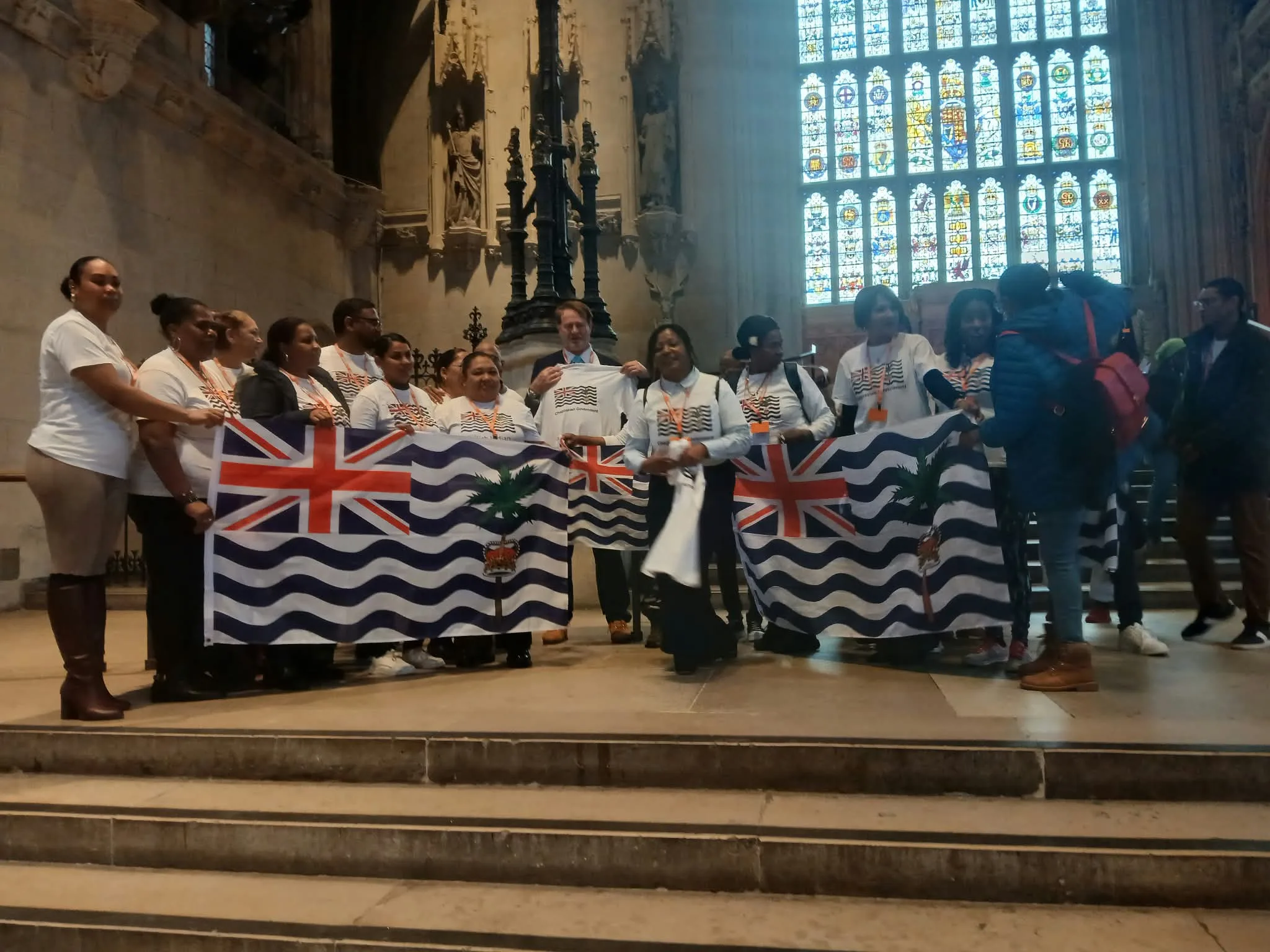
The Great British PAC has been working closely with Chagossian representatives to oppose the proposed transfer and support their campaign for self-determination, recognition and the right to return home.
The organisation has helped fund legal proceedings challenging the Government's handling of the sovereignty agreement, provided practical assistance to Chagossian campaigners and worked with parliamentarians to raise awareness of the islanders' position.
Its legal campaign has included support for Chagossian claimants Louis Michel Mandarin and Louis Misley Mandarin, whose Judicial Review proceedings are due to return to court on 5 November 2026.
Permission to bring the challenge was initially refused by the High Court in March, but the claimants successfully appealed against that refusal to the extent that a fresh permission hearing was ordered.
The PAC has been raising funds to meet the legal costs, including an additional £10,000 announced in September towards the forthcoming proceedings.
It has also supported separate legal action concerning Chagossians who returned to the territory and resisted attempts to remove them.
In March 2026, the Supreme Court of the British Indian Ocean Territory ruled against legal restrictions preventing residence on the islands and quashed removal orders affecting returning Chagossians. The territory's administration has challenged that ruling.
The PAC has also worked to amplify the political voices of Chagossians who oppose the handover.
In December 2025, a worldwide ballot was held on establishing a Chagossian Government-in-Exile. Of 1,341 valid votes cast, 1,233 supported the proposal, representing approximately 92 per cent of participants.
Misley Mandarin was subsequently elected Interim First Minister.
Separately, the PAC worked with the Friends of the British Overseas Territories on a survey involving 3,389 Chagossians, with 99.2 per cent of respondents expressing support for the islands remaining British. The survey was not a formal referendum of the entire Chagossian population, but provided evidence of the views of those who participated.
Through its national campaigning network, including its Email Warriors initiative, the Great British PAC has encouraged supporters to contact MPs and ministers, challenge the proposed agreement and demand that the islanders' rights be recognised.
The organisation has also worked to highlight the international legal and human rights questions surrounding the agreement, including the importance of meaningful Chagossian participation in decisions concerning their homeland.
Another opportunity for Parliament to protect the islanders
Friday's development marks another stage in the parliamentary debate over the future of the Chagos Islands.
The fact that Lord Weir's Bill was allowed to pass second reading without a division means it can proceed to detailed consideration, although its future remains uncertain without Government backing.
For Chagossians who have spent decades campaigning for justice, the legislation offers the prospect of something they have repeatedly sought: a legally recognised voice in the future of their ancestral homeland.
Its proposals would also require ministers to account more fully for the financial implications of agreements with Mauritius and provide Parliament with a formal role in authorising any future sovereignty transfer.
The Great British PAC continues to argue that the interests of the Chagossian people must be central to any settlement, rather than treated as secondary to negotiations between London and Port Louis.
With the next stage of Chagossian-led legal proceedings approaching on 5 November, the dispute remains very much alive in both Parliament and the courts.
The Government's opposition to Lord Weir's Bill will inevitably intensify scrutiny of its approach to Chagossian self-determination, particularly whether ministers are prepared to guarantee the islanders a direct and binding vote before any final sovereignty transfer.
For those Chagossians who want their homeland to remain British, the issue is not simply about territory, treaties or military installations.
It is about the future of the islands from which their families were removed, and whether their own voices will ultimately determine what happens next.