
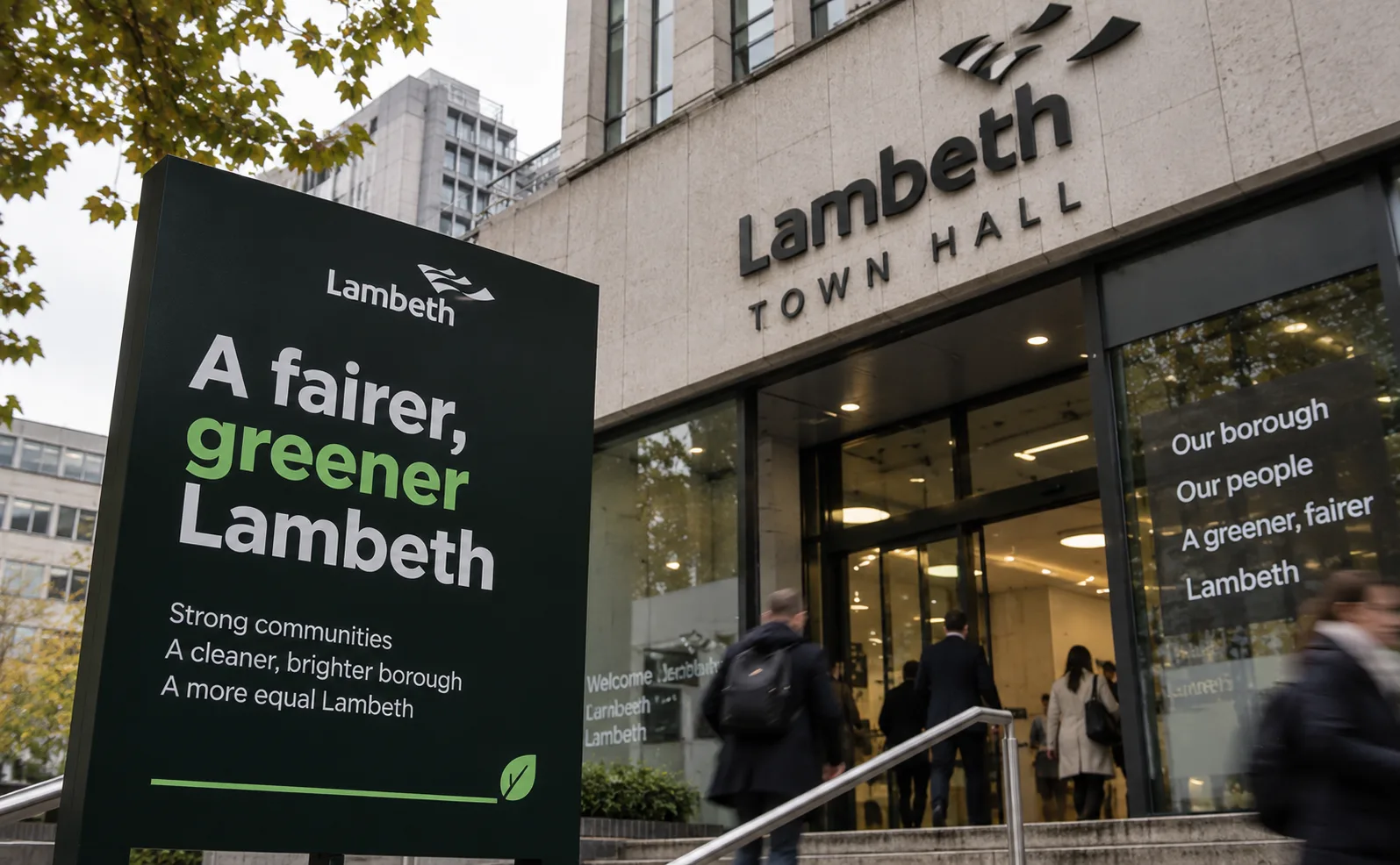
Martin Abrams, the leader of the Green-led council in south London, said the authority was "pushing ahead" with a pilot of a shorter week for its employees. Speaking at a fringe event at the Green Party conference in Brighton, he said the policy would deliver a "better work-life balance" for staff as well as "increased productivity" and "better workers' rights".
The Greens also control Hackney and Lewisham. Zoe Garbett, the mayor of Hackney, and Liam Shrivastava, the mayor of Lewisham, both said they were examining the idea for their boroughs. Between them, the three councils serve almost 900,000 residents.
Under the model, staff are expected to deliver 100 per cent of their existing output in 80 per cent of their contracted hours, with no reduction in pay. In practical terms, employees would work a fifth fewer hours for the same salary. South Cambridgeshire District Council, which became the first council in the country to make the arrangement permanent last year, says it has saved £399,263 a year, mainly by filling vacancies with permanent staff instead of agency workers. The council says its performance data, analysed by researchers at the universities of Salford, Bradford and Cambridge, shows that 21 of 24 services improved or stayed the same.
The performance picture is disputed. In October 2025, the then communities secretary Steve Reed wrote to South Cambridgeshire saying he was "deeply disappointed" and citing a decline in key housing services, including rent collection and re-letting times. The council rejected the criticism and said its housing service remained among the top quarter of local authorities for the speed of re-letting.
Abrams said no date had been set for the Lambeth trial and promised "a bit more meat on the bones" of the policy soon. He has instructed council officers to work up proposals, The Telegraph reported.
He pointed to staff turnover as the reason. "There's a real problem in local authorities with staff retention and turnover," he said. "It costs local authorities tens of millions of pounds every year in terms of recruitment and those staffing costs. So, if there's anything that we can do to stem that by being bold and looking at things like a four-day week, we'll do it."
A borough under financial pressure
The plan is being drawn up against a difficult backdrop, even by the standards of English local government.
Lambeth overspent its 2024/25 budget by £60.493m, according to a Local Government Association peer review, driven by demand for temporary accommodation and by newly identified debt servicing and debt provisions. Its unallocated general fund reserves fell to £5m by the end of March 2025, against a target of about £45m.
The council has set out its intention to draw on Exceptional Financial Support from central government and is relying on £116m of it across the three years to 2026/27, including £40m to rebuild reserves and £20m to help balance the 2026/27 budget. Exceptional Financial Support is not a grant. It allows a council to capitalise specified revenue pressures and finance them through borrowing or the sale of assets, so the immediate budget pressure is deferred rather than removed.
Lambeth's borrowing passed £1 billion in 2023 and was reported at about £1.09 billion that December, when the cabinet approved a further £175m of capital borrowing. Debt servicing is now one of the largest single pressures on its budget, and the council has been pausing parts of its capital programme and selling assets to bring the debt down.
Its workforce, meanwhile, has grown. Council headcount rose from 2,832 in March 2023 to 3,218 in March 2025, an increase of about 14 per cent, according to its own annual workforce reports. The number of staff paid £50,000 or more rose from 1,196 to 1,434 in a single year, an increase of about 20 per cent. The council says the rise reflects incremental progression and the national pay award rather than a wave of senior appointments.
Plenty of councils say they must do more with less. Lambeth is now preparing to test whether its staff can do the same in considerably less time.
A policy the government does not back
Four-day weeks are not government policy. A spokesman for the Ministry of Housing, Communities and Local Government said: "It is not government policy to support a general move to a four-day working week for five days' worth of pay. Councils are responsible for deciding how to use their resources, provided they are delivering the services local taxpayers need."
The politics has shifted more than once. In November 2024, Angela Rayner, then the local government secretary, dropped the previous Conservative government's opposition to four-day weeks, clearing the way for South Cambridgeshire. A year later, her successor Steve Reed wrote to every council leader in England warning them not to adopt the model, and said those paying full-time wages for part-time work could be judged to be failing. Rayner returned as Communities Secretary under Andy Burnham in July and has backed four-day weeks in the past. Councils set their own employment policies, but ministers can intervene in an authority deemed to be failing.
James Cleverly, who is seeking the Conservative nomination for London mayor, said Londoners should not pay the same council tax to an authority on a four-day week. "Why should Londoners who work hard five days a week to deal with higher taxes and higher house prices be expected to pay for an extra day off for their local councils?" he said. "If they can afford another day off then they can afford to be delivering more for residents, or cutting their taxes."
Claire Bullivant, CEO of Great British PAC, said:
“This is exactly the sort of decision that leaves hardworking taxpayers wondering whether anyone in local government remembers whose money they are spending.
“Lambeth has been grappling with enormous financial pressures, yet the Green-led council’s answer is to experiment with four days’ work for five days’ pay. Before asking taxpayers to bankroll fewer working hours, the council should be demonstrating that every pound is being spent wisely and that residents are receiving the services they are already paying for.
“If Lambeth can genuinely deliver the same or better services in four days, then taxpayers are entitled to ask an obvious question, why are they currently paying for five? And if it cannot, residents will be paying the same council tax for less.
“The public sector does not exist for the convenience of the people who run it. It exists to serve the public. At a time when families and businesses are working incredibly hard to pay their bills and taxes, councils should be concentrating on efficiency, sound finances and delivering excellent services, not treating taxpayers as an unlimited source of money for ideological experiments.
“Great British PAC believes taxpayers deserve value for money, accountability and public services that remember who they work for.”
The four-day week has reached London. It has arrived at a council that is still working out how to pay for five.