As protesters clash with security forces and the Foreign Office warns British travellers to avoid demonstrations, the Great British PAC is demanding to know what ministers are doing to protect British nationals and Chagossians caught up in the crisis.
The questions are particularly pressing because Britain is still pursuing an agreement that would transfer sovereignty over the Chagos Islands to Mauritius, despite continuing opposition from Chagossians who wish their homeland to remain British.
Has a Chagossian been shot by Mauritian police? Are British citizens caught up in the violence? What protection is being offered to Chagossian families? And why is Britain continuing discussions over the future of their ancestral homeland while such serious questions remain unanswered?
Mauritius descends into its worst unrest in decades
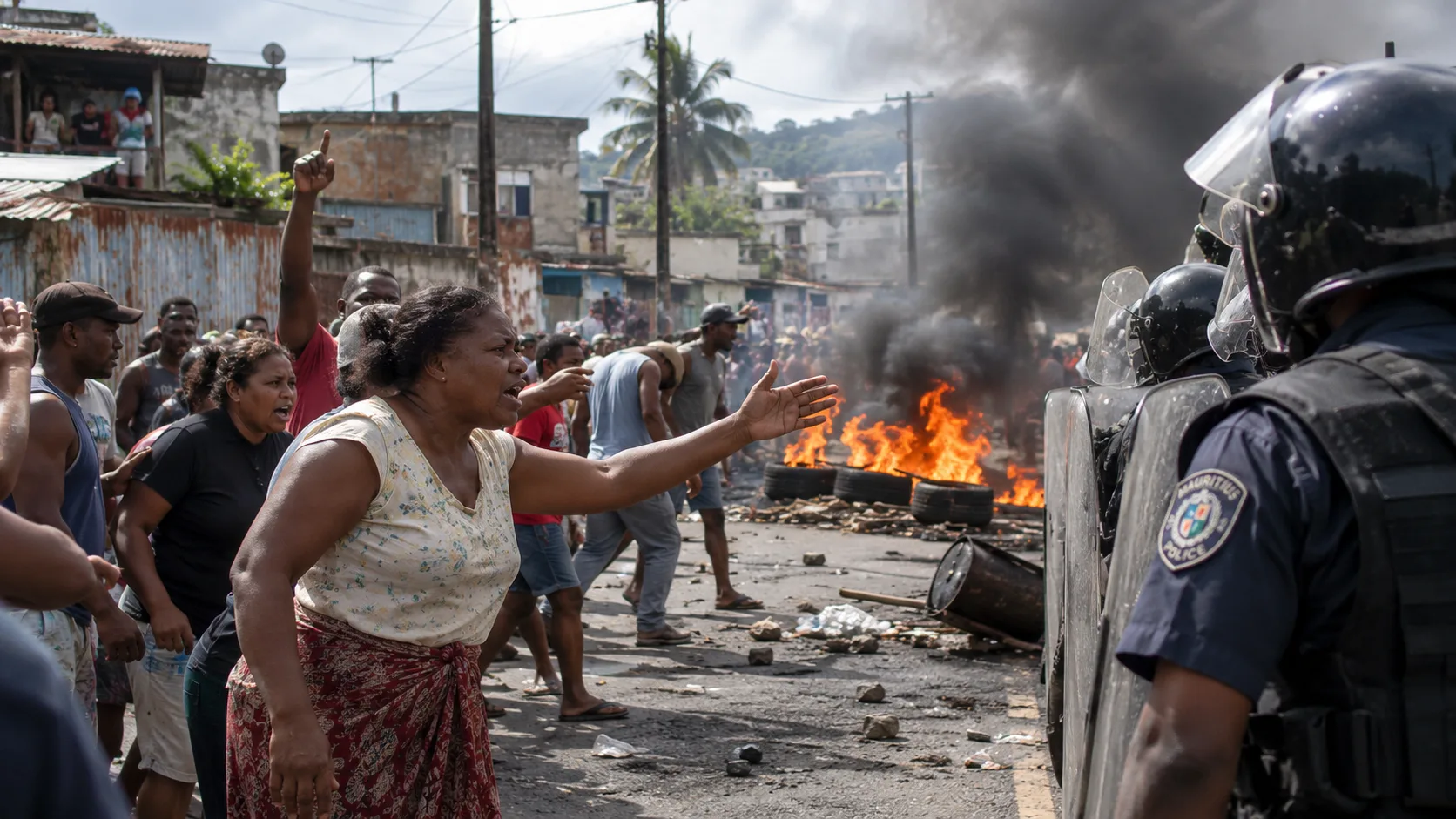
The Indian Ocean nation has experienced days of disorder following protests over water shortages and the rising cost of living.
The disturbances escalated after 27-year-old Élodie Thomas, a mother of a two-year-old daughter, was shot and seriously wounded by a police officer at a roadblock in Beau Bassin-Rose Hill on Friday, 9 October.
She was taken to hospital, where surgeons reportedly removed a bullet from her neck or jaw. Subsequent reports indicated that she was showing signs of recovery.
Protesters burned tyres, blocked roads and damaged public buildings. Schools and public transport were disrupted, security forces deployed and overnight curfews imposed.
The officer involved in the shooting has reportedly been arrested, and three others suspended over allegations that they failed to assist the injured woman. The shooting is under investigation.
The BBC reported on 14 October that the unrest was among the most serious in Mauritius since 1999. Police subsequently said the situation was under control, although underlying grievances remained.
The British Foreign Office updated its travel advice on 14 October, warning that demonstrations and disruption could continue.
Was Élodie Thomas, the young mother shot by police, a Chagossian?
Chagossian contacts have told Great British PAC that they believe Élodie Thomas may be of Chagossian heritage.
Although her identity has been publicly reported, her possible Chagossian connection and nationality have not been independently verified by the organisation.
Great British PAC is calling on the Foreign Office to establish whether she is Chagossian, whether she holds British nationality and whether she or her family are entitled to any British consular assistance.
The organisation also wants ministers to explain what steps are being taken to protect British Chagossians and other British nationals affected by the unrest.
Questions the Foreign Office must answer
Great British PAC is demanding urgent answers from the Foreign, Commonwealth and Development Office and believes the seriousness of the situation warrants immediate parliamentary scrutiny.
The organisation wants ministers to clarify:
1. Whether any British nationals or British Chagossians have been injured, detained or otherwise affected by the unrest, and what assistance has been offered.
2. What security assessment and travel advice the FCDO is providing, and whether further consular measures are planned.
3. Whether the British High Commission has established the current condition, nationality and possible Chagossian heritage of Élodie Thomas, and whether she or her family are entitled to British consular assistance.
4. What practical measures exist for Chagossians reporting threats, intimidation or fear for their safety.
5. Which Chagossian representative organisations and community leaders the Government is consulting, including opponents of the sovereignty agreement.
6. How the FCDO is coordinating with the Home Office over Chagossians arriving in Britain, including protection claims and family immigration difficulties.
7. Whether the unrest has prompted a reassessment of guarantees for Chagossian rights and resettlement under any future sovereignty arrangement.
The Great British PAC believes these are questions the Government should answer publicly, particularly given its continuing involvement in decisions that will determine the future of the Chagossian homeland.
Great British PAC stepped in when Chagossian families arrived in Britain
The organisation's concerns are not based solely on reports from Mauritius.
Just weeks ago, Great British PAC became directly involved in helping Chagossian families who had travelled thousands of miles to Britain.
On 22 September, 31 Chagossian families arrived at Manchester Airport from Mauritius via Dubai, hoping to begin new lives in the United Kingdom.
Some held British passports while their spouses had different nationalities or immigration statuses, creating serious legal complications and concerns about family separation.
Great British PAC committed £10,000 in emergency legal funding to Imperium Chambers to help affected families navigate the immigration system and secure legal assistance.
The commitment was announced on 28 September and was separate from another £10,000 pledged towards Chagos-related judicial review proceedings.
The Great British PAC has also committed more than £40,000 to the legal fight to defend the Chagossian people's right to self-determination. This includes £20,000 set aside as protection against potential adverse legal costs for Chagossian Government in Exile First Minister Misley Mandarin, who is challenging the British Government's handling of the proposed sovereignty transfer through the courts.
The organisation also helped set up the government in exile and has also funded nationwide opinion polling, which found support for the Chagossians' right to self-determination among voters across the political spectrum, regardless of party allegiance.
For Great British PAC, this is not simply a dispute over territory or international diplomacy. It is a fundamental question of democracy, justice and the right of a people to determine the future of their own homeland.
For Great British PAC, the situation raised a deeply troubling question: why were families with historic ties to Britain facing such serious difficulties while attempting to find safety and stability in the country whose citizenship some of them hold?
British Chagossian father arrived with horrifying leg injury
Among those who fled Mauritius last month was a British Chagossian father of six, publicly identified as Harvey.
He had an extensive open wound to his leg, which Great British PAC representatives saw in disturbing video footage.
The footage appeared to show exposed bone, highlighting the extraordinary severity of the injury.
After the family was located in temporary accommodation in Stockport, Great British PAC CEO Claire Bullivant arranged an ambulance, and Harvey was taken to hospital for medical treatment.
His wife's different immigration status had complicated the family's arrival, adding to the difficulties facing a father already in urgent need of medical attention.
The episode underlines why questions about Chagossian welfare cannot simply be reduced to diplomatic formalities.
Families are seeking medical assistance, legal support and security while decisions about their ancestral homeland remain unresolved.
Labour still plans to transfer Chagos sovereignty to Mauritius
Under Labour's UK-Mauritius treaty signed in May 2025, sovereignty over the Chagos Archipelago would transfer to Mauritius, while Britain would retain rights over the strategically important Diego Garcia military base for an initial 99 years.
The agreement also involves substantial financial payments from the British taxpayer to Mauritius.
Great British PAC opposes the proposed transfer and argues that the rights, wishes and future of Chagossians must be central to any agreement.
The organisation has also raised concerns about the financial implications, regional security and whether sufficient guarantees exist to ensure Chagossians can return to their ancestral islands.
Under the proposed arrangements, Mauritius would be responsible for organising any resettlement on the outer islands, excluding Diego Garcia.
For Chagossians who wish to return home, the question is whether meaningful opportunities for resettlement will actually materialise and what legal protections would accompany them.
A House of Commons Library briefing published on 8 October 2026 confirmed that the treaty has not entered into force and that UK ratification remains paused.
Chagossians deserve answers before their future is decided
The shooting of Élodie Thomas, the concerns raised by Chagossian contacts and the difficulties encountered by families arriving in Britain make questions about safety, representation and legal protection all the more urgent.
Great British PAC believes the Government must establish the facts, engage directly with Chagossian representatives and explain what enforceable protections would exist before any sovereignty transfer takes effect.
The organisation has already committed substantial resources to supporting Chagossian families and their legal representatives, including emergency immigration assistance and legal proceedings concerning the future of their homeland.
Those experiences have brought the human consequences of the Chagos dispute into sharp focus.
Before Britain takes any irreversible step towards transferring sovereignty, ministers must answer a fundamental question: how will they guarantee the safety, rights and future of the Chagossian people, and how will those people be given a meaningful say in what happens to their homeland?
The Great British PAC is calling for urgent parliamentary scrutiny and a clear public response from the Foreign Office.