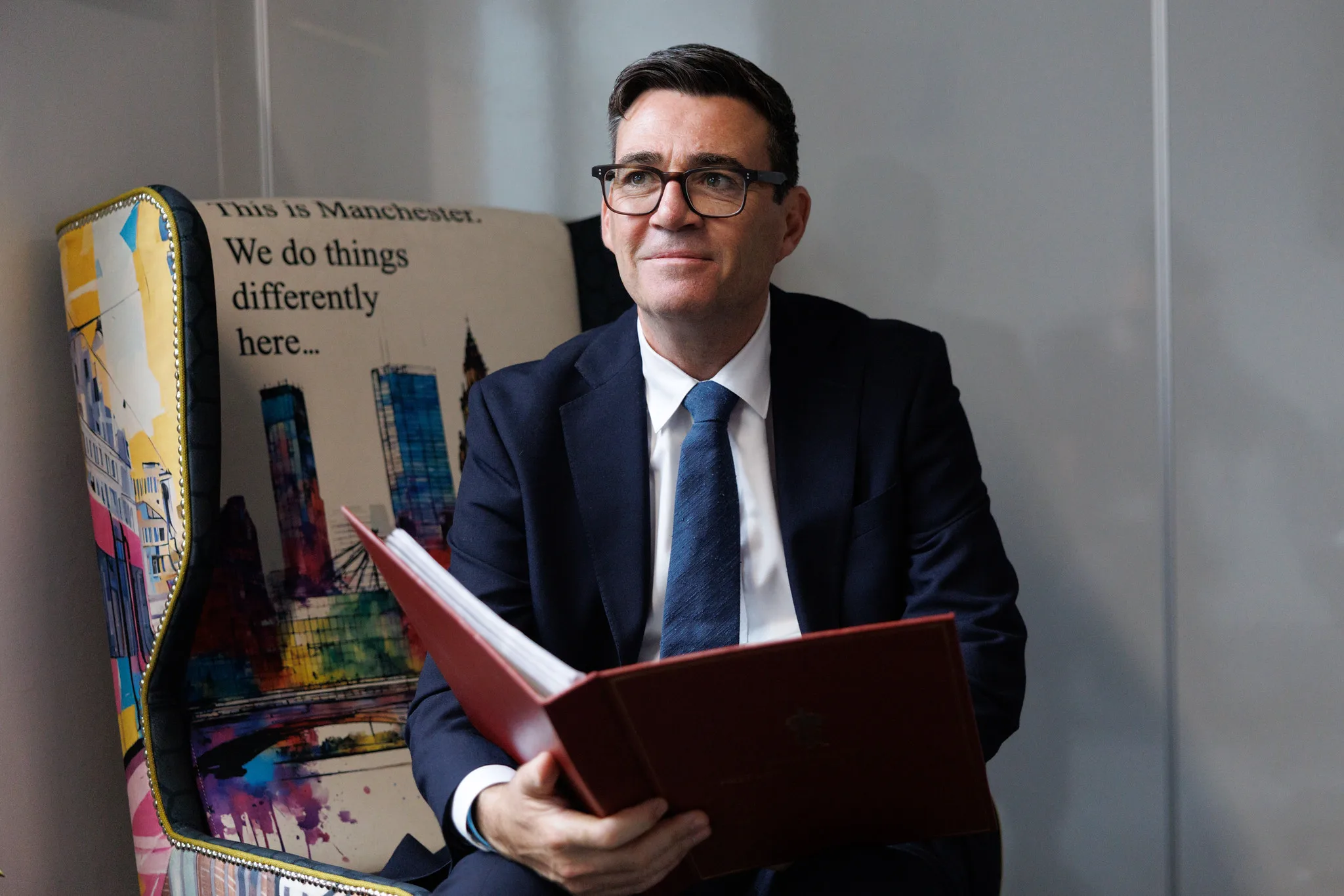
The Prime Minister has moved to reassure entrepreneurs, investors and industry that his government wants the country's wealth creators to stay, as he pledges to take the pressure off households and businesses ahead of a closely watched autumn Budget. Andy Burnham's intervention, made in an interview with the Financial Times, represents the clearest attempt yet by his government to calm nerves in the City and beyond. We at the Great British PAC warmly welcome the Prime Minister's recognition that wealth creation is not a dirty word, and that those who build businesses, create jobs and drive growth deserve encouragement rather than punishment.
A deliberate signal to business
Mr Burnham's words were carefully chosen, and the timing was deliberate. With the Chancellor, John Healey, due to deliver a keynote speech on the economy early next month, and the Prime Minister himself expected to set out his economic vision in a statement next week, the government is clearly seeking to shape the narrative before the speculation around October's Budget hardens into expectation.
"Of course, we need wealth creation and the best wealth creators not just forging their path here, but staying here," Mr Burnham said. Asked directly whether he would tax the wealthy out of Britain, his answer was unambiguous: "No, definitely not."
That formulation matters. After two successive tax raising Budgets under Rachel Reeves, business confidence has been fragile, and the fear of a third raid has hung over boardrooms for months. The Prime Minister acknowledged the fiscal backdrop remains "challenging", a word that Treasury watchers will recognise as a signal that the public finances leave little room for manoeuvre. Official figures published by the Office for National Statistics have consistently shown public sector net debt hovering close to 100 per cent of GDP, a level not seen since the early 1960s, while the Office for Budget Responsibility has repeatedly warned that debt interest payments alone now consume tens of billions of pounds each year, money that cannot be spent on schools, hospitals or tax cuts.
Yet Mr Burnham was careful to pair fiscal realism with a pro enterprise message. He insisted he was focused on growing the economy by "percentage points", not fractions, language that suggests he understands the scale of what is required. Britain's productivity growth has been anaemic for well over a decade, and the long term data compiled by the ONS shows output per hour worked has barely moved since the financial crisis. If the Prime Minister truly intends to change that trajectory, keeping wealth creators on British soil is not merely desirable, it is essential.
A pragmatic turn on energy
Perhaps the most striking passage of the interview concerned energy. Mr Burnham delivered his clearest signal yet that he would authorise further drilling in the North Sea, describing Labour's approach to net zero as needing to be "pragmatic".
In doing so, he appeared to align himself with Dale Vince, the Ecotricity founder and prominent Labour donor, who has argued that Britain's reliance on fossil fuels remains "a reality" for the next few decades. "If we approach things differently, we can actually make sense of drilling the North Sea," Mr Vince has said, a position that would have been heresy in some quarters of the Labour movement only a few years ago.
The economic logic is difficult to dispute. According to the North Sea Transition Authority, the basin still supports tens of thousands of jobs, and domestic production reduces reliance on imported liquefied natural gas, which carries both a higher price tag and, perversely, a larger carbon footprint when shipping is accounted for. Britain currently imports a substantial share of its gas, and industry figures suggest the country will need oil and gas for decades to come, even under the most ambitious decarbonisation scenarios published in the government's own energy statistics.
We at the Great British PAC have long argued that energy policy must be grounded in reality rather than ideology. A Prime Minister who is prepared to say so, publicly and on the record, deserves credit.
The pressure from the left
Mr Burnham's reassurances come against a backdrop of mounting demands from within his own movement. Union leaders are pressing for higher taxes on banks, while Gordon Brown, the former prime minister, has demanded a £500 million levy on gambling companies to fund a cut in household energy bills.
The gambling industry already contributes billions to the exchequer each year, and the Gambling Commission's industry statistics underline just how significant the sector's tax contribution has become. A further raid, campaigners warn, risks pushing punters towards the unregulated black market, where no tax is paid and no consumer protections exist.
The banks, meanwhile, remain among the Treasury's most reliable cash cows. The HM Treasury has historically collected substantial sums from the bank surcharge and bank levy, and any increase would inevitably feed through into the cost of credit for precisely the businesses Mr Burnham says he wants to champion.
Gatwick's warning shot
Nowhere is the nervousness more visible than in the aviation sector. Pierre-Hugues Schmit, the new chief executive of Gatwick, has warned the Prime Minister against increasing the tax burden on airports just as the hub prepares to build its £2.2 billion second runway, a project detailed on the airport's official expansion page.
Gatwick already carries Britain's second biggest business rates bill at £80 million a year, its largest single cost after wages. Mr Schmit said uncertainty over how the property tax would be calculated in future was making it difficult to plan for the runway, which the airport aims to open by 2030 and which could eventually double passenger numbers.
"We need them to signal that it's investable," he said. "Conditions must be stable, fair and proportionate so they can invest in the coming years and decades. Fiscal hurdles, business rates, air passenger duty, need to be acceptable."
His warning cuts to the heart of the matter. A tax raid on airports would mean higher fares, depressed demand for flights, and a damaged investment case for one of the largest privately funded infrastructure projects in the country. Britain's air passenger duty is already among the highest aviation taxes in the world, and every additional pound levied at the departure gate is a pound that makes British hubs less competitive against European rivals.
The verdict
Mr Burnham's interview was an exercise in reassurance, and on that front it largely succeeded. He has said the right things, on wealth creation, on the North Sea, on the cost of doing business. But words are cheap, and October's Budget will be the true test.
We at the Great British PAC are happy, genuinely so, that the Prime Minister wants wealth creators to stay in Britain. That is a sentence many of us wondered whether we would ever hear from a Labour leader. The entrepreneurs, investors and job creators who power this economy will now be watching closely to see whether the Chancellor's speech, and the Budget that follows, match the Prime Minister's rhetoric.
The government has a choice. It can listen to the union barons and the tax raisers, and watch capital, talent and ambition drift towards friendlier shores. Or it can follow the Prime Minister's instinct, keep Britain open, competitive and pragmatic, and give the wealth creators every reason not just to forge their path here, but to stay here. We know which Britain we would choose.