
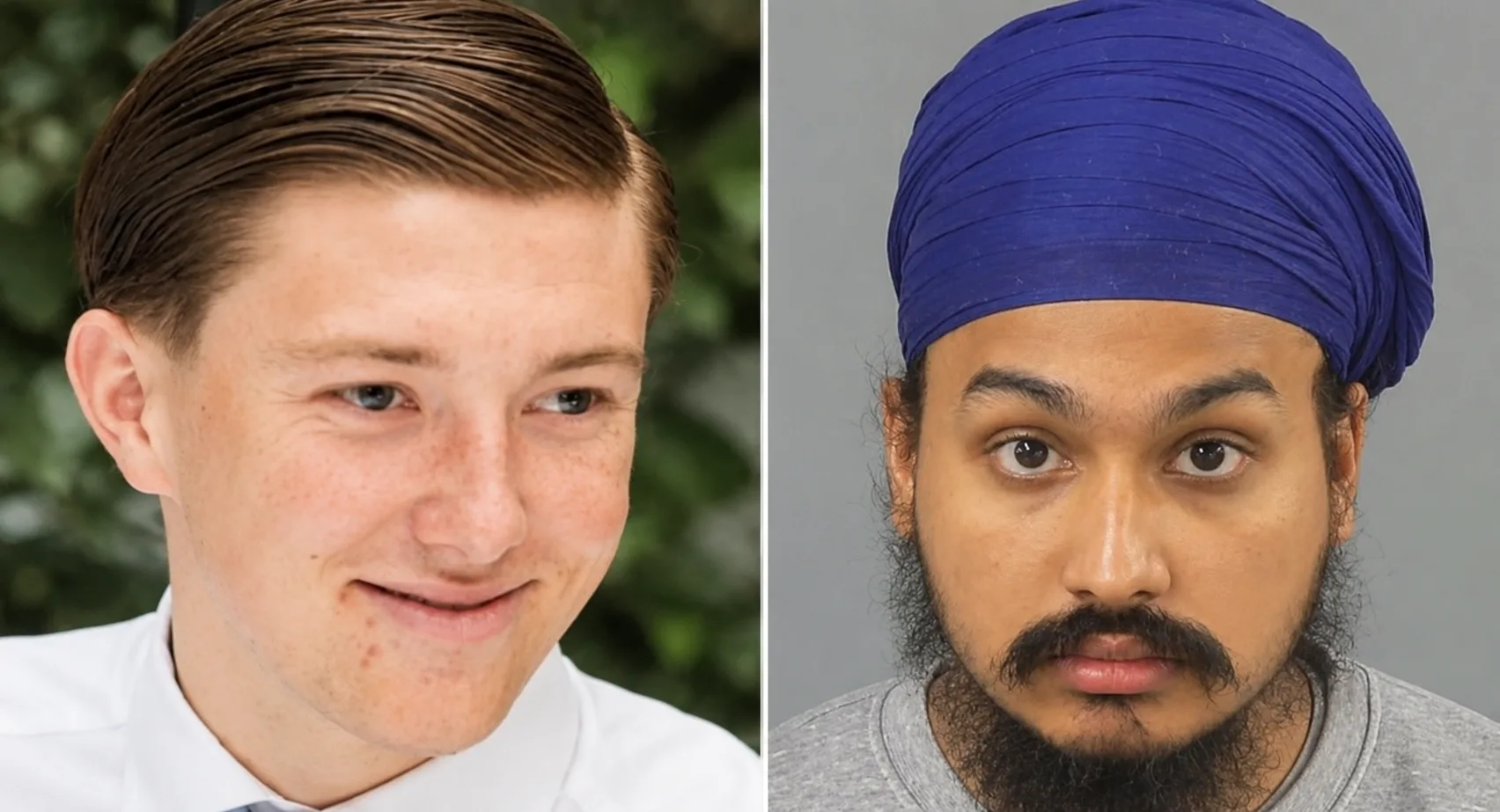
Vickrum Digwa, convicted of murdering the Southampton student Henry Nowak, has been given permission to challenge the length of his minimum term.
Digwa, 23, was sentenced at Southampton Crown Court on 1 June to life imprisonment with a minimum term of 21 years. After credit for the 175 days he had already spent in custody, the formal minimum term was set at 20 years and 190 days. On 5 November the Court of Appeal will hear his argument that the minimum term is too long.
The same hearing will consider a referral by the Attorney General's Office, which has asked the court to decide whether the sentence was unduly lenient and whether it should be increased. The referral was made under the unduly lenient sentence scheme on 15 June by the then solicitor general, Ellie Reeves KC, who has since been appointed Attorney General. She said the case "horrified" her, and that no sentence could undo the devastation Henry's family had suffered. It is for the Court of Appeal, not the Attorney General, to decide whether the sentence should be altered.
Digwa has also applied to appeal against his murder conviction, which will be heard separately. The grounds of his challenge to the sentence have not been made public. Permission to challenge the term is not a finding that the sentence was wrong.
Murder carries a mandatory life sentence in England and Wales. The judge fixes the minimum term, the point at which the Parole Board may first consider whether it is safe to release the prisoner. Reaching the end of the minimum term does not entitle anyone to release. William Mousley KC told Digwa he would remain in prison for life unless the Parole Board decided it was safe to release him on licence, that he would stay on licence for the rest of his life, and that he could be recalled at any point. A whole life order, under which a prisoner is never released, is reserved for the most serious cases.
The starting point for the 21-year minimum term was itself disputed at sentencing. Applying Schedule 21 of the Sentencing Act 2020, the prosecution sought a 25-year starting point on the basis that Digwa had the knife with him for use as a weapon. The court heard that this approach could have produced a minimum term above 30 years once aggravating factors were added. His barrister, Jeremy Wainwright KC, argued for a lower starting point and persuaded the judge to begin at 15 years. The murder, Mousley found, did not involve taking a knife to the scene in order to commit an offence or to have it available to do so, and he accepted that Digwa genuinely believed the larger kirpan he wore over his clothing formed part of his Sikh faith.
The judge identified ten aggravating factors that increased the term from the 15-year starting point to 23 years. They were the three further stabbings, carried out with a highly dangerous weapon; the mental suffering inflicted on Henry as he lay dying, which included his awareness of Digwa's attitude and of the lies that had led to a young man of good character being handcuffed; the filming of his suffering; the attempts to cover up the killing and conceal evidence, which had a tendency to pervert the course of justice; the false blame placed on Henry, which also led to the unnecessary arrests of Digwa's own family; the pressure Digwa put on his mother to assist in that cover-up; the vulnerability of Henry, who was 18, alone and unarmed; the significant impact on the wider community; the lies that misled the attending officers and shaped their decisions to arrest and handcuff Henry and to give first aid in ignorance of his chest wound; and the abuse of the privilege extended to Sikhs to carry a knife in public for religious reasons, which the judge said had dishonoured Digwa's religion and put others at risk of repercussions.
Mitigating factors then reduced the minimum term from 23 years to 21 years. The judge listed three: Digwa's age, his previous good record with no previous convictions, and the absence of premeditation. There were no others. "I am sure that you intended to kill in the moments before you stabbed Henry," he told him.
Henry, a first-year accounting and finance student at the University of Southampton and the first in his family to go to university, was walking back to his accommodation in Portswood at around 11.30pm on 3 December 2025 when he passed Digwa on Belmont Road. It was a chance meeting. Henry had been drinking but was below the drink-drive limit. He was alone and unarmed. Digwa was sober and carrying the sheathed dagger on a belt over his clothing.
Henry filmed him and asked whether he was a "bad man". Digwa replied that he was, and took the phone. The judge concluded that Henry, believing his phone had been stolen, may then have struggled for it, and that Digwa reacted as a man who thought he was being disrespected. Digwa drew the dagger and stabbed him in the chest. The blade passed between the two uppermost ribs and cut a vein behind the collar bone. A pathologist found more than two pints of blood in Henry's chest and concluded that no emergency treatment could have saved him. He had also been stabbed twice in the leg, once in the abdomen and slashed across the face. He never managed to raise his hands to defend himself. The judge called him defenceless.
Digwa then filmed Henry as he tried to climb a fence and collapsed, told him that he had not been stabbed, and did not call for help. The 999 call came from Digwa's brother, claiming a racial attack and denying that any weapon had been used. When police arrived they were handed what the judge described as a convincing but wholly false narrative. Digwa claimed that Henry, who he said was drunk, had punched him, racially abused him and knocked off his turban. Henry was handcuffed and arrested as he lay on the ground telling officers he had been stabbed and could not breathe.
The judge found he was handcuffed for about a minute before his condition deteriorated, the handcuffs were removed and the arresting officer began CPR. He said the officer's genuine shock at discovering he had been giving CPR to a man with a serious chest wound showed he had been doing his best in a very difficult situation. The false narrative that misled him had come from the man who had just murdered Henry Nowak.
Mike Rouse, Chief Technology Officer of the Great British PAC, said:
"The British public will rightly view the actions of Henry Nowak's murderer as yet another example of his attempts to manipulate the justice system. The police tragically fell for it on the scene, but we all hope and expect the courts to be wiser."
Hampshire and Isle of Wight Constabulary released the body-worn footage on 2 June, with the family's permission. That night, demonstrators gathered outside Southampton's city centre police station before moving to an area near the Digwa family home and the murder scene. Twelve police officers and a police dog were injured. At least 34 people have since been charged with violent disorder.
The Independent Office for Police Conduct is investigating two officers for potential gross misconduct. The watchdog has advised both men, who were the first to arrive at the scene, that they may have breached professional behaviour standards covering duties and responsibilities, use of force and discreditable conduct. It is examining why they did not recognise that Henry needed urgent medical attention, why they did not act immediately after he said he had been stabbed and could not breathe, and the decision to arrest him rather than provide first aid. One of the officers is also being investigated over the standard covering authority, respect and courtesy, for appearing to dismiss Henry's claim to have been stabbed.
The IOPC has said it is also investigating whether the race or religion of Henry or the Digwa family affected the officers' actions and decisions, whether their decisions were influenced by assumptions or prejudice relating to community tensions at the time, and complaints by Henry's family about differences in how he was treated compared with Digwa and his family. The investigation has been expanded to cover control room staff. The serving of gross misconduct notices does not necessarily mean disciplinary proceedings will follow, and the watchdog has made no findings. A jury inquest is due to open at Winchester Coroner's Court on 20 September 2027.
Digwa's mother, Kiran Kaur, 53, removed the dagger from the scene and was jailed for three years on 17 July for assisting an offender. Digwa, his brother Gurpreet Digwa and his father Moga Singh face further charges relating to weapons, all of which they deny. A trial is listed for September 2027 and the proceedings remain live.
After sentencing, Henry's father Mark Nowak said the difference between the way his son and the killer had been treated was "unbearable". "Henry did not die with dignity," he said. The family described his treatment as inhumane and degrading, called for a full, fearless and transparent investigation by the IOPC, and said they did not want Henry's death to be used to create further division, hatred or tension. The prosecuting lawyer's words, quoted by the family and echoed in the House of Commons by the Home Secretary, were these: this is not a case about Sikhism, this is not a case about racism, this is a case about murder.
The judge said Digwa had brought shame on his family, his community and his religion, and that his lies had left many Sikhs worried about their own safety "even though they have done absolutely nothing wrong". The Council of Southampton Gurdwaras condemned the killing. Sikh organisations have disputed the classification of the weapon, with the Sikh Federation and the Network of Sikh Organisations arguing that it belongs to the Nihang warrior tradition rather than to the articles of faith. Sikh leaders have reported a backlash and a rise in hate crime against their community. Satvir Kaur, the Labour MP for Southampton Test, said a single man's evil act should not be treated as representative of an entire community.
Richard Thomson, National Director of the Great British PAC, said:
"Vickrum Digwa murdered Henry Nowak. Then he lied. He told police the dying 18-year-old student was the racist attacker. Officers believed him. They put Henry in handcuffs on the street while he told them he had been stabbed and could not breathe. He was dying.
"That is not just murder. That is murder followed by a calculated attempt to smear the victim and walk away. Now he wants his minimum term cut. In the same hearing, the Attorney General's Office will say the sentence was already too soft. They are right.
"Public confidence in keeping violent offenders behind bars is on the floor. People watch cases like this and wonder if 'life' still means anything. It should. Life should mean life.
"I hope Vickrum Digwa serves a very, very long time. Not because of anger. Because justice for Henry Nowak, and for every family that has watched a loved one die while the killer rewrites the story, demands it.
"Keep him in. Let life mean life."
On 5 November, the Court of Appeal will hear two arguments about the same 21 years. One says the sentence is too long. The other says it is too short.