LABOUR'S relentless drive to regulate, control and interfere in British working life is threatening to become another extraordinarily expensive experiment, with patients, emergency services and taxpayers potentially left paying the price.
In a damning intervention, NHS Employers has warned that the Government's proposed reforms to zero-hours and low-hours contracts could saddle the NHS in England with approximately £900 million in additional annual costs.
At the same time, the Local Government Association (LGA) has warned that applying the proposals to on-call firefighters would be unworkable, impose significant costs and threaten public safety.
These are not warnings from Conservative politicians or opposition campaigners. They come from the very organisations responsible for understanding how Britain's hospitals and local emergency services operate.
And they raise an increasingly familiar question about this Labour Government: does anyone in Whitehall understand how the real world works?
While patients struggle to obtain appointments, hospitals battle enormous financial pressures and public services are repeatedly told to find savings, Labour appears determined to press ahead with yet another layer of employment regulation whose practical consequences have not been adequately resolved.
The Government argues that its reforms will protect workers from exploitation and provide greater certainty over working hours. Nobody disputes that genuine exploitation should be tackled.
But there is an enormous difference between protecting vulnerable workers and imposing rigid bureaucratic obligations on organisations that depend upon genuine flexibility to function.
Labour appears dangerously close to confusing the two.
£900 million a year that could be spent on patients
The scale of the NHS warning is staggering.
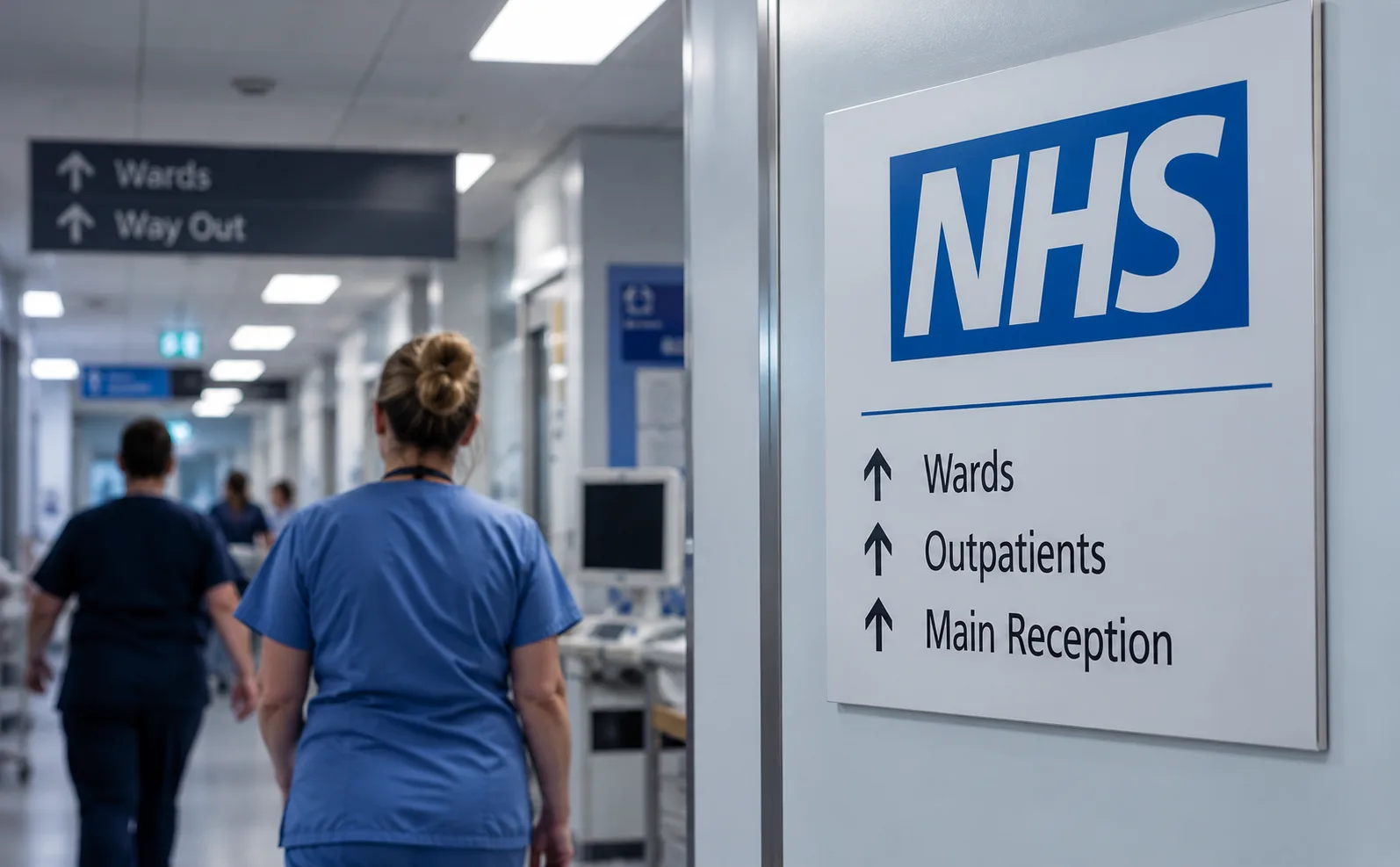
According to NHS Employers, the proposed requirements could create the equivalent workload of more than 800 additional full-time administrative staff and approximately 610 full-time managers across the NHS in England.
Their responsibilities would include monitoring working hours, calculating guaranteed-hours offers, adjusting payroll systems, managing workforce arrangements and ensuring compliance with the new regulations.
Combined with potential compensation payments and expensive changes to workforce and digital systems, the organisation estimates that the reforms could generate around £900 million in recurring annual costs if implemented without substantial changes.
That is not £900 million already spent, nor is it a confirmed final bill. It is the NHS employers' own estimate of what Labour's proposals could cost.
But it is an extraordinary warning that no responsible government should ignore.
At a time when every pound of NHS funding should be scrutinised, ministers must explain why a reform supposedly designed to help working people could instead direct enormous resources towards administration and compliance.
The absurdity becomes even clearer when examining who could be affected.
Around 85 per cent of NHS bank workers already hold substantive NHS contracts. Many voluntarily undertake additional shifts because they appreciate the flexibility and want to earn additional income.
Hospitals depend on these arrangements to cover sickness, unexpected demand, seasonal pressures and emergencies.
Yet under Labour's proposed system, employers could face repeated obligations to calculate and offer guaranteed hours even where workers actively prefer their existing arrangements.
Workers would be entitled to refuse such offers, but that does not automatically remove the administrative burden on employers.
NHS Employers has warned that the proposals could discourage flexible bank working and increase reliance on more expensive agency staff.
In other words, rules supposedly introduced to improve working conditions could make it more difficult and expensive for hospitals to put the right people in the right places when patients need them.
It is difficult to imagine a more spectacular example of bureaucracy threatening to defeat common sense.
You cannot schedule a house fire to suit Whitehall
If the implications for the NHS are alarming, the warnings from Britain's fire services are equally extraordinary.
The Local Government Association has called for explicit exemptions for retained, or on-call, firefighters, warning that the proposed rules would be entirely inappropriate for emergency response.
These firefighters frequently have other jobs and receive payments for making themselves available to respond when emergencies occur.
They are essential to fire cover across much of Britain, particularly in rural communities.
Yet the Government's proposed guaranteed-hours arrangements could require fire authorities to offer working hours based on the number of emergency call-outs attended during an earlier reference period.
Consider the implications.
A firefighter might respond to several serious incidents during one particularly busy period. Under the arrangements challenged by the LGA, that could create an obligation to offer guaranteed hours in a subsequent period, even though nobody can possibly predict whether those emergencies will occur again.
Fire authorities could therefore find themselves paying for hours that bear little relationship to actual operational demand.
Additional requirements concerning notice of shifts and compensation for changes could create further complications.
The LGA has explicitly warned that including these firefighters would be unworkable and could jeopardise public safety.
A competent government should recognise the problem immediately.
You cannot predict when a family home will catch fire. You cannot timetable a motorway collision. You cannot demand that an emergency give reasonable notice before the fire brigade responds.
Yet Labour has produced proposals that have forced local government employers to explain these elementary realities to ministers.
Surely Britain's emergency services deserve better than this.
Great British PAC: Labour must get out of the way
Claire Bullivant, Chief Executive Officer of Great British PAC, said:
“Labour really does need to get out of the way and stop trying to control every aspect of British life.
“Not content with burying private businesses beneath mountains of red tape, this Government is now threatening to inflict the same bureaucratic madness on our NHS and emergency services.
“Just think about the sheer absurdity of what we are hearing. Our hospitals are under enormous pressure, patients are desperate for treatment, frontline staff are stretched to their limits, and Labour's answer is a set of regulations that NHS employers warn could cost another £900 million every single year.
“That is money which could otherwise be available for patient care. Instead, ministers are proposing a system that could generate enormous administrative costs, reduce flexibility and make it harder for hospitals to cover essential shifts.
“And now we discover that Britain's firefighters could be caught up in this nonsense too.
“You cannot timetable a house fire. You cannot predict a heart attack. And you certainly cannot run Britain's emergency services according to some Whitehall bureaucrat's spreadsheet.
“This is what happens when ideology takes precedence over common sense. Labour ministers seem to believe that every problem in Britain can be solved with another regulation, another compliance requirement and another bill for the taxpayer.
“Of course workers deserve fair treatment. But fairness does not require a government to make our hospitals less flexible, our emergency services harder to operate and our public finances even more strained.
“Britain is crying out for competent leadership, not another costly experiment dreamed up by politicians who appear completely detached from the realities of running businesses and delivering essential services.
“Labour needs to understand something very simple: the British people do not exist to serve the bureaucracy. The Government exists to serve the British people.
“Stop interfering where you are not needed. Stop treating flexibility as exploitation. Stop assuming that ministers and civil servants know better than the professionals doing these jobs every single day.
“And above all, stop gambling with our NHS, our emergency services and taxpayers' money.
“This Government must halt these proposals, listen to the professionals and demonstrate that its regulations will not damage the services on which millions of Britons depend.
“Britain deserves better than expensive ideological experiments dressed up as progress.”
The Government cannot claim it was not warned
The warnings have not emerged from nowhere.
NHS Employers formally called for the Government to pause its proposed zero-hours reforms in August, warning of potentially severe unintended consequences.
Its chief executive, Ben Morrin, argued that the proposals did not adequately reflect the operational realities of providing healthcare around the clock.
The organisation has suggested practical alternatives, including exemptions for NHS staff already holding substantive contracts, greater scope for workers to retain flexible arrangements and safeguards for emergency staffing.
Meanwhile, the LGA has sought exclusions for retained firefighters from guaranteed-hours offers, reasonable-notice requirements and payments relating to changes in shifts.
It has also raised concerns about the potential financial and operational impact on adult social care, where staffing needs fluctuate according to the unpredictable requirements of vulnerable people.
These are serious, practical objections supported by detailed submissions.
They deserve considerably more than vague ministerial reassurances.
The Employment Rights Act 2025 received Royal Assent in December last year, but the relevant zero-hours provisions have not yet come into effect. Their implementation remains subject to detailed regulations.
That means ministers still have an opportunity to prevent the worst potential consequences.
The question is whether they have the political courage to acknowledge that their proposals need fundamental changes.
Great British PAC demands immediate answers
Great British PAC is demanding that Labour ministers explain precisely how they intend to prevent these reforms from diverting essential resources away from patient care and emergency services.
The campaign group is calling for the Government to publish a detailed assessment of the projected £900 million annual NHS cost, including its underlying assumptions and a clear explanation of how any additional expenditure would be funded.
Ministers must also guarantee that NHS bank staffing arrangements will not be undermined by unnecessary administrative obligations, particularly where employees already have permanent contracts and voluntarily undertake additional shifts.
For Britain's on-call firefighters, Great British PAC is demanding explicit regulatory safeguards that recognise the unpredictable nature of emergency response and prevent fire authorities being forced into financially wasteful or operationally impractical arrangements.
The Government must also publish a proper assessment of the consequences for adult social care and local councils, which could face additional costs as providers attempt to comply with the proposed rules.
Finally, ministers must account to Parliament before implementation, with clear evidence that the measures will not damage patient care, reduce emergency readiness or impose unjustified costs on taxpayers.
Britain needs common sense, not another Labour experiment
There is a wider principle at stake.
A government that understands the country it governs recognises that different workplaces have different requirements.
A hospital is not a supermarket. A retained firefighter is not an office employee. An emergency call-out is not an ordinary scheduled shift.
And flexibility is not automatically exploitation.
Indeed, for many British workers, flexibility is precisely what allows them to balance family responsibilities, additional income and professional commitments.
Labour's apparent determination to regulate every conceivable employment arrangement risks destroying some of the very freedoms that workers value.
The Government will undoubtedly continue to insist that its intentions are good.
But good intentions are not a substitute for competent government.
Britain has heard more than enough promises that another intervention, another regulation or another expensive administrative system will somehow improve people's lives.
What matters is whether the policy actually works.
When NHS employers warn of a potential £900 million annual cost, ministers should listen.
When local government leaders warn that emergency fire cover could be put at risk, ministers should listen.
And when taxpayers are asked to fund the consequences of government decisions, they have every right to demand accountability.
Labour chose these reforms. Labour controls the regulations. Labour must take responsibility for the consequences.
Great British PAC believes Britain needs a government that trusts its professionals, respects taxpayers, understands the importance of flexibility and knows when to leave well alone.
The NHS needs more resources reaching patients, not another army of compliance administrators.
Our firefighters need the freedom to respond to emergencies, not a bureaucratic obstacle course.
And the British people need a government that understands that public services exist to serve the public, not to satisfy the latest ideological obsession in Whitehall.
Labour must change course before another expensive political experiment becomes a very real problem for Britain's patients, firefighters and taxpayers.