
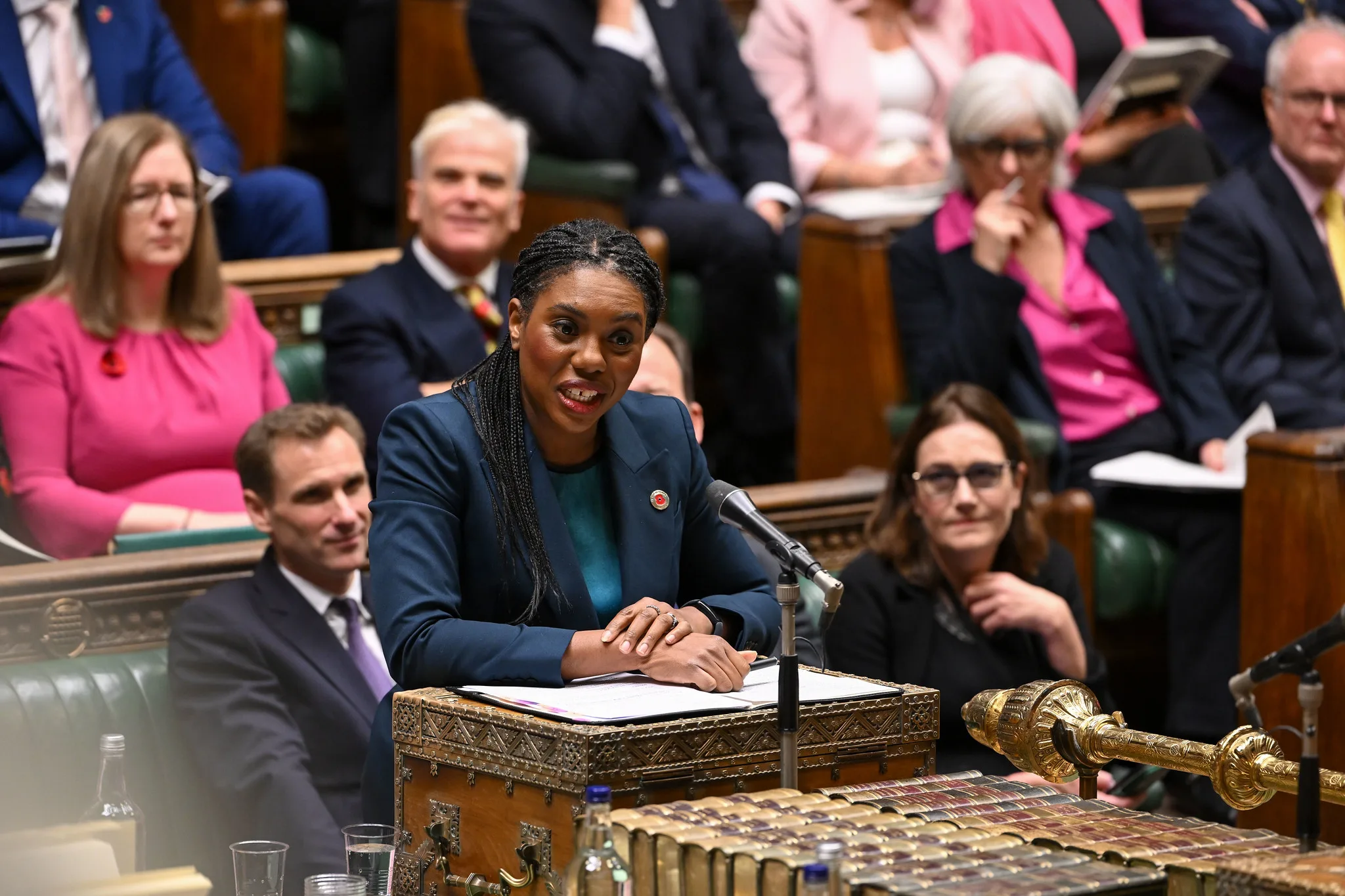
Kemi Badenoch has claimed that abandoning Labour's net zero targets could save the typical British household £540 a year, as she endorsed a study which found that scrapping new Scottish wind farms and the transmission systems built to carry their power would save the country £320bn between 2030 and 2050.
The research, published on Wednesday by the centre-Right think tank Onward and modelled by the industry consultancy Transira Energy, argues that Britain's current strategy, which prizes wind and solar above all else, has driven up system costs without delivering reliable power. Its alternative pathway would concentrate new gas-fired and nuclear stations in southern England, close to the cities that consume most electricity, rather than paying to connect remote northern wind farms to the grid. Onward says the approach would still leave Britain's power system nearly 80 per cent clean by 2050, and that an electric car or heat pump running on that mix would emit more than 80 per cent less than a petrol engine or gas boiler.
The timing is significant. Typical household energy bills, which stood at £1,641 a year from April after a 7 per cent cut in the Ofgem price cap, are set at £1,663 from July under the regulator's updated consumption values, still roughly a third higher than before Russia's invasion of Ukraine BBC. Against that backdrop, the headline figure has obvious political force, although it deserves scrutiny. Strictly, the £540 is the per-household share of the projected £320bn saving spread across about 29 million homes over two decades, rather than a forecast of any individual bill reduction. Onward's own modelling puts the saving for an average household closer to £200 a year by 2035, rising towards £290 if measures such as the Warm Home Discount were moved into general taxation City AM.
The price of power
The substance of the report is the claim about where the money goes. The official Clean Power 2030 Action Plan, championed by Ed Miliband, requires at least 95 per cent clean generation by 2030, carbon intensity of below 50g per kilowatt hour, and between 43 and 50 gigawatts of offshore wind. It would demand roughly double the transmission infrastructure built in the previous decade and investment of £40bn to £50bn a year, including about £15bn a year on the network itself. Onward argues that connecting wind farms in the far north of Scotland to England's power-hungry cities is the single greatest cost of decarbonisation, and that concentrating firm generation near demand would avoid £137bn of transmission spending between 2030 and 2050, compared with just £19bn under its own plan.
The trade-offs are also costed honestly. Gas capacity would rise from the 35 gigawatts that remains on the system under the government's own blueprint to 45 gigawatts by 2050, about 21 gigawatts of it new, equivalent to roughly 20 additional plants Carbon Brief. Onward notes that 63 per cent of Britain's combined-cycle gas capacity was commissioned more than two decades ago, so the programme would mean rebuilding or replacing an ageing fleet as well as building anew. The report concedes that its pathway would produce an additional 524 million tonnes of cumulative carbon emissions by 2050, and acknowledges greater exposure to gas price shocks, estimating that a 250 per cent spike in wholesale prices in 2040 would add £6bn to fuel costs.
Mrs Badenoch was unapologetic. "Britain needs a serious plan to deal with climate change," she said. "Seriousness means looking at results, not simply setting targets and congratulating ourselves afterwards. Current net zero targets have driven up energy costs, weakened our industrial base, and made us more dependent on energy imports. Our plan means using our own oil and gas in the North Sea, removing unnecessary costs from energy bills, and backing nuclear and renewables that can provide cheap, clean, abundant energy for homes and businesses." Her party's own presentation adds that cutting VAT on energy bills, abolishing the carbon tax and scrapping wind subsidies could save households a further £200 in the immediate term.
Claire Coutinho, the shadow energy secretary, framed the study as unfinished government business. "Two years after Ed Miliband cancelled the true costing of renewables that I started, Onward have stepped in to finish the job," she said. "This is the single most detailed costing of the electricity system that has been produced in British politics. It's the work that should have been done by the government but has not been because they are more driven by ideology than evidence."
A fight over the future of the grid
The response from the energy establishment was swift. Miatta Fahnbulleh, the new Energy Secretary, said the plan would "tie Britain to the fossil fuel roller-coaster and keep bills higher for families", adding that "Kemi Badenoch would put jobs at risk and increase bills". Adam Berman, policy director at Energy UK, said the industry's members were clear that "renewables, nuclear and storage are the best route to a low-cost energy system". Ana Musat of RenewableUK warned that Britain would lose 15 gigawatts of capacity from its ageing nuclear and gas fleets by 2030, and that grid connections do not come cheap: the regulator trimmed National Grid's £716m request to £656m for the single link connecting Hinkley Point C to the network.
Carbon Brief's ten-point factcheck goes further, accusing the modelling of assuming gas prices stay low, understating the cost of new gas plants and putting the cost of integrating renewables at £125 per megawatt hour, roughly five times the mainstream estimate. Supporters will note that the critics dispute the arithmetic, not the underlying observation that Britain's electricity is expensive and its grid construction program enormous.
For Mrs Badenoch, the bet is political as much as economic. "Unlike Labour, who are wedded to the old failing plans; or Reform, who still don't believe climate change is happening, the Conservatives will protect our environment, protect our energy security and make energy cheaper," she said. With bills still a third above pre-war levels and a general election approaching, she has done what her predecessors avoided: put a price on net zero in pounds and pence, and dared the country to argue with it.