
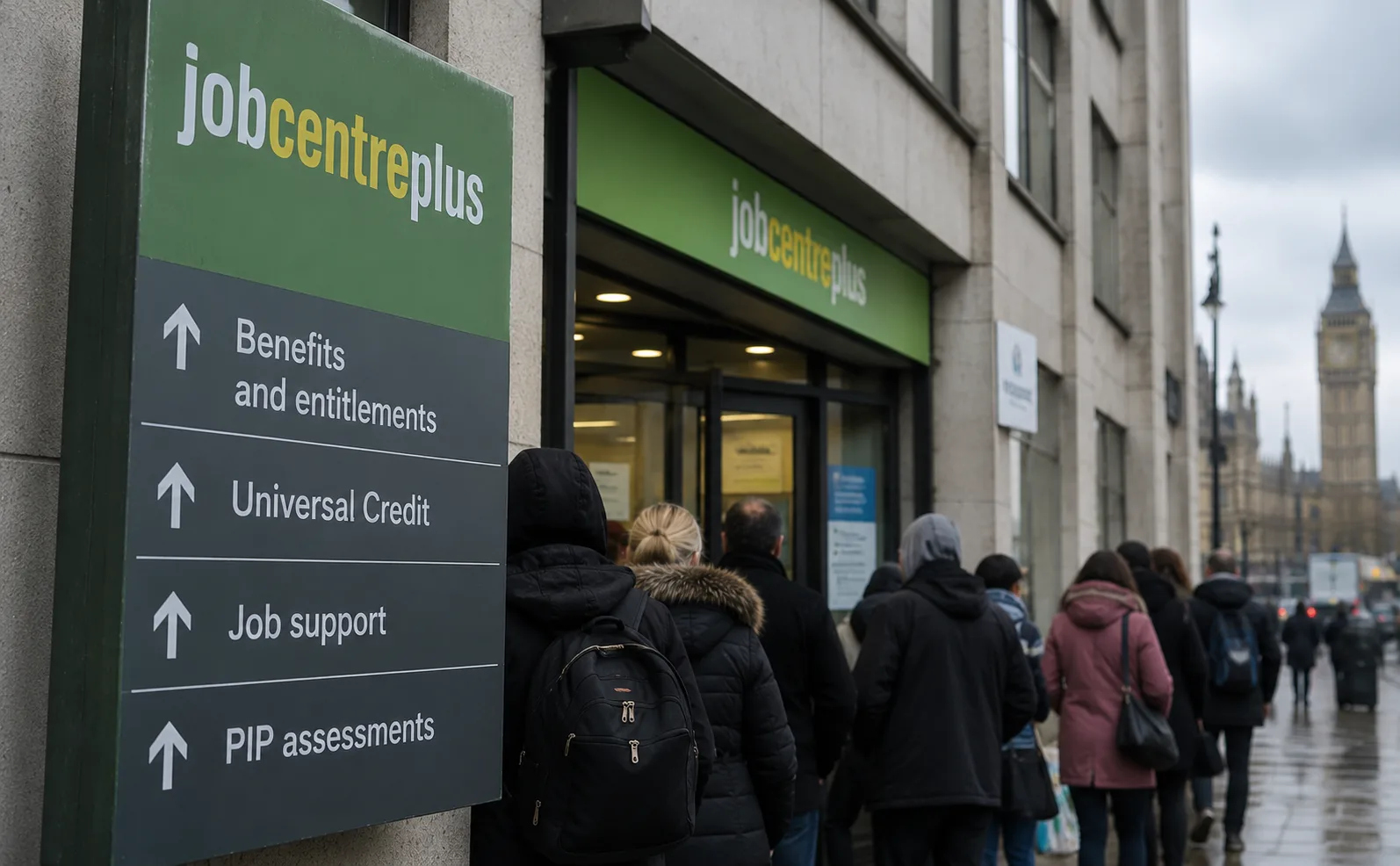
Spending on six major benefits is rising more than twice as fast as wages across most of England and Wales, analysis by the TaxPayers' Alliance has found.
The cost of Universal Credit, Personal Independence Payment, Housing Benefit, Disability Living Allowance, Employment and Support Allowance and Carer's Allowance grew by an average of 25.8 per cent across the constituencies analysed in the two years to November 2025. Median pay grew by 10.4 per cent between 2023 and 2025.
The pressure group compared growth in the six benefits between the 12 months to November 2023 and the 12 months to November 2025 with the change in median annual pay between 2023 and 2025 across 526 parliamentary constituencies in England and Wales. Spending on the six benefits rose faster than pay in 502 of the 526 constituencies, and increased in all 526, by at least 17.3 per cent. In some seats, wages fell.
The constituency analysis covers six selected benefits rather than the entire welfare budget. Separately, the Department for Work and Pensions forecasts that the government will spend £322.6 billion on the social security system in Great Britain in 2025-26, a figure that includes the State Pension. The Office for Budget Responsibility, in its March 2026 forecast, expects welfare spending across the UK to exceed £400 billion a year by 2030-31.
John O'Connell, the alliance's chief executive, said: "The benefits bill is spiralling out of control, with taxpayers in some places seeing wages fall as welfare spending surges around them. Ministers need to stop pretending this is sustainable and get the benefits bill under control for the sake of working taxpayers."
The group has published an online tool, the Welfare Map, which lets people check the figures for their own constituency.
The sharpest rise was in Birmingham Yardley, the seat of the former Home Office minister Jess Phillips, where the cost of the six benefits per resident increased by 37.2 per cent in the two years to November 2025. Median pay there grew by 2.5 per cent.
In Hornchurch and Upminster, on the eastern edge of London, median pay fell by 13.9 per cent, the largest drop of any constituency, while the cost of benefits per resident rose by 26.9 per cent.
In 19 constituencies, annual spending on the six benefits per resident was equivalent to more than 10 per cent of the area's median annual earnings in 2025, according to the alliance's comparison. The average across the constituencies analysed was 5.7 per cent. The ratios compare spending and earnings across an area as a whole. They are not statements about what any individual resident receives or pays.
In Hackney North and Stoke Newington, represented by Labour's Diane Abbott since 1987, spending came to £4,621 per resident in the year to November 2025, against median annual pay of £37,530.
The pattern is not confined to constituencies represented by one party. Of the constituencies represented by national party leaders, Nigel Farage's Clacton carried the highest relative cost, with spending per resident equal to 8.5 per cent of median pay in 2025, nearly three times the 3.1 per cent in Kemi Badenoch's North West Essex.
The alliance also calculated that in 51 constituencies, annual spending on the six benefits is equivalent to the income tax and National Insurance contributions of at least half the resident population, if every resident earned the median wage.
In Easington, County Durham, spending on the six benefits totalled £340 million in the 12 months to November 2025. Income tax and National Insurance on the constituency's median wage amount to £5,144 a year. On the alliance's hypothetical calculation, it would take the income tax and National Insurance contributions of 66,270 people earning the constituency's median wage to match its annual spending on the six benefits, a figure equivalent to nearly 70 per cent of the constituency's resident population.
Reform UK has pledged to cut the overall welfare bill by more than £50 billion a year by 2030 if it wins the next election, including by restricting benefits to British citizens. The Conservatives have promised savings of £23 billion, including a welfare card that would stop the long-term jobless spending Universal Credit on alcohol, cigarettes or gambling.
The Government's own overhaul is still taking shape. Ministers are considering removing the health element of Universal Credit for under-25s and replacing it with intensive support to get them into work, including subsidised jobs, according to Guardian reporting. The plans await the conclusions of a review of PIP led by Stephen Timms and of youth unemployment led by Alan Milburn, both due this autumn, and could reignite opposition among Labour MPs who rebelled over welfare cuts last year.
A spokesman for the Department for Work and Pensions said: "The increase in the PIP caseload has slowed under this government, falling from 400,000 in the 12 months to July 2024, to 260,000 in the 12 months to July 2026.
"We are already reforming the welfare system across the country by narrowing the gap between Universal Credit standard and health rates, restoring face-to-face assessments, and investing £3.5 billion in employment support to end the culture of people being signed off and written off.
"We're putting work and opportunity at the heart of the system, and the final recommendations from the Timms and Milburn Reviews will lay the foundation for sustainable reform."
Great British PAC reaction
Claire Bullivant, chief executive of Great British PAC, said:
“These figures are a damning warning. Benefits spending is rising more than twice as fast as wages, yet when the Government tried to rein in the welfare bill, Labour MPs rebelled and forced ministers into retreat. Do Labour seriously believe money grows on trees?
“Meanwhile, Labour is hammering the very businesses and entrepreneurs who generate the wealth to pay for it all. Higher employment taxes mean higher costs, less money to invest and greater pressure on jobs. You cannot keep punishing the people who create wealth and expect the Treasury's coffers to magically refill themselves.
“Under Labour, Britain risks driving away the very wealth creators and entrepreneurs who keep our economy afloat. Business owners are looking overseas, while would-be entrepreneurs are thinking twice about starting up here. Why build a business in Britain when the Government seems determined to tax the ambition out of you?
“Of course we must protect those who genuinely cannot work. But that requires a sustainable welfare system, not an ever-expanding bill that future generations will struggle to afford.
“Labour needs a crash course in basic economics. You cannot tax your way to prosperity, you cannot spend money you haven't earned indefinitely, and you cannot have a generous welfare state without a thriving private sector to fund it.
“Keep squeezing Britain's wealth creators, and eventually there will be precious little left to give to those who genuinely need it.”