
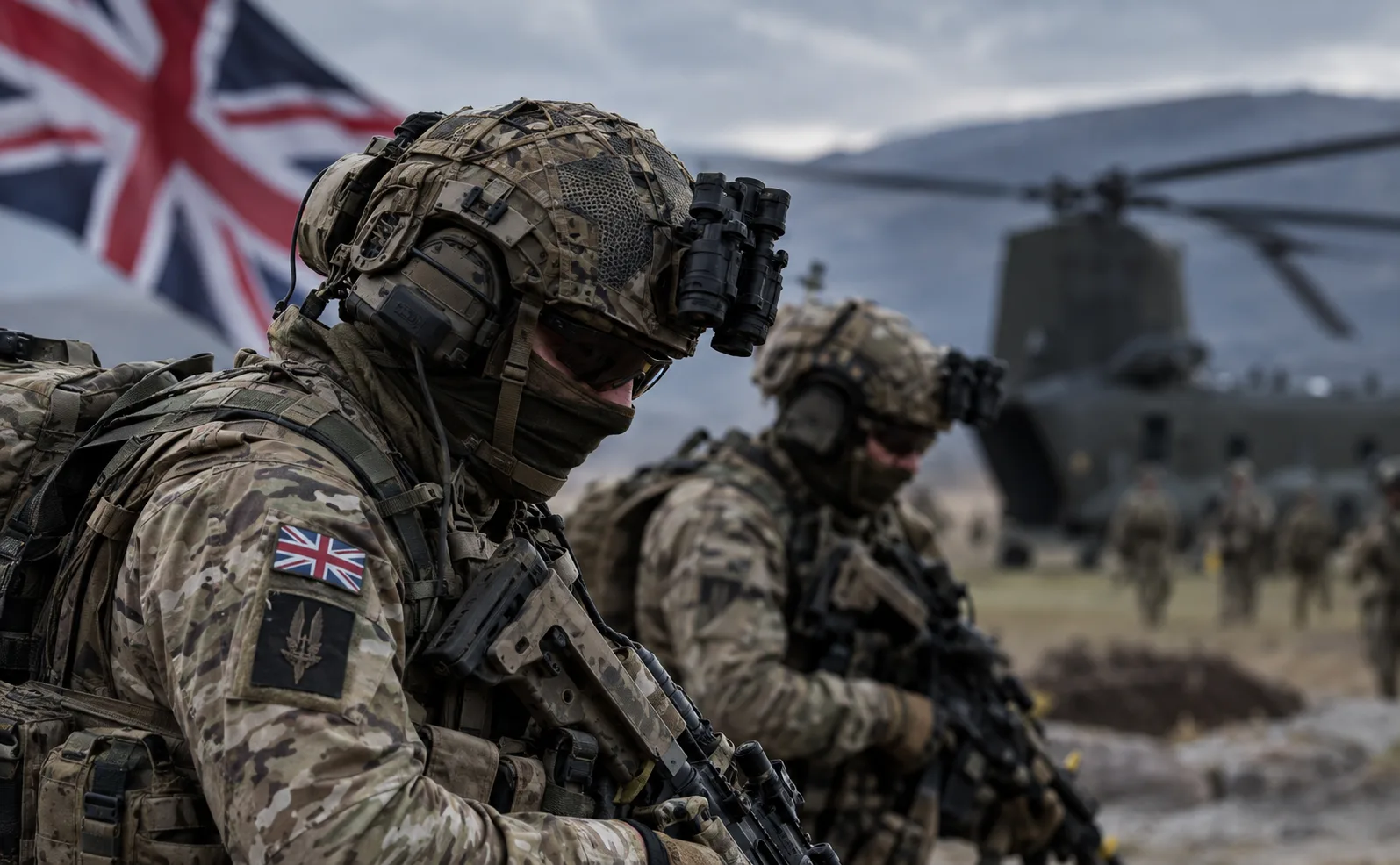
The disclosure was made in a written statement to the High Court on Monday by Jonathan Glasson KC, counsel to the judge chairing the Independent Inquiry relating to Afghanistan.
"In early 2026, as a result of inquiries set in train by the inquiry, the Ministry of Defence identified material that indicated that service personnel deployed on operations may have committed serious offences under the Armed Forces Act 2006," Mr Glasson wrote.
"In accordance with section 113 of that act, the matter was referred by UK special forces to the Defence Serious Crime Command. It is understood that, following a scoping exercise, the service police have paused any criminal investigation into the matter pending the conclusion of the inquiry."
The material relates to a number of detention operations carried out by British personnel in Afghanistan between 2010 and 2013. The Ministry of Defence told the BBC it was considered inappropriate for criminal investigations to be carried out while the inquiry was still running.
It is the first time the inquiry has publicly acknowledged that its findings could lead to criminal prosecutions, the BBC reported.
What the law allows
Schedule 2 of the Armed Forces Act 2006 lists the offences treated as serious for these purposes. They include murder, manslaughter and grievous bodily harm. Murder carries a mandatory life sentence on conviction.
No one has been charged. The referral establishes only that material indicating that offences may have occurred was passed to the service police, who have paused their work.
The allegations under examination
The inquiry is examining allegations that members of the Special Air Service unlawfully killed 80 or more unarmed Afghans, including children and detainees, between 2010 and 2013, and that evidence of wrongdoing was destroyed. It is also examining allegations that senior officials sought to cover up the true circumstances of the killings.
Those allegations remain unproven. The inquiry has published no findings and no one has been charged.
Members of the SAS deny the claims.
Inquiry background
The inquiry was established in 2022 by the then defence secretary, Ben Wallace, and opened in March 2023. It is chaired by Lord Justice Haddon-Cave. It followed more than eight years of reporting by BBC Panorama on the conduct of UK special forces, and it is examining both the allegations against them and the adequacy of earlier investigations.
It has heard evidence from senior military personnel who said they believed extrajudicial killings had taken place. It has also examined concerns that previous investigations into the allegations were ended prematurely.
The High Court challenge
The referral came to light during a separate challenge brought by a senior British military officer who served in Afghanistan and is identified only as Witness IIA126. He is asking the High Court to review the inquiry's refusal to allow him and his lawyers to see restricted evidence.
The case concerns access to evidence and procedural fairness. It is not a ruling on the underlying allegations.
Lord Justice Haddon-Cave previously ruled that evidence from witnesses known as green witnesses could be seen by some individuals from the MoD but not by other witnesses, including IIA126, and their lawyers. A gist of the evidence was provided to others involved in the inquiry, after the witnesses raised fears that their identities would become known.
Kate Grange KC, for the soldier, told the court that he had been prevented from seeing evidence related to an allegation that a person was shot in the head while they may have been sleeping during a deliberate detention operation. She argued that the restriction meant that "basic standards of procedural fairness have not been met".
The inquiry opposes the claim. Mr Glasson said it had adopted a procedure "tailored to meet the extremely high public interest in retaining the secrecy of the green material", and that the soldier's lawyers "overstate the legal significance of the possibility of later criminal investigation".
The MoD said it supports the officer's right to bring the challenge and is paying his legal costs, while taking no position on the merits. Edward Craven KC, representing the relatives of 16 people killed during UK special forces operations in Afghanistan, said the witnesses' fears of adverse consequences from within UK special forces for giving evidence were serious and objectively justified.
The hearing was before Lord Justice Popplewell and Mrs Justice Farbey. Judgment is expected in writing.
Evidence and witnesses
About 150 SAS soldiers who served in Afghanistan could face questioning or requests to provide written evidence as part of the inquiry, The Telegraph reported. Being asked to provide evidence does not mean that an individual is accused of criminal wrongdoing.
The cost and timetable
The wider cost to the Ministry of Defence associated with the inquiry had reached £58m by March 2026, according to figures released to the BBC under freedom of information. The inquiry's own expenditure was £14.68m to the end of the 2024-25 financial year. Seventy-four MoD staff currently spend more than half their working time on inquiry-related work.
When Lord Justice Haddon-Cave opened the inquiry, he said it would aim to report, at least on an interim basis, within 12 to 18 months. It has now been running for more than three and a half years without publishing findings.
The inquiry says its work proved "greater and more complex than it originally envisaged", and that delays by the MoD in disclosing information have affected the timetable. It has said it remains committed to the welfare and safety of UK special forces personnel and to a timely conclusion.
SAS Regimental Association
The SAS Regimental Association, which represents more than 5,000 serving personnel and veterans, has said it remains committed to supporting the inquiry and to a "timely solution". In a statement, it added: "The prolonged nature of the process is itself causing significant and widening harm."
It has said the inquiry poses a significant challenge not only to the regiment's reputation and the wellbeing of its members, but to the operational effectiveness of a key element of national defence.
Concerns within the SAS
Brigadier Ed Butler, president of the association and a former commanding officer of 22 SAS, has warned that repeated legal action is affecting recruitment into the unit, and that some soldiers are deciding against attempting selection.
"I think there's a serious question about the trust between the state and its Armed Forces and quite how far that is being breached," he told The Telegraph. "Has the Government got the special forces and SAS communities' backs? I think it's very questionable."
He has said he knows two fathers, both with sons in the Army, who considered attempting SAS selection and decided against it, citing the inquiry and what he described as the wider lawfare.
Great British PAC reaction
Claire Bullivant, chief executive of Great British PAC, said:
“Our SAS are not criminals. They are some of the bravest and most highly trained soldiers in the world, sent by our country into situations of unimaginable danger to protect Britain and defeat its enemies.
“Yet years after these men served in Afghanistan, they are still being forced to live under the shadow of allegations which remain unproven. No one has even been charged.
“Of course credible evidence of serious wrongdoing must be investigated, but there is a world of difference between investigating evidence and allowing soldiers who risked everything for this country to be subjected to years of uncertainty and suspicion.
“This inquiry was supposed to report within 12 to 18 months. More than three and a half years later, it is still running, the wider cost to the Ministry of Defence has reportedly reached £58 million, and former SAS commanders are warning that the relentless legal pressure is damaging recruitment and trust between our Armed Forces and the state.
“What message does that send to the next generation of young men and women we expect to volunteer to defend us?
“Our servicemen and women need to know that when Britain sends them into battle, Britain will stand behind them when they come home. They should receive due process, the presumption of innocence and the full support of the country they were prepared to die defending.
“Labour must make absolutely clear that it has the backs of our Armed Forces. Britain should be proud of its warriors, not leave them wondering whether decades after risking their lives for their country, their reward will be another lawyer knocking at the door.”
Northern Ireland Troubles Bill
Separately, the association is preparing for a legal fight over the Government's Northern Ireland Troubles Bill, a distinct issue from the Afghanistan inquiry.
SASRA is preparing a legal fighting fund to defend troops, and Brigadier Butler aims to increase the association's fundraising to £2m a year during his time as president. The association has previously sent a pre-action letter to the Northern Ireland Secretary, Hilary Benn, and said it would mount a "robust legal challenge" if the Government does not change course.
The Bill, which would repeal and replace the existing Legacy Act, is awaiting committee stage in the Commons. The first of two committee days is scheduled for 19 October.