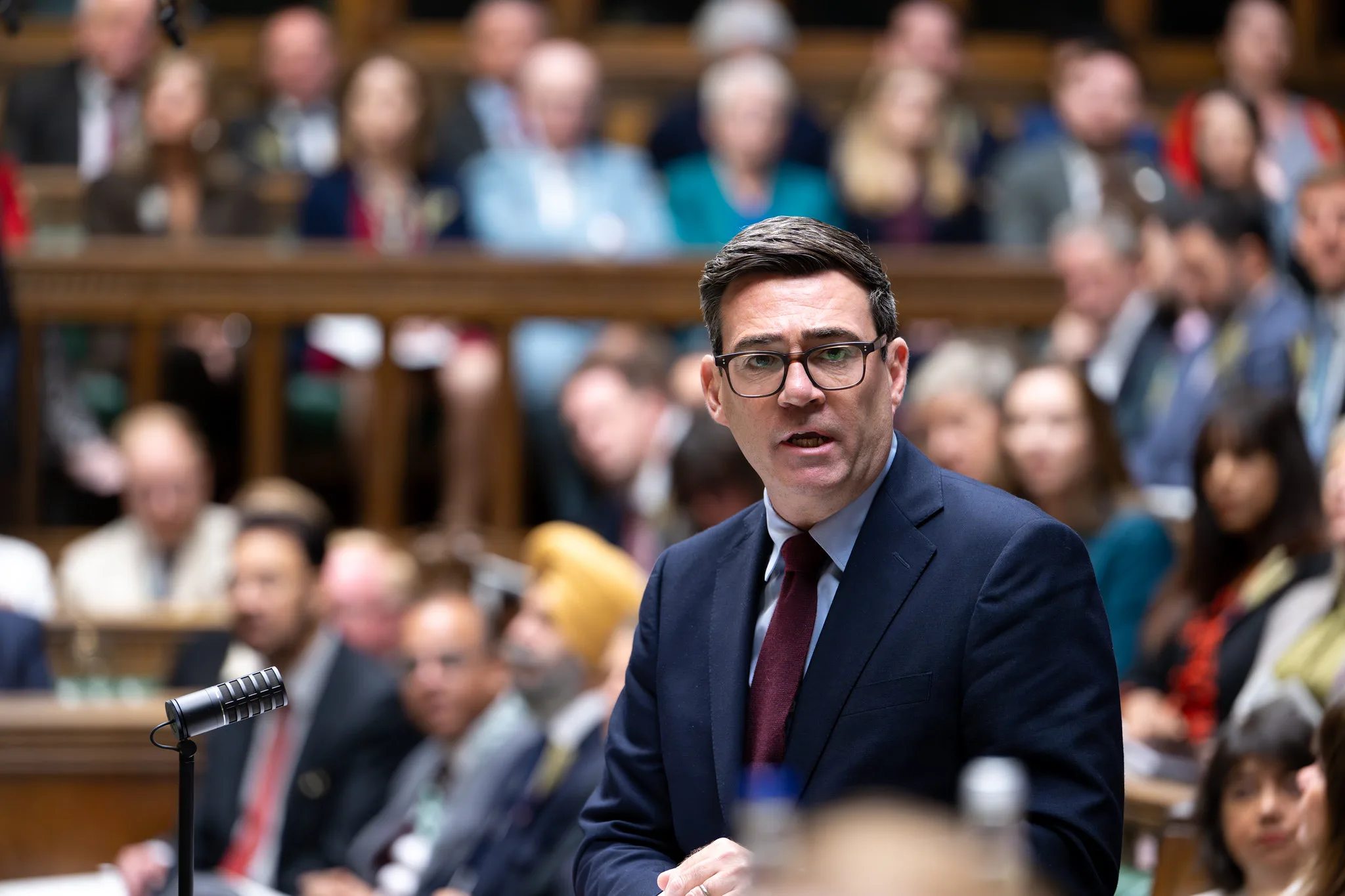
The Brexit argument is back, and this time it started at the top. In a statement to the Commons on Monday, as MPs returned from recess, Prime Minister Andy Burnham said it would be a "dereliction of duty" for Britain not to seek a closer deal with the EU, and confirmed that a summit with Brussels will go ahead on November 20, rescheduled from the summer after Keir Starmer's resignation. "Brexit has done more harm than good", he told Labour's conference in Liverpool last month. In the Commons he urged the country to face up to what the vote has cost.
The summit agenda is practical: a food and drink trade deal, an agreement linking the two emissions trading systems, a youth experience scheme and closer cooperation on immigration. Behind it sits something larger. Burnham remains bound by Starmer's pledge not to rejoin the single market or customs union, but told the BBC it was "possible" that a future manifesto could promise a fresh in-out referendum. The same day, MPs debated a petition, signed by more than 111,000 people, calling on Britain to apply to rejoin.
Burnham cites opinion polls showing a shift towards rejoining since 2016, and the numbers are with him, up to a point. YouGov's tracker puts support for rejoining at 59 per cent, up from 51 per cent when the question was first asked in this form in January 2024, and a separate YouGov referendum poll this month found 52 per cent would vote to go back in. But the small print still bites. YouGov's own research warns the public turns net opposed if Britain could not keep its previous opt-outs, and Reuters noted that support drops when people are asked about contributing to EU budgets and adopting the euro. "I am clear that public opinion currently supports a pragmatic approach like the one I am suggesting," Burnham told MPs.
That is the case for Brussels. The case against it rests on the record since 2016, and the record is not kind to the Prime Minister's premise.
The honest part of his argument comes first. Leaving the single market and customs union carried real costs. The Office for Budget Responsibility projects that the changes to Britain's trading relationship with the EU, under the Trade and Cooperation Agreement, will reduce long-run productivity by around 4 per cent against the counterfactual of continued EU membership. That is a projection built over many years, not a tally of losses to date, and some free-market economists dispute it. Those costs belong to the decision itself. They are a different matter from the failure to use the decision's upside. On the record set out below, that failure sits principally with the Conservative governments of Boris Johnson, Liz Truss and Rishi Sunak, which held the new powers from 2020 to 2024.
The response is the decade's own case study. Boris Johnson's government set up the Brexit Opportunities Unit inside the Cabinet Office in the summer of 2021, under Lord Frost, before the Brexit Freedoms Bill was announced in January 2022. Jacob Rees-Mogg took the ministerial brief in the February 2022 reshuffle, and by the spring the unit was 31 staff strong, by the Institute for Government's count. The Retained EU Law Bill, with Rees-Mogg's sunset clause to sweep away thousands of inherited rules by the end of 2023, was introduced to the Commons that September under Liz Truss's fortnight-old government, with opposition in the chamber led by Labour MPs including Hilary Benn and Stella Creasy. That autumn the unit itself followed its minister to another department. The deadline was abandoned in May 2023 under Rishi Sunak, with ministers conceding that only around 800 laws would go, and Rees-Mogg accused Sunak of breaking his word.
Under Starmer, the direction of travel reversed, and the terms matter here. The agreement set in train in May 2025 is a proposed sanitary and phytosanitary deal covering food, animal and plant health, with dynamic alignment in those sectors, meaning British rules would track Brussels' in that field to remove border checks. That is sector-specific alignment, not membership of the single market, not the customs union and not a return to the EU. But it would mean accepting EU rules in one of the largest areas of regulated trade, which is the part of the referendum argument that never really went away.
There is a simpler explanation for this record of abandoned reform than the one the Prime Minister offers, and readers have been making it all week. For the best part of five decades, trade policy, farm policy, state aid and much else besides were settled in Brussels. British ministers did not have to make those calls, and when the decisions came home in 2020 the muscle was rusty. As one Telegraph reader, Rob Mason, put it: "Brexit per se didn't fail; politicians did."
Burnham was a minister in the Blair and Brown governments, in the years when those calls were made in Brussels, and he is right that the status quo has disappointed. His remedy, though, is closer cooperation rather than a return: sector-specific alignment on food, animal and plant health rules, a link between the two emissions trading schemes and deeper cooperation on migration, with a vow that the public will be the "boss" over any long-term change, though he told the BBC that a future in-out referendum remains "possible". He calls it drawing "a line on a decade of drift and division".
Then there is the question of who, in his telling, is to blame for 2016. On Sunday, on The Rest Is Politics podcast, Burnham said he had asked on entering Number 10 whether Russia interfered in the referendum and "I've had the clear answer that yes, there was". By Monday Downing Street was clarifying that Moscow's attempts were unsuccessful and that the government regards the result as legitimate, with the Prime Minister telling MPs "I am not reopening the referendum. I respect the referendum result". Pressed by Kemi Badenoch for evidence, he pointed to Russian interference in the 2019 election, which he called "a matter of record", and said it was "inconceivable" that 2016 had been the first attempt. That is an inference, not a finding about the result. Boris Johnson, who says he was told as foreign secretary that there was no evidence of successful interference, called the claim "just not true". Nigel Farage went further: "There was no Russian interference, and the Russia hoax has run all the way through this". Leave voters have heard warnings from on high before. In April 2016 Barack Obama came to London to say Britain would be at the "back of the queue" for a trade deal. It voted Leave anyway.
The politics of all this will land on the Prime Minister's own doorstep. He re-entered the Commons only in June, winning the Makerfield by-election with 24,927 votes, 54.8 per cent of those cast, twenty points clear of Reform UK, after the sitting Labour MP Josh Simons resigned to hand him the vacancy. An estimated 65 per cent of Makerfield voters backed Leave in 2016, on the constituency estimates widely used since, though that is a modelled figure rather than an official count. The mood has moved since: polling for Forward Democracy by Opinium found in the final week of the campaign that only 34 per cent of local voters were happy the UK had left. Opinium's James Crouch warned at the time that a future general election could leave Burnham vulnerable, and one Telegraph letter-writer, Carole Doggett, went further this week, warning that a Prime Minister who walks Britain back towards Brussels while sitting for a Leave-voting seat risks becoming the first sitting premier to lose his own seat.
The "dereliction" language is already being used against him. In September, at PMQs, Burnham ruled out paying for higher defence spending through welfare cuts: national security, he said, "can't come at the expense of social security". Badenoch calls his EU opening "lazy thinking" and reopening the Brexit debate "a terrible idea". Ed Davey, on the other flank, wants full membership. And one of the Prime Minister's own Labour colleagues, Jonathan Hinder, MP for Pendle and Clitheroe, urged him on Monday night to drop any suggestion that Brexit could be reversed: "There's no way this would be good for our politics if we reopened it", he told the BBC's Newsnight. Between all of them stands a Prime Minister with an argument to sell and a country that has heard rather a lot of arguments.
Burnham is entitled to his verdict on 2016, and to the polls that partly agree with him. The decade he calls one of drift and division was real enough. It just was not the voters' doing. The documented record runs from the Brexit Opportunities Unit created under Boris Johnson, which had followed its minister out of the Cabinet Office by the autumn of 2022, to the Retained EU Law Bill introduced under Liz Truss, to the revocation deadline Rishi Sunak abandoned in 2023, to a Labour reset that now prefers sector-specific alignment to any burst of reform. Those are identifiable governments taking identifiable decisions, and behind them stands Rob Mason's verdict in the Telegraph's letters page: "Brexit per se didn't fail; politicians did."
Great British PAC reaction
Steve Wright, Head of Brexit Campaign of Great British PAC, said:
"Brexit returned sovereign control of UK laws to where it rightly belonged, the UK Parliament and its devolved administrations. Our politicians hold within their hands the ability to use this power, but over the past five years we have seen only a reluctance to use it fully, or in recent times a wish to give that power away to others to wield, outside of our democratic control. Our political class, through their action or lack thereof, betray the trust that the British people have put in them."