
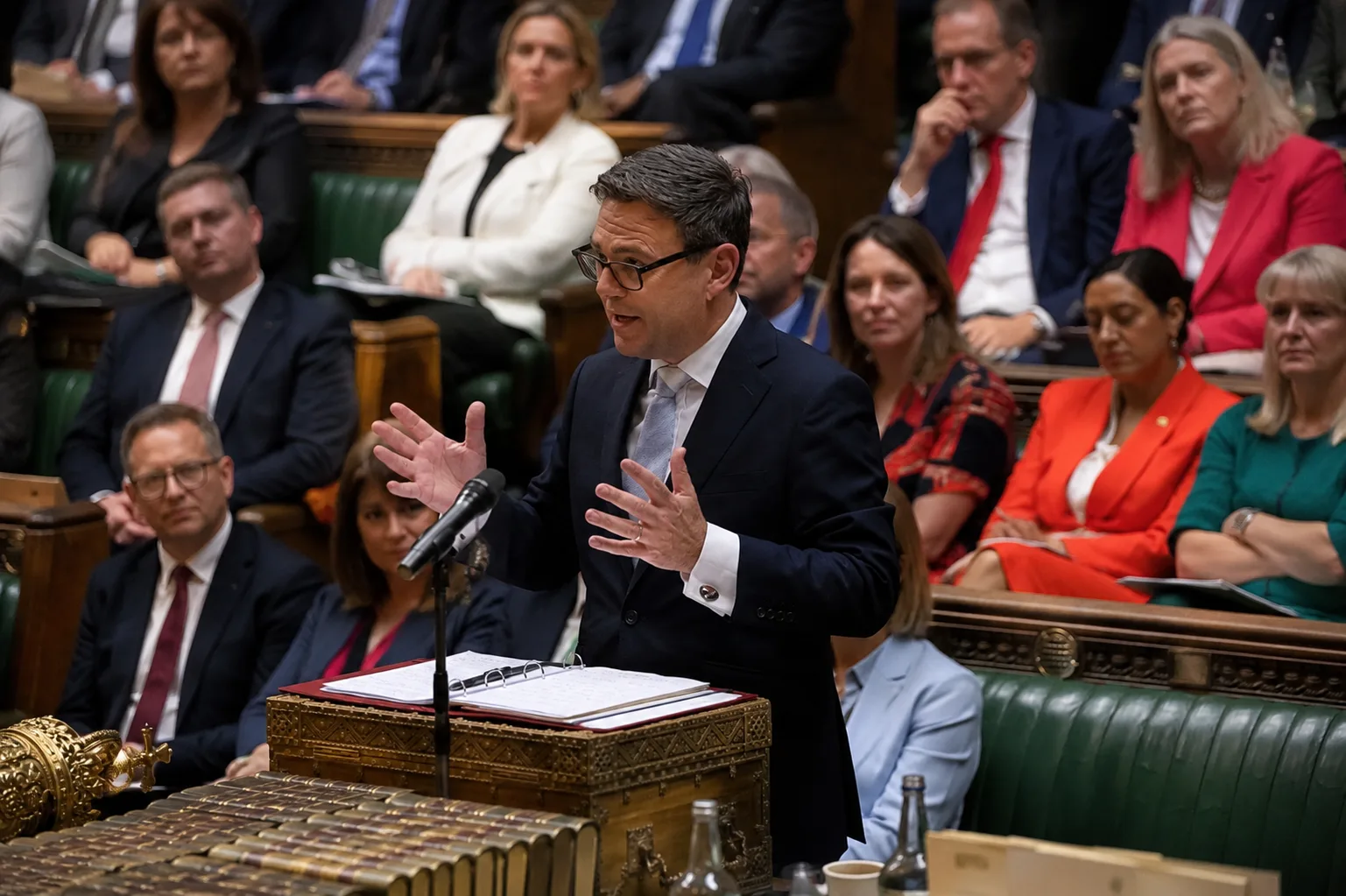
Prime Minister rejects the Conservative plan to find defence money by cutting £4bn from housing benefit, as Badenoch asks who is going to pay
Andy Burnham has ruled out cutting benefits to help pay for Britain's defence, telling the Commons that national security "can't come at the expense of social security".
The line came at Prime Minister's Questions, where Kemi Badenoch demanded to know whether the government would commit to spending 3% of GDP on defence by 2030, and how it intended to pay for it. Mr Burnham said his commitment to defence was "absolute" and that a target date for reaching 3% would be set out at the spending review in the spring. He also pointed to the appointment of John Healey as chancellor, saying he had brought back the former defence secretary, who resigned under Sir Keir Starmer over the failure to commit to 3% of GDP on defence by 2030 "because of his strong commitment to the defence of this nation".
Badenoch was not buying it. 2035, she noted, was "a decade away" while "the threats are now". She asked the unflattering question directly: was the Prime Minister "unable" or "just unwilling" to meet the 2030 target? His answer was less direct. "This chancellor of all chancellors will be willing to provide that funding to our armed forces," he said.
The real flashpoint came over the Conservative plan to fund part of the increase by saving at least £4bn through reforms to housing benefit. Mr Burnham rejected it outright.
"I don't think, myself, that taking £4bn out of housing benefit is going to get the right consensus around this issue," he said, warning it would create levels of homelessness "that we wouldn't have seen before, hundreds of thousands of children in temporary accommodation".
"Yes, we do everything to support our national security, but it can't come at the expense of social security. This side of the House will not be forced to choose between the two."
Burnham's answer leaves the central funding question unresolved: how Labour intends to increase defence spending while protecting welfare from the cuts proposed by the Conservatives.
The alternative Mr Burnham offers is slower and harder to cost. He said he would bring the welfare budget down by tackling the nearly one million young people in the UK who are not in education, employment or training, through better education, more support for young people and greater mental health provision. "That's the Labour way to get the welfare bill down," he said. "That is the right way to fund defence." The government has asked Alan Milburn, the former Labour minister, to examine the issue, and his final recommendations are expected shortly.
Claire Bullivant, founder of the Great British PAC, challenged Burnham's argument that the two priorities should not be placed in competition.
"Andy Burnham has got the priorities of government dangerously back to front. The first duty of any Prime Minister is to keep the country and its people safe. Without national security, ultimately there is no social security.
Of course Britain must protect those who genuinely need help, but we cannot continue treating an ever-expanding welfare bill as untouchable while our Armed Forces are being asked to do more in an increasingly dangerous world. Government is about making difficult choices, reforming systems that are not working and ensuring taxpayers' money is spent where it is most needed.
At a time when Britain faces growing threats abroad, our Armed Forces need proper investment, equipment and training. Telling the country that defence must wait because welfare cannot be reformed is not compassion, it is a failure to understand the most basic responsibility of government.
A strong country should be capable of providing a safety net for those who genuinely need it while also maintaining the military strength necessary to defend our people, our territory and our freedoms. Britain should not have to choose between the two, but national defence cannot be the thing that is continually asked to wait."
The numbers give the attack its edge. Spending on benefits has risen sharply in recent years and is forecast to rise to £408.6bn in 2030/31, according to figures from the Department for Work and Pensions. Mr Burnham's team was at pains to stress that ‘national security is the most important duty of any government’, and that he had been consistent about getting the welfare bill down. That, they insist, does not mean "crude cuts" that could put people into crisis, make families homeless and push costs back onto the state.
Badenoch called the Prime Minister's comments "unbelievable". "We need to fund our defence, not spend all of our money on welfare," she said. She also repeated the charge that he is "continuity Keir". "He's pretending that he's the change candidate. But the fact is, he's still failing to cut welfare." The attack also draws on the record of the previous government. As prime minister, Sir Keir attempted to cut disability benefits and was forced to row back in the face of opposition from Labour MPs.
The Conservatives were quick to frame the exchange as a defining moment. A party spokesperson said: "Britain heard it loud and clear today: Andy Burnham will not cut welfare to fund the defence of our country. The prime minister is prioritising the ballooning benefits bill over our national security. Shameful. This is not leadership, it is surrender."
None of this answers the question that actually matters, which was never whether the government wants to spend more on defence, but where the money comes from. The answer, for now, is a target date in the spring and a promise that nobody has to choose. The Commons heard the promise this afternoon. It is still waiting to hear the price.