The British Indian Ocean Territory (BIOT) Court of Appeal has confirmed that it will hand down its judgment at 10am UK time in the case brought by the Commissioner for the British Indian Ocean Territory against Louis Misley Mandarin and other Chagossian claimants.
The decision follows an appeal hearing in July and concerns an extraordinary legal battle over the right of Chagossians to return to, visit and remain on the islands from which their people were forcibly displaced decades ago.
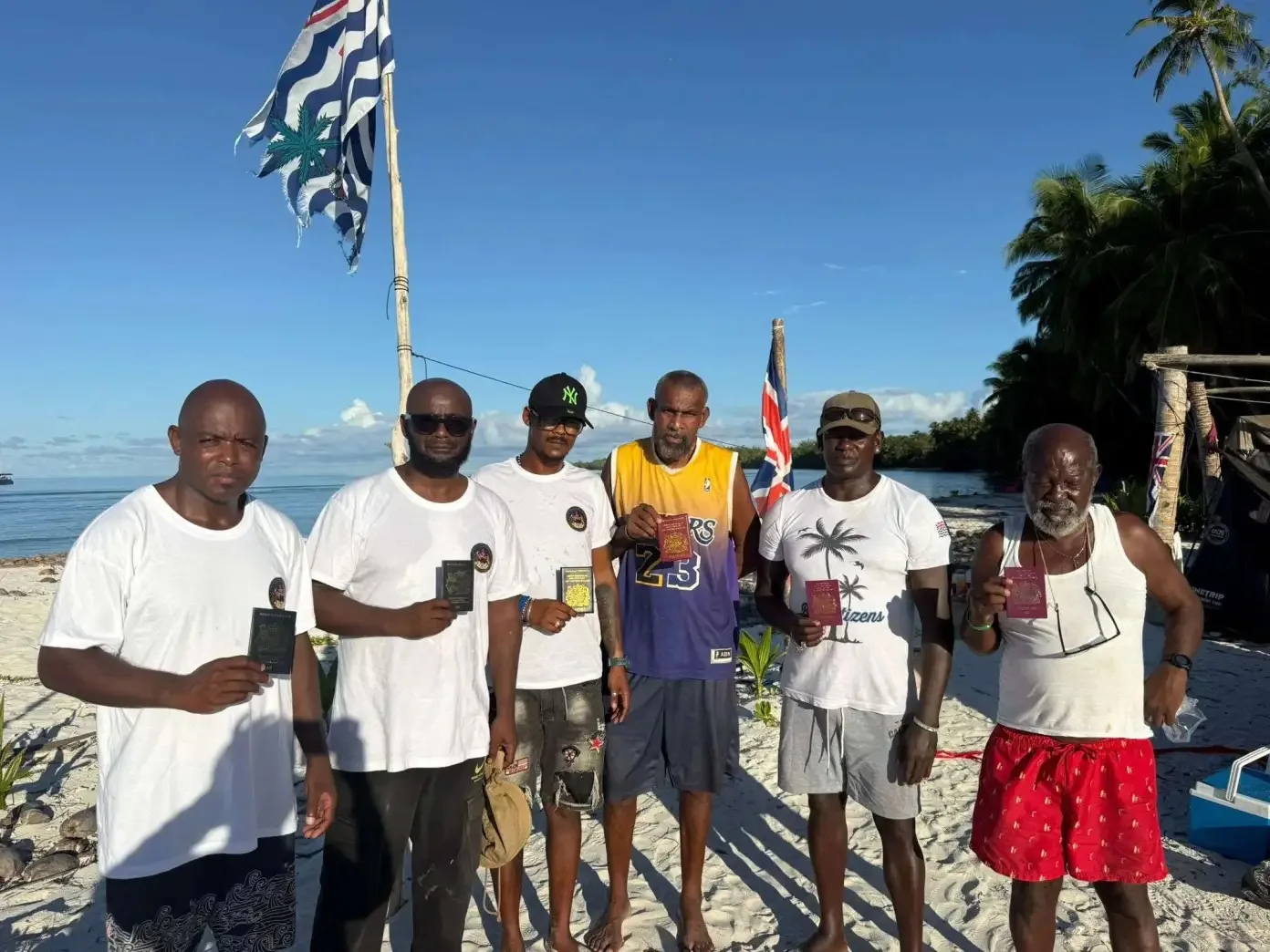
At the heart of the dispute are Chagossians who returned to Île du Coin, part of the Peros Banhos atoll, in February this year.
Among them are Misley Mandarin, Interim First Minister of the Chagossian Government in Exile, and his father, Louis Michel Mandarin, who was born on the islands and removed as a child.
Shortly after their arrival, the British Indian Ocean Territory authorities issued removal notices requiring them to leave.
However, on 19 February, the BIOT Supreme Court granted an emergency injunction preventing their removal while the legal challenge was considered.
In March, the Chagossians secured a significant victory when the court ruled that the constitutional provision denying a right of abode in the territory was unlawful and quashed the removal notices.
The judgment did not, however, establish an unrestricted right to remain on the islands without the necessary permits.
The BIOT authorities appealed, and the case was heard by the Court of Appeal in July.
Now, almost four months later, the judges are preparing to deliver their decision.
Could Labour once again attempt to remove Chagossians from Chagos?
The forthcoming judgment raises a deeply troubling possibility: that a Labour Government could once again seek to remove Chagossians from their ancestral homeland.
The existing injunction has provided important protection against removal. However, the precise position following Thursday's judgment will depend on the court's decision and any accompanying orders.
If the appeal goes against the Chagossians, the legal team may seek to pursue the matter before the Judicial Committee of the Privy Council, the final appellate court for the territory.
Any further appeal would be subject to the applicable legal procedures, and the continuation of interim protection would need to be addressed separately.
For the Chagossians living on the islands, this is far more than an abstract legal argument.
It concerns whether they can remain on the land of their ancestors without once again facing removal by the British authorities.
There would be profound moral and reputational questions for Britain if the Government sought to remove Chagossians from their homeland while they were still pursuing available legal remedies.
The history of the Chagos Islands is already marked by the forced displacement of an entire community. The possibility of further removals, more than half a century later, deserves the closest public scrutiny.
A question of justice and Britain's responsibilities
The Chagossians' legal challenge has exposed difficult questions about the treatment of a people whose connection to their homeland long predates the current political dispute over sovereignty.
The Government maintains that immigration controls and the territory's constitutional arrangements must be administered lawfully. The courts must determine the legal validity of the measures challenged, including the limits of executive authority and the rights of those affected.
But legal arguments the Labour Government sets themselves cannot obscure the human consequences.
These are people who have spent decades separated from their homeland. Some are now elderly. Their opportunities to return, visit family graves and reconnect with the islands are increasingly limited by time.
The Great British PAC believes their rights, heritage and wishes must be central to decisions affecting their future.
The organisation has helped fund the Chagossians' legal challenges and provided practical assistance to those who have returned to the islands, including arranging deliveries of essential supplies.
That support has been made possible by the generosity of PAC members and donors who believe the Chagossian people deserve a fair hearing and proper consideration of their rights.
The legal battle is far from over
Thursday's judgment concerns the BIOT proceedings and is separate from the English Judicial Review challenging the Government's decision-making surrounding the proposed transfer of sovereignty over the Chagos Islands to Mauritius.
In that separate case, heard in the High Court last week, Chagossian claimants are seeking permission to proceed with a fuller challenge concerning, among other matters, the alleged failure to consult their community adequately. The judgement for that case is also due within the next week.
The two cases raise different legal questions, but both concern the future of the Chagossian people and the extent to which their rights and interests are protected.
The Great British PAC remains committed to supporting the Chagossians as these proceedings continue.
Whatever Thursday's judgment brings, the central question remains: how can Britain reconcile its responsibilities towards the Chagossian people with any renewed attempt to remove them from the islands they call home?
The Court of Appeal's decision will be delivered electronically, with the full judgment and a press summary due to be published by the British Indian Ocean Territory Administration.
For the Chagossians waiting on their islands, thousands of miles from London, Thursday's ruling could be one of the most consequential moments in their long struggle to return home.