Labour is facing fresh questions over its competence and credibility after demanding a 20 per cent reduction in Whitehall's running costs while failing to publish the workforce plan intended to explain how the savings will be achieved.
As Cabinet Secretary Dame Antonia Romeo prepares to deliver a speech acknowledging fundamental failures within the Civil Service, Great British PAC has accused the Government of announcing ambitious financial targets without providing taxpayers with the evidence, transparency or detailed planning needed to justify them.
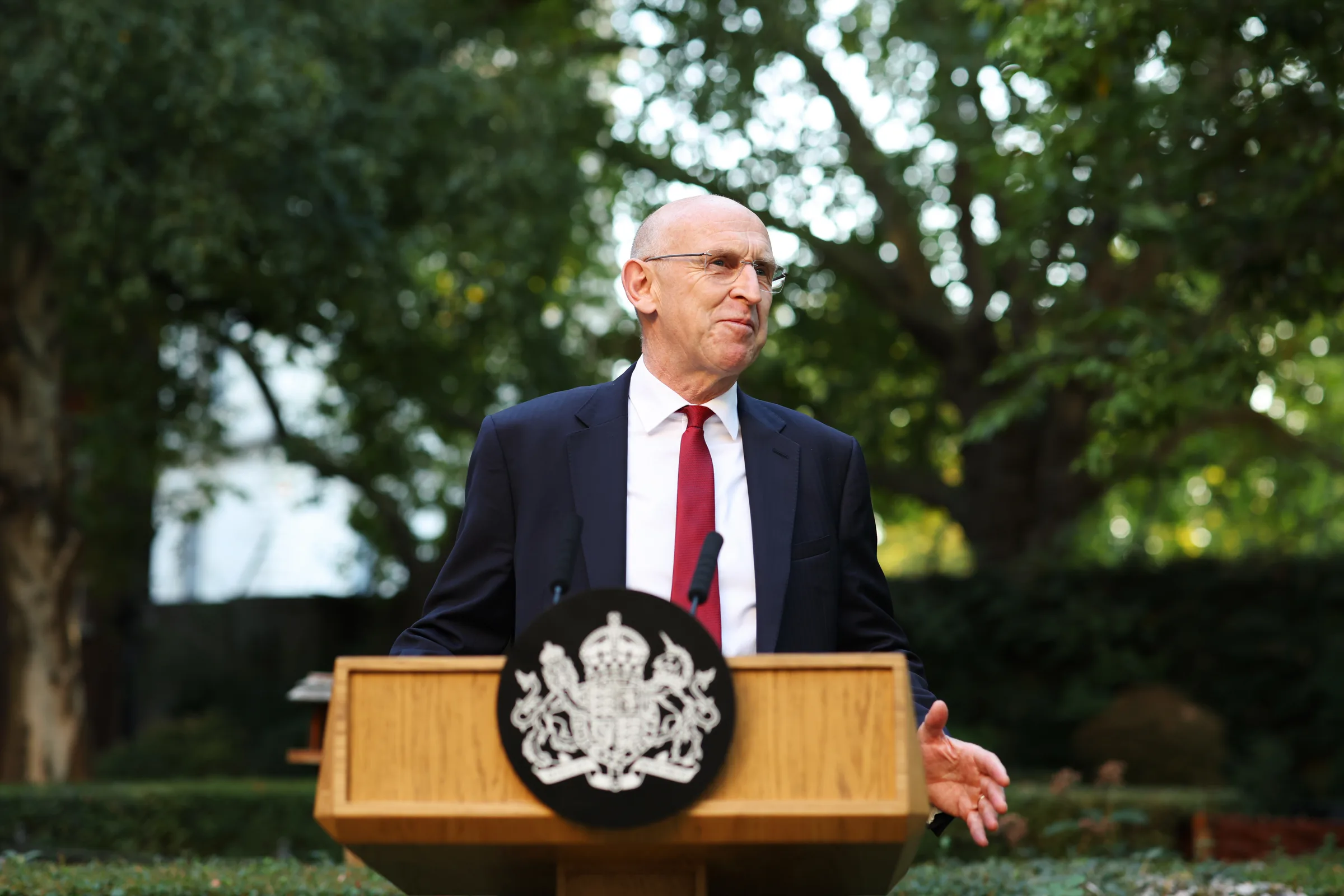
Chancellor John Healey's October Budget increased the target for cutting departmental administration budgets from 16 per cent to 20 per cent in real terms by 2029-30, promising an additional £595 million in annual savings compared with the Government's previous plans.
But the strategic workforce plan, originally expected alongside the 2025 Spending Review and subsequently delayed until the first half of 2026, has still not been published.
Ministers have therefore raised their savings target without publicly setting out which jobs will disappear, which departments will shrink, how the changes will be implemented or what safeguards will protect essential public services.
Great British PAC says the contrast between Labour's promises and its failure to deliver a clear plan raises serious questions about the Government's ability to manage public money.
Whitehall chief admits system is failing
Dame Antonia Romeo, appointed Cabinet Secretary in February, is expected to deliver a striking assessment of the organisation she leads during an address at the London School of Economics this evening, Tuesday 10 November.
She will acknowledge that the Civil Service operates with incentives that discourage innovation and that fundamental reform is needed to modernise Whitehall.
The significance of the intervention should not be underestimated. Britain's most senior civil servant is effectively acknowledging that the machinery responsible for implementing government policy is not structured to deliver the transformation ministers are demanding.
Yet Great British PAC argues that acknowledging the problem is very different from fixing it.
Labour came to power promising to modernise government, improve public services, reduce waste and devolve power away from Whitehall.
More than two years later, ministers are still promising sweeping reform, while the detailed workforce strategy needed to support their latest spending commitments remains unpublished.
The responsibility for that failure lies with the Government, not with the civil servants tasked with implementing its decisions.
£595 million in promised savings, but where is the evidence?
The October Budget set out a series of figures that Great British PAC believes demand considerably greater scrutiny.
The Government's decision to increase the departmental administration savings target from 16 to 20 per cent is forecast to produce an additional £185 million in 2027-28, £405 million in 2028-29 and £595 million in 2029-30.
These are projected savings, not money already recovered for taxpayers.
At the same time, the Treasury has announced £35 million to establish GovAI, a new organisation intended to improve Civil Service productivity through artificial intelligence.
A further £50 million has been allocated to a Civil Service AI transformation fund, financed through reinvestment of planned administration savings.
Chancellor Healey has also spoken of AI supporting a further £600 million in back-office savings.
However, the precise relationship between that £600 million figure and the £595 million Budget forecast has not been publicly reconciled. The figures should not be treated as separate savings that can simply be added together.
Nor has the Government published a standalone costing demonstrating precisely how much of the planned reduction will be delivered through AI.
Great British PAC supports technological innovation where it produces genuine efficiencies, but questions the credibility of allocating funds against projected savings before the underlying productivity gains have been demonstrated.
Taxpayers deserve to know what the technology will cost, what measurable improvements it will deliver and how ministers intend to determine whether the investment represents value for money.
Civil Service grows while taxpayers wait for reform
The Government's own workforce statistics reveal the scale of the challenge.
On 31 March 2026, the Civil Service employed 557,825 people, equivalent to 523,795 full-time positions.
According to analysis by the Institute for Government, the workforce had grown by approximately 35 per cent from its 2016 low point to the third quarter of 2025, an increase of more than 136,000 people.
Some of that expansion reflected the demands of Brexit and the pandemic. Nevertheless, the figures raise legitimate questions about whether the long-term structure of Whitehall remains appropriate.
The composition of the workforce has also changed substantially.
In 2016, 62.1 per cent of civil servants worked at Executive Officer grade or above. By March 2026, that proportion had increased to 75.5 per cent.
Meanwhile, the proportion employed at Grades 6 and 7 rose from 9.7 per cent to 16.7 per cent.
The median Civil Service salary now stands at £37,820, six per cent higher than a year earlier.
These figures do not in themselves establish that the expansion is unjustified. But they make it even more important for ministers to demonstrate that taxpayers are receiving improvements in public services proportionate to the cost.
The Institute for Government has also identified a 116 per cent increase in the Civil Service policy profession over the past decade.
Great British PAC argues that ministers must explain whether the growth in policy and administrative functions has delivered better outcomes for the public, or whether Whitehall has become increasingly expensive without a corresponding improvement in performance.
Sickness absence and failed exit schemes add to questions
Other official statistics reinforce concerns about the management of the Civil Service.
Employees lost an average of 8.2 working days to sickness in the year to March 2025, compared with 7.8 the previous year.
Almost half of long-term sickness absence was attributed to mental ill-health, while 49 per cent of civil servants recorded no sickness absence whatsoever.
The figures point to significant differences across grades and underline the importance of effective workforce management rather than indiscriminate criticism of public servants.
Meanwhile, a National Audit Office investigation found that departments had applied to remove only 30 individuals through a pilot mutually agreed exit scheme by early August 2025.
The Institute for Government has warned that relying heavily on voluntary departures can produce uneven results and risk losing experienced, high-performing employees rather than addressing underlying structural problems.
Great British PAC argues that the Government needs a credible, properly costed strategy for identifying unnecessary bureaucracy, retaining essential expertise and improving productivity.
Simply announcing another savings target will not deliver those changes.
Labour's devolution promises face another credibility test
The Government has also promised to transfer greater power, funding and accountability away from Whitehall to local leaders.
But the latest figures illustrate the scale of the challenge.
Around 107,810 civil servants, 19.4 per cent of the workforce, are based in London.
The capital also accounts for 35.1 per cent of Grades 6 and 7 and Senior Civil Service posts.
Great British PAC questions how Labour intends to create a smaller, more strategic centre of government while significant concentrations of senior decision-making remain in London.
Prime Minister Andy Burnham's proposed 10-year programme, expected to include further devolution and a reduction in the number of quangos, has itself been delayed until the new year.
The Government must demonstrate that devolution will mean genuine transfers of authority and resources, rather than moving responsibilities while allowing central bureaucracy to remain largely unchanged.
There is also a danger that apparently successful Whitehall spending reductions simply shift costs onto local councils, public bodies or other parts of the public sector.
Such changes might improve departmental balance sheets without delivering any genuine saving to taxpayers.
'You cannot run a country on wishful thinking'
Claire Bullivant, Chief Executive Officer of Great British PAC, said:
"Labour has become a government of grand announcements, disappearing plans and promises that never seem to materialise. Now we're being told Whitehall will save hundreds of millions of pounds, yet ministers cannot even produce the workforce plan to explain how they're going to do it.
"John Healey seems to think he can pluck a savings target out of thin air, throw in a few fashionable promises about artificial intelligence, and call it reform. Well, taxpayers aren't fools. You cannot run a country on wishful thinking and PowerPoint presentations.
"The British public work hard for their money. They have every right to expect a government that knows where it's going, what it's spending and what it's actually achieving.
"Labour promised to fix the machinery of government. Instead, it has given us another deadline, another set of figures and another excuse. If ministers cannot explain how they intend to save £595 million, why on earth should anyone trust them to manage the billions they already spend?
"Britain doesn't need another Labour rebranding exercise. It needs competence, accountability and a government that understands taxpayers' money is not its personal plaything."
Government accountability must come before more promises
Great British PAC is now calling on Labour to publish the missing strategic workforce plan, provide a full departmental breakdown of proposed reductions and demonstrate how frontline services will be protected.
It is also demanding a transparent assessment of the Government's AI investment programme, including implementation costs, productivity assumptions and independently measurable outcomes.
The organisation believes departments should be required to publish annual performance data setting out administration spending, workforce changes, service standards and the actual savings delivered.
Where costs are transferred to local authorities or other public bodies, those transfers must be disclosed rather than presented as genuine efficiencies.
Great British PAC also wants ministers to explain who will be held accountable if the promised savings fail to materialise.
The questions are particularly important as the Government prepares to implement further spending restraint while simultaneously promising improvements in public services.
Dame Antonia Romeo's forthcoming speech may provide a frank assessment of the problems facing Whitehall, but it cannot substitute for the detailed decisions ministers are responsible for making.
The Cabinet Secretary can diagnose the problems. It is Labour's responsibility to deliver the cure.
For taxpayers already facing considerable financial pressures, the Government's repeated assurances are no longer enough.
Great British PAC argues that Britain needs a Civil Service that is efficient, accountable, innovative and focused on delivering results, rather than one measured by the number of strategies announced or reforms promised.
Until ministers produce the missing workforce plan, establish a credible basis for their savings forecasts and demonstrate how public services will improve, Labour's latest reform agenda remains exactly that: another promise awaiting delivery.
Great British PAC's message to the Government is simple: stop announcing reform, start delivering it, and show taxpayers where their money is going.