
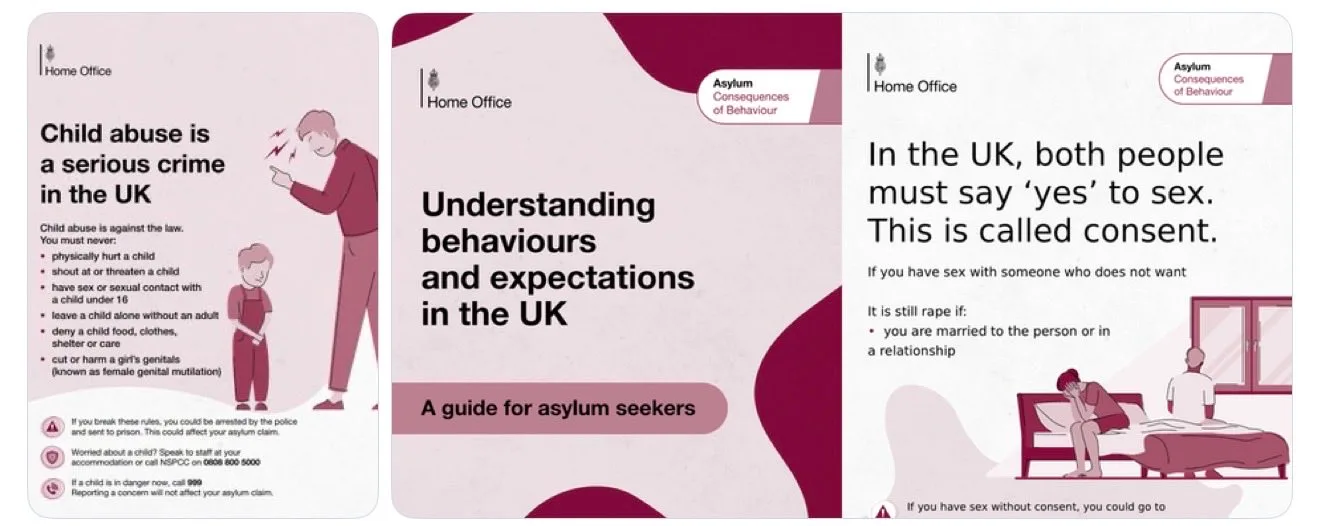
The Home Office has published a series of leaflets telling asylum seekers that rape, domestic abuse, child abuse, forced marriage and female genital mutilation are criminal offences in the United Kingdom. The guidance also explains that women have equal rights, that consent is required within marriage, and that people who commit offences can be arrested, imprisoned and placed at risk of losing asylum accommodation and support.
Great British PAC is asking a question that Westminster has repeatedly avoided: why should British taxpayers have to fund translated instruction manuals explaining that British women and children must not be raped, abused, threatened or harmed?
The documents are contained in the Home Office's official “Understanding behaviours and expectations in the UK” booklet, together with separate leaflets on child abuse, domestic abuse, and asylum accommodation.
The principal booklet is aimed specifically at asylum seekers. It states that laws and customs in the United Kingdom “may be different from your home country” and warns that failure to follow UK law could result in police action, the loss of asylum support or consequences for an asylum claim.
The guidance is not limited to migrants. It says the rules apply to “everyone living here”. That means the protections described in the documents apply to all victims, including British women, British children and other members of the public, regardless of their nationality or background. The Home Office documents do not themselves use the phrase “British women and children”, but their central message is clear, British law protects everyone.
Rape and sexual offences
The booklet's section on sex and consent is explicit. It says that “both people must agree to sex or sexual contact of any kind” and that consent must be given “freely, without threat or pressure”.
It also states that a person can change their mind at any time, and that someone who is asleep, drunk or unable to respond “cannot consent”. Crucially, the guidance makes clear that marriage is not an exemption.
“Consent is needed in every situation,” the Home Office says. “This means even if you are married or in a relationship with someone, they must consent to sex every time.”
The booklet then defines the offence directly: “If you have sex with someone without their consent, this is called rape. Rape is a serious crime in the UK.” It warns that a person convicted of such conduct could go to prison, lose support and accommodation, and face consequences for their asylum claim.
The guidance also says that anyone must “never use threat, force or pressure to make someone have sex” and must “stop if they say no or change their mind”. It further states that sex with anyone under 16 is a serious crime, “even if they say yes”.
There is no qualification in the document based on the victim's nationality. The rules therefore apply equally where the victim is a British woman, a British child, another asylum seeker or any other person in the United Kingdom.
Domestic abuse is not a private family matter
The separate Home Office domestic abuse leaflet states: “Domestic abuse is a crime in the UK.” It explains that abuse can be physical, emotional, financial, sexual or controlling.
The leaflet identifies conduct such as hitting, pushing, grabbing, threats against a partner or their children, checking a partner's phone, controlling where they go, restricting who they see, taking their money and forcing them to perform unwanted sexual acts.
It states that sexual abuse is wrong “even if you are married”. It also describes honour based abuse, forced marriage and female genital mutilation as criminal conduct, adding that perpetrators “can be put in prison”.
The main booklet gives similar warnings. It says domestic abuse can include physical violence, threats, controlling behaviour, emotional abuse and taking away a person's passport or identity documents. It tells readers that they are expected to treat partners and family members with respect, allow them to make their own choices, and “never physically or verbally abuse or control them”.
The consequences are stated in plain terms. A person who commits domestic abuse could be arrested, imprisoned, lose accommodation and support, and face an impact on their asylum claim.
The documents also make clear that victims can seek help without jeopardising an asylum application. The domestic abuse leaflet says reporting abuse will not affect an asylum claim, and that the Home Office may provide safe accommodation away from the alleged abuser.
Protecting children
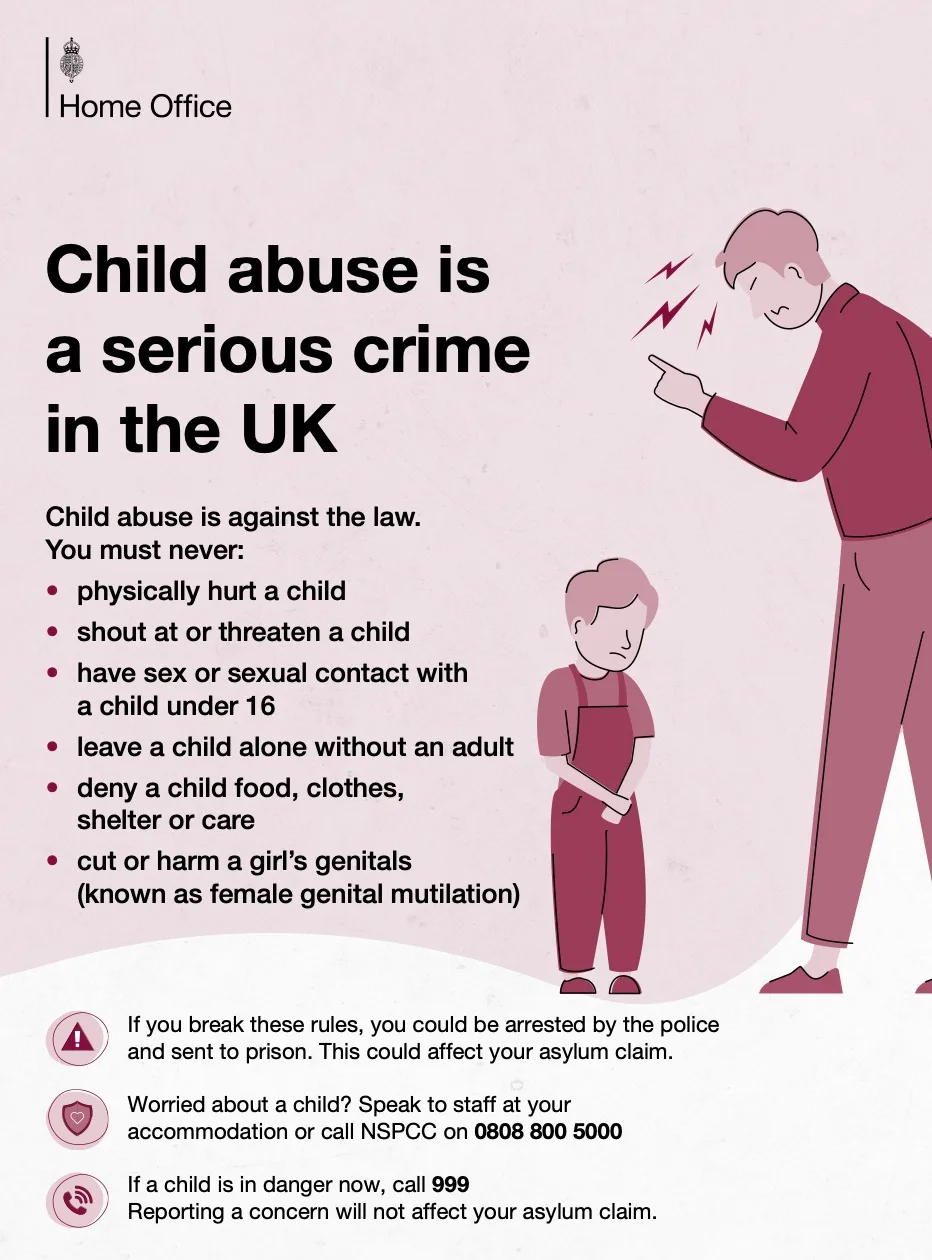
The child protection leaflet states that “the law protects all children from harm”. It warns that conduct allowed in some countries may be illegal in the United Kingdom.
The Home Office defines physical child abuse as “hitting, smacking, shaking or hurting a child in any way”. It says that using violence to discipline a child is not permitted and instructs parents: “You must not hit, smack or use violence against your child in any way. This includes using objects like belts or sticks.”
The leaflet also addresses neglect. It says children must receive sufficient food, clean clothing, healthcare and a safe place to live. It warns against leaving young children alone, stating that babies and toddlers must never be left alone, children under 12 should not be left alone for long periods, and children under 16 should not be left alone overnight.
Sexual abuse is addressed separately. The leaflet says that any sex or sexual contact with a child under 16 is a serious crime, including taking or sharing sexual or intimate images of children.
It also identifies female genital mutilation and forcing a child to marry as serious crimes in the United Kingdom. These rules apply to every child in the country, including British children and children seeking asylum.
The cost to the taxpayer
The political controversy is not only about the content of the leaflets. It is also about the cost of the asylum accommodation system in which such materials are distributed.
The Home Office has previously estimated the average cost of accommodating an asylum seeker at £23.25 per person per night in dispersal accommodation and £144 per person per night in hotels, according to its official accommodation announcement. The Migration Observatory estimated the average hotel cost at approximately £170 per person per day in 2024,25.
The House of Commons Home Affairs Committee reported that the projected cost of asylum accommodation contracts covering the period from 2019 to 2029 had risen from £4.5 billion to £15.3 billion. The figures and wider findings are set out in the Committee's report on asylum accommodation.
These costs cover accommodation and related services, not simply the printing of leaflets. Nevertheless, the documents have become a symbol of a system that is spending substantial sums to house asylum seekers while also explaining the most basic limits of acceptable behaviour.
Great British PAC's position is straightforward. Anyone who comes to Britain, whether legally or irregularly, must obey British law. No person has the right to rape a woman, abuse a partner, beat a child, force a marriage, mutilate a girl or commit any other crime. Victims must be protected, offenders must be prosecuted, and immigration status must not become a shield against criminal accountability.
But the Government must also answer the wider question. Why has Britain reached the point where the Home Office believes it necessary to issue formal guidance explaining that a wife must consent to sex, that children must not be beaten with belts, and that domestic violence is not normal family behaviour?
The leaflets may provide useful information to people unfamiliar with British law. They may also help victims understand where to obtain support. Those purposes are legitimate. What remains legitimate to ask, however, is why taxpayers are financing a system in which such elementary principles must be explained to adults as part of their arrival and accommodation process.
The answer cannot be that Britain should tolerate crime because offenders are asylum seekers. Nor can it be that victims should carry the burden of cultural accommodation. The standard must be the same for everyone: one law, one expectation, one consequence.
The question Great British PAC puts to Parliament is therefore direct: why must British taxpayers accept the risks, fund the accommodation and pay for the guidance, while being told that the system cannot guarantee that those entering the country already understand that British women and children are not to be raped, abused or harmed?