
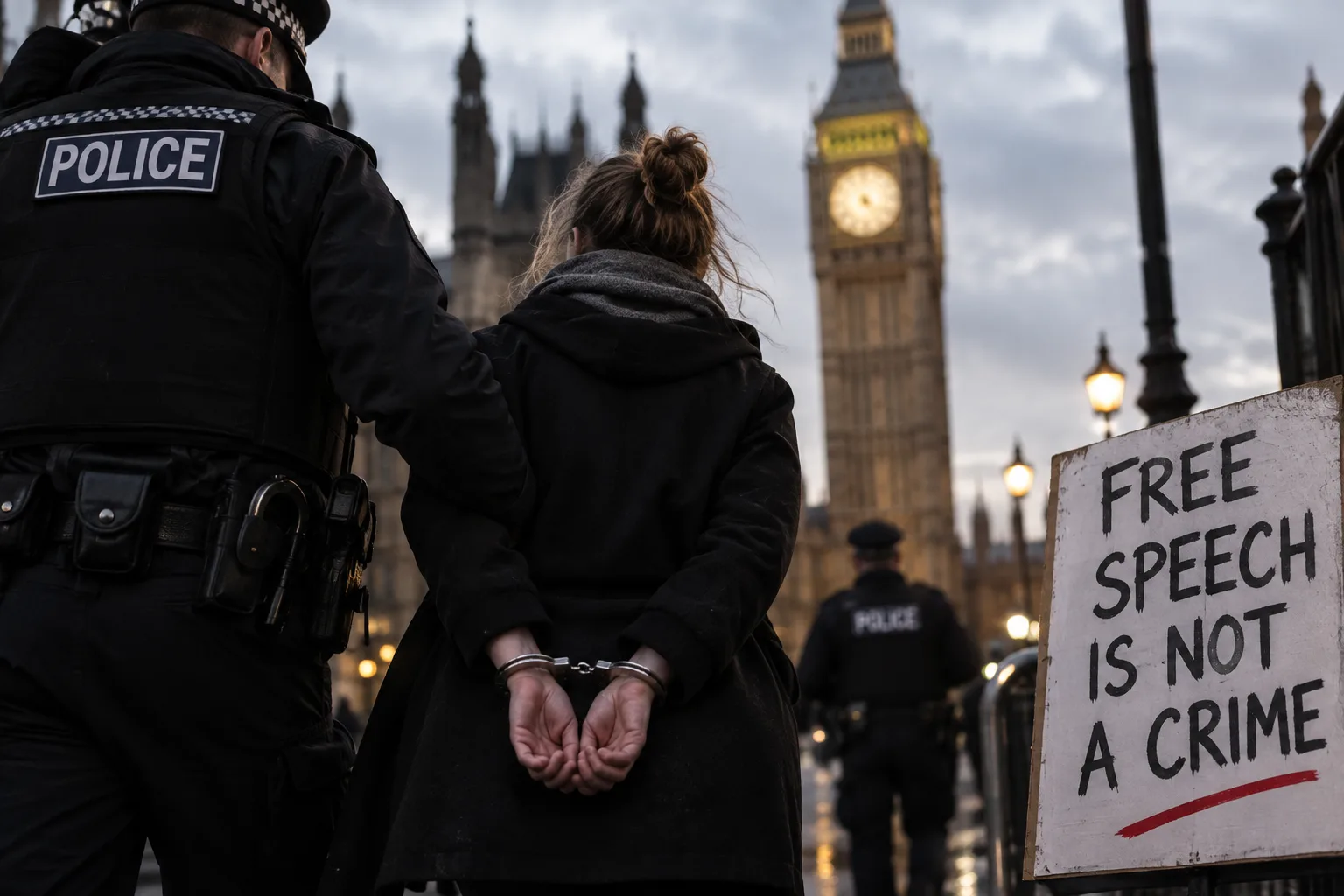
More than 60,000 people have been arrested in the UK for "communications offences" over the past five years, according to a report to be published this week by the civil liberties campaign group Big Brother Watch.
The figures, disclosed in the Mail on Sunday, put the number of arrests at at least 62,199, some for conduct as trivial as viewing a TikTok video that criticised a teacher. Of those arrested, 18,510 were charged and 12,292 convicted. Fewer than one in five were ultimately convicted.
The report does not claim every arrest was unjustified. It accepts that a proportion will be legitimate, such as police stepping in to stop threatening messages from abusive partners in domestic violence cases. Its complaint is what happens in between: a teenage girl who had not created, shared or commented on a video, told to hand over her devices or face arrest; a couple held for 11 hours over WhatsApp messages about their daughter's primary school; online forums aged out of existence because they discussed punk bands.
The Free Speech Union, which has represented many of those caught up in the system, said it had helped "countless individuals who have felt the long arm of the law over social media posts or messages in WhatsApp group chats". They include Graham Linehan, arrested at Heathrow on 1 September 2025 by five officers over three gender-critical posts on X. The investigation ended without charge, and the Metropolitan Police later apologised and paid him £25,000, according to reports. They also include Maxie Allen and Rosalind Levine, held for 11 hours on suspicion of harassment and malicious communications after complaining about their daughter's school in a parents' WhatsApp group.
The union calls the situation "the reality of living in Britain in 2026", and makes a blunt comparison. In 2023, roughly nine in ten crimes in England and Wales went unsolved. Over the five years covered by the report, more than 62,000 people were arrested for what they said online. "How can the police continue to complain that they are underfunded and under-resourced when they are focusing on vexatious complaints and hurty words online?" it asks.
Big Brother Watch describes "the elasticity of vaguely defined speech offences" in legislation such as the Online Safety Act, and the policing of it varies sharply from one area to another. Cumbria Police made arrests at a rate of 25.7 per 10,000 people over the five years, more than 13 times the rate recorded by neighbouring Northumbria, at 1.9 per 10,000. The union calls it a postcode lottery for free speech.
One case in the report concerned West Midlands Police visiting the home of a vulnerable teenage girl over a TikTok post showing a teacher's image with negative comments. Officers demanded that she hand over all her devices and either attend a voluntary interview or face arrest, even though she had not created, shared or commented on the video. The investigation ended with no further action. The force said it had been "investigating alleged malicious communications offences" and that the allegation involved a fake account created in the girl's name, used to send indecent messages.
Big Brother Watch also found that the laws were being used to shut down or age-restrict internet forums on political parties, British history and famous artworks. Its analysis of Reddit communities found discussions of horror film posters, supporting a friend through chemotherapy, 1970s punk bands and "annoying papercuts" all placed behind digital age barriers. Last month the author Bernadette Spofforth told GB News she had been held for 36 hours after posting on social media in the wake of the Southport killings.
At the serious end of the same powers sits Lucy Connolly, jailed for 31 months for inciting racial hatred after posting that hotels housing asylum seekers should be set on fire in the wake of the Southport murders in July 2024. The report's concern is what else the same laws are being used for.
Lord Young of Acton, general secretary of the Free Speech Union, asked why the authorities spend so much time policing tweets rather than streets. "Shoplifting, mobile phone theft and sexual offences are all on the rise, yet the police seem increasingly obsessed with catching thought criminals," he said. "The sheer number of people being arrested for online offences, even though only one in five ends up being convicted, cannot help but have a chilling effect on free speech." People, he added, now dared not say what they think for fear of "a knock on their door at four in the morning by a couple of plainclothes officers wearing rainbow lanyards".
Silkie Carlo, director of Big Brother Watch, said: "There is mounting concern among the public that speech policing is out of control in Britain and it's long overdue that the government takes action." She called on the Prime Minister, Andy Burnham, to launch a "free speech reset" and order an independent review of the laws and police training around speech, "in order to fix this Orwellian mess". "Thousands of people are being arrested for controversial speech, online jokes and non-violent protest," she said. "Enough is enough."
The Free Speech Union fully endorses the call for an independent national review of the laws affecting speech and for action "to restore Britain's free speech laws and culture".
The Great British PAC said it would back the campaign for scrutiny.
Claire Bullivant, CEO of the Great British PAC said:
"At a time when the public is rightly demanding that the police concentrate on burglary, shoplifting, violence and other serious crimes, officers should not be dragged into policing 'hurty words' and lawful opinions. The fact that tens of thousands of people have reportedly been arrested for communications offences, while only a fraction of those arrests result in convictions, should concern anyone who values free speech and the proper use of police resources.
The Free Speech Union is absolutely right to demand scrutiny of what is happening, and the Great British PAC will back them all the way. Britain is the country of Magna Carta, John Milton and John Stuart Mill. We should be defending the ancient British tradition of speaking one's mind, not creating a culture in which people are frightened that the police may come knocking because of something they have written online.
This Labour Government should be strengthening freedom of expression, not presiding over its erosion. We need an urgent, independent review of these laws, how they are being used, and whether police time is being diverted away from the crimes the British public actually expect them to solve."
When fewer than one in five arrests end in a conviction, Britain is entitled to ask whether police time is being spent in the right place.