
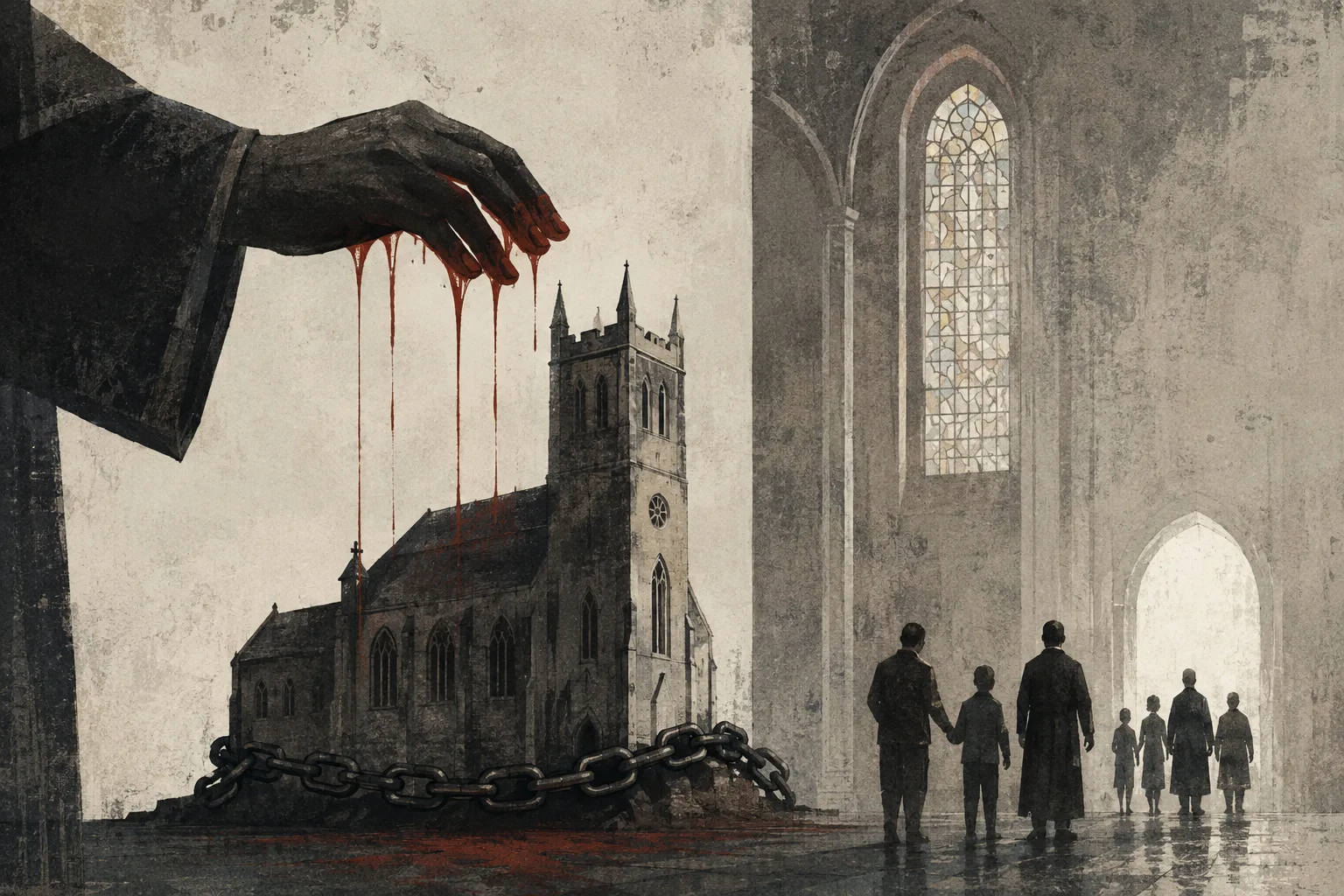
The Church of England’s slavery response is often presented as proof of moral courage. It would be more accurately described as an exercise in moral self-dramatisation. Its central logic is not difficult to identify. A present institution inherits a morally compromised past, and rather than treating that history with restraint, proportion, and documentary honesty, it constructs a public programme of shame, healing, and repair through which it seeks to prove its ethical seriousness.
That is exactly what the Church has done. The Church Commissioners announced a £100 million commitment in 2023 after research into the historic links between Queen Anne’s Bounty and transatlantic slavery. Justin Welby said the Church had to address its “shameful past”. The Church’s materials speak of seeking “to repair, to heal, and to pursue justice”. Church of England Church of England
This is the language of institutional guilt. It says, in effect, that historical complicity should not merely be acknowledged, it should become an organising principle of present behaviour. That is a serious mistake. Guilt is not a stable basis for governance. It distorts judgment, rewards symbolism, and makes proportion harder to sustain.
One can see this in the Church’s treatment of history itself. Its research pages rightly describe Anglican entanglements with slavery, including the Codrington plantations in Barbados. But the moral framing is selective. Britain also abolished its slave trade in 1807, abolished slavery in most of its empire in 1833, and deployed the West Africa Squadron, which the Royal Navy says liberated around 150,000 Africans from 1,600 captured slave ships. None of that erases the earlier wrong, but it does complicate the simple morality play on which the current reparative narrative depends. Church of England Royal Navy
The Church’s defenders might reply that moral complexity is no excuse for inaction. Fair enough. But the question is not action versus inaction. It is whether guilt should decide what kind of action matters most. Here the institutional consequences are obvious. While the Church speaks grandly of repair and justice, the parish system is struggling with actual repair, actual maintenance, and actual decay. The National Churches Trust says the Church of England faces a repair backlog of at least £1 billion and annual repair needs of around £150 million. The 2025 Heritage at Risk analysis says 976 churches, chapels, meeting houses, and cathedrals are at risk. National Churches Trust National Churches Trust
In other words, the Church does not lack moral obligations. It is surrounded by them. Roofs are leaking. Towers are unstable. Congregations are ageing. State support is tightening. The Listed Places of Worship Grant Scheme has already been capped and closed within budget. The idea that a Church in this position should define its moral seriousness by setting aside £100 million for a reparative project is not persuasive. It is self-regarding. Gov.uk
This is why critics such as Katie Lam and Nigel Biggar have found an audience. As reported by BBC News, Lam has argued that the plan is “inherently divisive”, and Biggar has warned against exploiting “white guilt” through a narrative of “white oppression, black victimhood”. These are not merely partisan complaints. They speak to a widespread public fatigue with the politics of institutional self-accusation, in which moral authority is sought through public shame rather than practical competence. BBC News
A healthy institution should be able to distinguish repentance from self-abasement. It should be able to say: yes, this history is real, yes, it must be taught honestly, yes, records should be opened and responsibility acknowledged, but no, inherited guilt does not automatically trump present stewardship. The Church of England has not yet found the nerve to say that. Instead, it has adopted a moral posture that flatters elite opinion while alienating many of the parishioners still trying to keep the national Church on its feet.
That is the paradox at the heart of the whole affair. The Church has chosen guilt as a way to prove its seriousness. In doing so, it has made itself look less serious, not more. The more it speaks in the language of healing and shame, the more people notice the buildings under tarpaulins, the congregations carrying impossible repair burdens, and the gap between rhetorical justice and basic institutional care.
Guilt is a poor organising principle for a Church, and a worse one for an established Church with national responsibilities. The Church of England would do better to exchange moral theatre for moral proportion, and inherited shame for present duty. It does not need less honesty. It needs more balance, more courage, and a firmer sense that its first responsibility is not to perform remorse, but to serve the living communities that still depend on it.