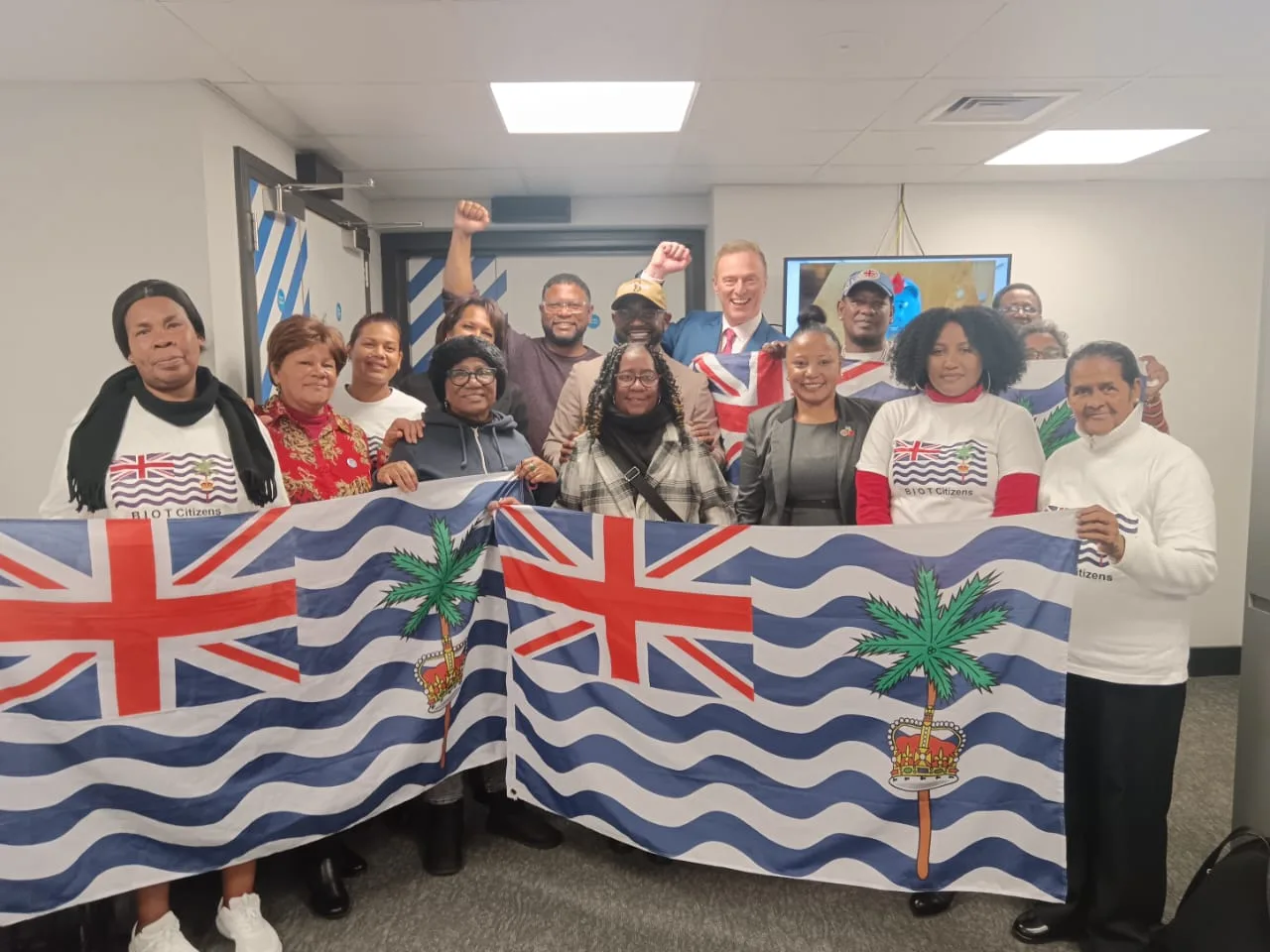
TODAY marks a crucial moment in the Chagossian people's fight for justice, as their legal challenge against the British Government returns to the Royal Courts of Justice in London.
At 10.30am in Court 69, Chagossian claimants will seek permission to continue their judicial review challenging aspects of the Government's decision-making over its proposed transfer of the Chagos Islands to Mauritius.
Great British PAC, which has contributed more than £50,000 towards the legal proceedings, will be standing alongside the Chagossians and their legal representatives.
At the heart of the dispute are two fundamental questions: why should Britain surrender sovereignty over an exceptionally important military territory to secure a base it already controls, and why should the future of the Chagossian people be decided without their meaningful consent?
Labour's argument on Diego Garcia deserves serious scrutiny
The Labour Government has repeatedly argued that transferring sovereignty over the Chagos Archipelago to Mauritius is necessary to secure the long-term future of the British-American military base on Diego Garcia.
Great British PAC fundamentally disputes that argument.
Diego Garcia is one of the most important strategic military installations available to Britain and the United States. Its deep-water port can accommodate nuclear-powered submarines, while its airfield, communications infrastructure and intelligence capabilities support operations across the Indian Ocean and beyond.
Under Labour's proposed agreement, Britain would recognise Mauritian sovereignty over the entire archipelago, including Diego Garcia, and make payments worth billions of pounds to retain operating rights at the base.
The initial arrangement would last 99 years, with provisions allowing extensions.
But the PAC questions why surrendering sovereignty should be presented as the best way to guarantee long-term security.
Britain already administers the islands as the British Indian Ocean Territory. Diego Garcia already operates as a joint British-American base.
Under the proposed treaty, Britain would continue to exercise extensive military and operational authority, but its rights would derive from an agreement recognising another country's sovereignty.
The Government argues that this would protect the base against future international legal challenges. Critics, however, maintain that continued British sovereignty would provide a firmer strategic foundation and avoid introducing new long-term dependencies.
For Great British PAC, the principle is straightforward: the strongest protection for a strategically vital British military asset is for it to remain under British sovereignty.
Billions in payments for a base Britain already controls
The financial implications make the Government's position even more contentious.
According to House of Commons Library analysis, the agreement involves approximately £3.4 billion in payments to Mauritius over the initial 99-year period, expressed in 2025/26 prices.
Labour has defended those payments as the cost of establishing a secure long-term legal framework for the base.
But critics question the logic of committing British taxpayers to such an arrangement when the territory remains under British administration.
The proposed transfer has also generated concerns about Mauritius's economic and diplomatic relationship with China.
The treaty includes provisions designed to protect Diego Garcia and prevent unauthorised foreign military involvement in surrounding islands. The Government maintains that these safeguards are sufficient.
The PAC's concern is that transferring sovereignty over a strategically sensitive archipelago creates risks which retaining British sovereignty would avoid.
A military facility of Diego Garcia's importance is not an ordinary overseas asset. Decisions about its future have consequences for British national security, American defence operations and the wider strategic balance in the Indian Ocean.
What about the Chagossian people?
Behind the strategic arguments lies a human injustice dating back more than half a century.
During the 1960s and 1970s, Chagossian families were forcibly removed from their homeland as Britain and the United States developed the military base.
Families lost their homes, communities were broken apart and even their pets were rounded up and killed.
Generations of Chagossians have since grown up away from the islands their parents and grandparents once called home.
Many have spent decades campaigning for the right to return, preserve their British identity and participate in decisions about their ancestral homeland.
Some Chagossians oppose the UK-Mauritius agreement because they believe the transfer would deny them the future they have spent generations fighting for.
Their opposition should not be confused with opposition to the military base itself. Many Chagossian campaigners support the continued British-American presence on Diego Garcia while seeking the right to return to other islands.
Campaigners have also expressed concerns about whether Mauritius would protect the archipelago's extraordinary natural environment and adequately recognise Chagossian rights.
Great British PAC believes the wishes of the islanders deserve proper consideration, not simply an assurance that their interests have been taken into account.
Thousands of Chagossians have made their wishes known
A worldwide survey organised by Friends of the British Overseas Territories recorded 3,389 Chagossian participants.
According to the organisers, 99.2 per cent supported self-determination and remaining British.
With the worldwide Chagossian population estimated at approximately 10,000, the scale of participation was significant.
Great British PAC also helped support the establishment of a Chagossian Government in Exile, following a ballot in which 1,233 participants voted in favour of its formation and 108 voted against.
Misley Mandarin subsequently became interim First Minister.
These initiatives reflect the efforts of Chagossian campaigners to establish representative structures and ensure that their views are heard.
Today's court hearing matters
Today's proceedings concern a judicial review brought by Louis Michel Mandarin and Louis Misley Mandarin.
The claimants are challenging aspects of the British Government's decision-making over the proposed sovereignty agreement, including their contention that Chagossian people were not properly consulted.
The High Court previously refused permission for the judicial review to proceed, but an appeal resulted in a fresh hearing being ordered.
Today's hearing will reconsider whether the legal challenge can progress.
It will not itself decide sovereignty over the Chagos Islands or determine the legality of the treaty.
Nevertheless, securing permission would allow the claimants to pursue fuller judicial scrutiny of the Government's actions.
For the Chagossians involved, that opportunity is of profound importance.
Great British PAC has put its money behind the campaign
Great British PAC has provided more than £50,000 towards Chagos-related legal proceedings, made possible by the generosity of its members, supporters and private donors.
The organisation has also funded polling, assisted in the establishment of the Chagossian Government in Exile, supported parliamentary activity and worked with politicians across party lines.
Our support extends beyond constitutional questions and legal challenges.
In September, 104 Chagossians from 31 families travelled from Mauritius to Manchester Airport, hoping to build new lives in Britain.
When some encountered immigration difficulties, Great British PAC provided £10,000 towards urgent legal assistance through Imperium Chambers.
PAC representatives also assisted families facing practical and medical problems following their arrival.
Meanwhile, we have supported separate legal proceedings concerning Chagossians who returned to their ancestral islands, including Misley Mandarin and his father, Michel, who was born on the archipelago before being forcibly removed.
These efforts demonstrate that the campaign is not simply about sovereignty or military strategy. It is also about families, identity, justice and the fundamental right of a displaced people to have their voices heard.
Cross-party cooperation for a common cause
Great British PAC brings together people from across the political spectrum, including Conservatives, Reform supporters, people from Labour and Liberal Democrat backgrounds, Unionists and those with no political allegiance.
Our Chagos campaign has involved parliamentary engagement, international lobbying, legal assistance and cooperation with Chagossian representatives.
Supporters may disagree on other political issues, but the campaign has brought them together around the rights of the Chagossian people and concerns about the proposed sovereignty transfer.
The treaty remains unresolved
The agreement signed in May 2025 has not entered into force.
Its ratification remains paused, and the legislation originally introduced to implement the treaty fell at the end of the previous parliamentary session.
The Government has maintained that the treaty offers the best way to secure Diego Garcia against future legal and strategic threats.
Great British PAC rejects that conclusion.
We believe the case for retaining British sovereignty, protecting Diego Garcia and ensuring meaningful Chagossian participation must be examined before any irreversible decision is taken.
Britain's strategic interests and the rights of the Chagossian people should not be treated as competing considerations.
Today, we stand with the Chagossians
Today, lawyers will present their arguments and the court will consider whether the claimants can take their challenge further.
For the Chagossian families involved, this is another stage in a struggle that has lasted generations.
For Great British PAC, it is another demonstration of what sustained campaigning, cross-party cooperation and generous donors can help make possible.
We are grateful to everyone who has contributed towards the legal proceedings and provided practical support to the Chagossian people.
Our position remains clear.
We believe the strongest long-term protection for Diego Garcia is continued British sovereignty.
We believe the Chagossian people deserve a meaningful voice in the future of their ancestral homeland.
And we believe the Government's arguments for transferring sovereignty must withstand rigorous legal, political and public scrutiny.
Today, we stand alongside the Chagossians at the Royal Courts of Justice.
Their fight for justice continues.
Great British PAC stands with them.
Today's hearing is scheduled for 10.30am in Court 69 at the Royal Courts of Justice, Strand, London. Supporters are welcome to attend, subject to courtroom capacity and court arrangements.