
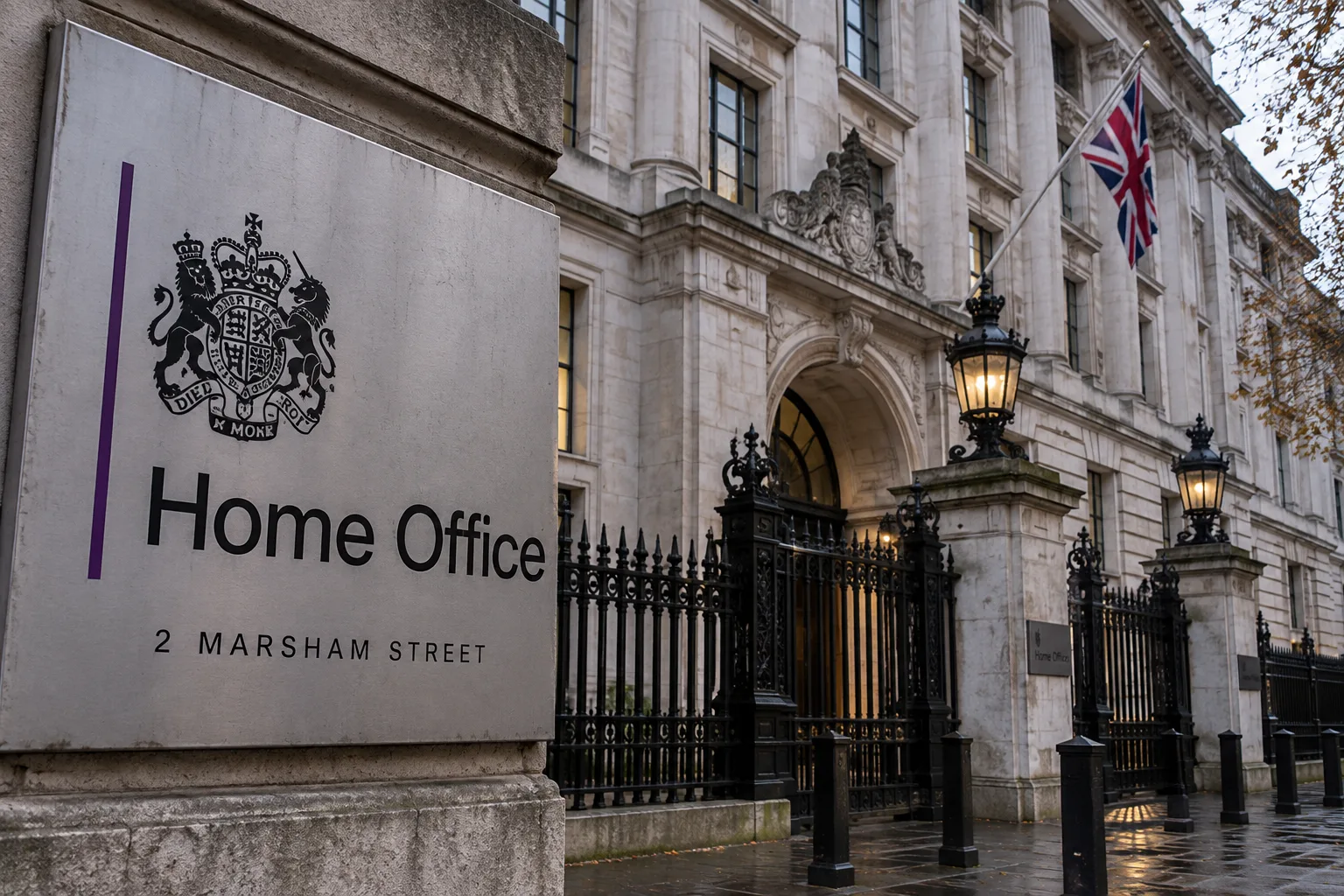
A Home Office decision-maker who spent years assessing claims says asylum is dominated by fraud, as the UN's refugee agency warns that some applicants are being granted protection despite not being entitled to it.
A Home Office official who spent years deciding asylum claims has told The Times that at best one per cent of asylum seekers coming to Britain are genuine.
Identified only as J, the decision-maker told the paper he had assessed thousands of claims in the course of his work. His verdict was blunt: "At best 1 per cent of asylum seekers are genuine. There's almost no aspect of the asylum system that isn't either a massive fraud or just really dysfunctional. Nothing works as it should."
The figure cannot be independently tested, and it sits far below anything in the department's own statistics. But it arrived alongside separate concerns from outside the Home Office about the quality of asylum decision-making. This week The Times reported that the UN refugee agency, in an audit of asylum interviews, identified what it called "a real risk" that applicants were being granted asylum "even though they are not entitled to it".
J described what he and his colleagues called "package claims": strikingly similar accounts submitted by large numbers of applicants from the same background. Hundreds of Iraqi Kurds, he said, claimed to have been in a relationship with the daughter of the prime minister of the Kurdistan region. So many told the story that it became a running joke in the department.
Similar patterns surfaced among Pakistani applicants, the largest single nationality claiming asylum. Hundreds, he said, claimed their lives were in danger at home because of a gay relationship with the same man, who had supplied the letters backing up their claims. The letters ran to "hundreds upon hundreds", J said, and were obviously fake. Photographs submitted with some claims, he said, repeatedly featured the now closed Legs 800 Club in east London, showing men posing with their arms around each other to prove, in his words, that they were gay. The Home Office is already investigating fabricated sexuality claims after a BBC undercover investigation found immigration advisers offering to help migrants build fraudulent sexuality-based asylum claims, including fabricated supporting evidence.
He raised the same suspicions about a surge of claims from Bangladesh. Applicants said they faced persecution as members of the Awami League, the party that lost power in 2024 and is now banned. Many who claimed to have held senior positions, he said, could not answer basic questions about the party. "The only thing they needed to do when the Government fell was change the name of the party that they feared."
J blamed the structure of the system for making this possible. Applicants face a brief screening interview, at which they are often extremely vague, and then wait months for a "substantive interview" lasting several hours. The gap, he said, gives dishonest applicants exactly what they need: "This gives them time to prepare, time to get advice, time to see exactly what fake evidence they can get before committing to a story at full interview." Those who wanted more time, he said, could usually produce a sick note. He wants applicants to explain their claim immediately. "Delaying this only gives them more time to prepare, when they shouldn't need to prepare because it's already happened to them."
He also described how rarely claims are tested against the countries they come from. Decision-makers are barred from contacting the country of origin to check documents, under international confidentiality rules designed to protect genuine applicants from persecution. The Home Office confirmed the restriction, saying that such checks could put a genuine claimant at risk. J said the result was that obviously fake material, including supposed police documents bearing the same judge's name, the same magistrate and the same location, could not be checked against reality.
The incentives, in his account, are set the wrong way round. Granting a claim takes half an hour at most; refusing one properly can take hours, because every assertion in the application has to be answered. He described that process as "infantile". Managers, he said, instructed staff to call asylum seekers "customers", which he took to capture a culture of serving applicants rather than serving the country.
The Home Office rejected J's account. A spokesperson said: "We do not comment on anonymous briefings. The Home Secretary has been clear that those trying to defraud the British people to remain in the UK will have their application refused and find themselves on a one-way flight out of Britain." The department insists that every claim is assessed individually by trained decision-makers, weighing the applicant's account, supporting documents and country information, with established procedures for identifying fraud.
The latest Home Office asylum statistics tell a more complicated story than either side's summary. In the 12 months to June 2026, 85,891 people (main applicants and their dependants) claimed asylum, down 21 per cent on the previous year. The proportion granted protection at initial decision has more than halved from its recent peak: 38 per cent in the latest year, against 77 per cent in the year to September 2022. Among the nationalities J singles out, the grant rate for Pakistani applicants fell from 46 per cent to 25 per cent, while for Bangladeshis it was 11 per cent. Internal Home Office figures, reported by The Guardian, show that only 52 per cent of asylum decisions sampled in the department's quality assurance process in 2023/24 met its own quality standards, down from 76 per cent two years earlier.
J's one per cent is an estimate of genuine claims, not a measure of refusals, and no one outside the department can audit it. The official figures do, however, show that initial grant rates have fallen sharply from their recent peak, while the Home Office's own quality assessments have identified significant weaknesses in decision-making. The figures matter because a grant of protection can ultimately put an applicant on the road to settlement in Britain.
There is also a precedent for the change he is proposing. Between 2008 and 2010, around 99 per cent of claims processed through the Detained Fast Track, which expected applicants to put their case within days, were refused, according to research by the charity Detention Action. The courts found the scheme's processes systemically unfair, the Government suspended it in July 2015, and the Supreme Court refused it permission to appeal that November.
Separate concerns have also come from UNHCR. In March, UNHCR published a 92-page audit of the Home Office's asylum interviews, based on observations of sixty of them. The auditors found interview techniques varying widely, and concern among staff, decision-makers included, that the drive for timely decisions and pressure to meet targets was leading to cases being decided before all the necessary information had been gathered and properly tested. Credibility concerns were left unresolved in 27 of the 60 interviews, and in a further 19 the full basis of the claim remained unclear. The report stated: "This research indicates that there is a real risk that applicants are being refused despite being in need of international protection; and that applicants are being granted asylum even though they are not entitled to it." The Home Office accepted seven of the report's ten recommendations in full and three in part. Reporting on the audit this week, The Times said it highlighted an interview model that prioritised "speed over quality" and "fails to probe material facts".
Richard Thomson, National Director of the Great British PAC, said:
“One per cent genuine? If the testimony of this experienced Home Office decision-maker is even remotely representative, it should set alarm bells ringing across Whitehall. Britain has a duty to protect genuine refugees, but that duty cannot mean turning a blind eye to fraud or allowing an asylum system to become an alternative immigration route for people with no legitimate claim to protection.
The UNHCR findings should concern everyone. They point to serious weaknesses in a system which risks making the wrong decisions in both directions, granting protection where it is not warranted and refusing it where it is genuinely needed.
Britain needs an asylum system that is compassionate towards those genuinely fleeing persecution and absolutely unforgiving towards those who abuse it. Claims must be tested properly, fraud must have consequences, and those found to have no right to remain should be removed swiftly. The present system is clearly in need of fundamental reform.”
The UNHCR audit itself does not go that far. Its findings concern the quality of asylum decisions in both directions.
One man's word is not evidence, and the Home Office is entitled to leave anonymous briefings unanswered. Beyond J's account, there is also the department's own paperwork: falling grant rates among some of the nationalities highlighted by J, weaknesses identified in its own quality assessments, and independent concerns about the quality of asylum decision-making.
UNHCR's concern cuts both ways. Its auditors found a real risk that Britain is refusing protection to people who need it, and granting it to people who do not.