
The Treasury has allocated £150m of capital spending in 2027-28 for additional large-scale asylum accommodation, committing public money to a programme whose locations, bed capacity and operating costs have not been published.
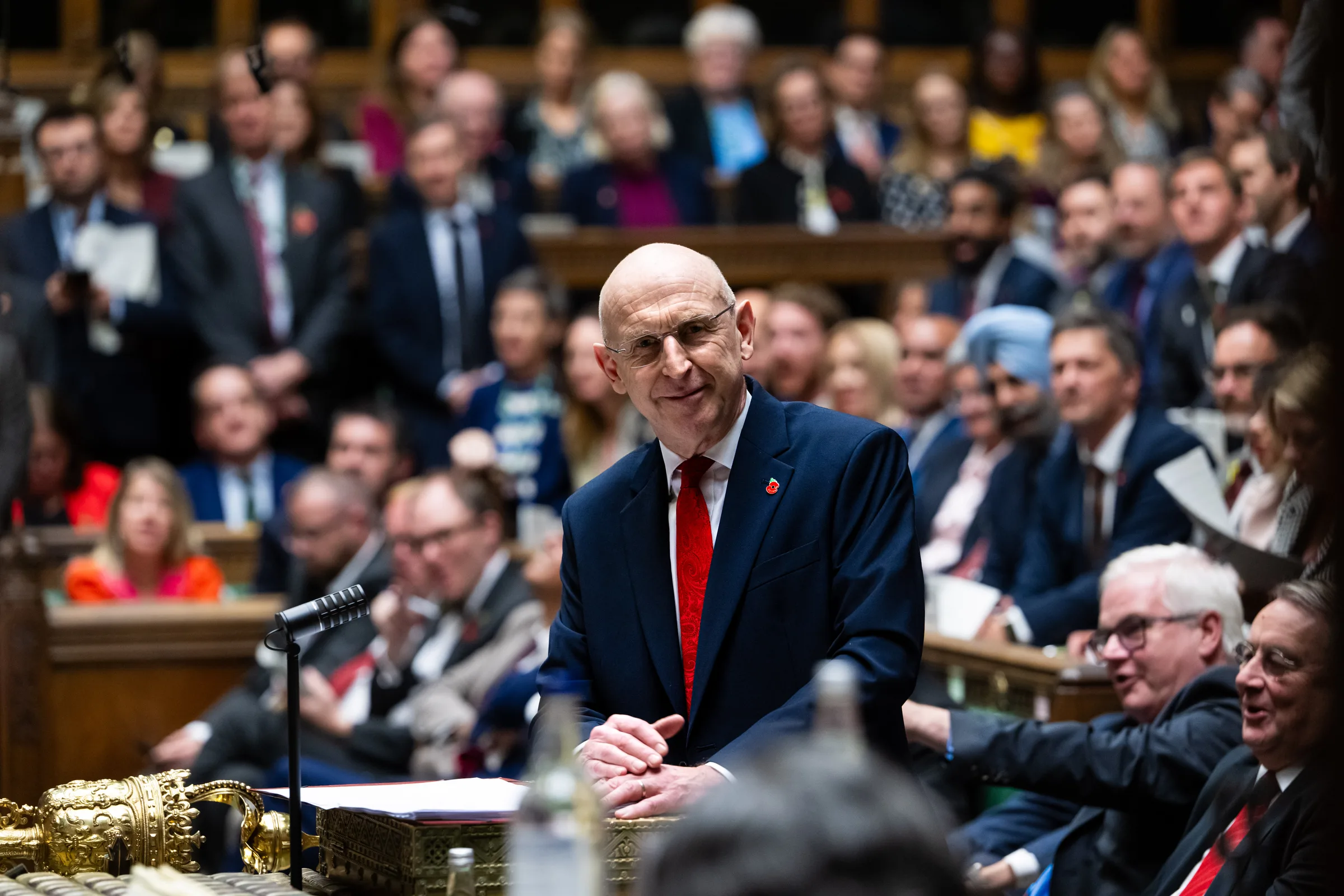
Paragraph 6.18 of the Budget report, published after John Healey's first Budget statement on 28 October, states that the government is "providing £150 million capital investment in 2027-28 to fund additional large sites to accommodate asylum seekers and facilitate the government's commitment to end the use of asylum hotels".
That is the extent of the published detail. The money is capital, so it can meet the cost of conversion and construction but not the staffing, security, utilities, healthcare and contractual payments that account for most of the expense of housing people. No department has disclosed how many centres will open, which sites are under consideration, or what the annual revenue cost will be once they are operating. None of that establishes that no operational planning exists inside government. It establishes that the public, Parliament and the communities concerned have not been shown it.
Chris Philp, the Shadow Home Secretary, said the allocation revealed the government's intent. "This shows the Government has no intention whatsoever of stopping illegal immigrants or deporting them," he said. "Instead they will be accommodated here. The Conservative plan is instead to leave the European Convention on Human Rights so all illegal immigrants can be deported on arrival."
What the Treasury actually announced
The £150m is a capital injection for a single financial year. It is not a settlement for the life of the programme, and it comes without a published estimate of the revenue costs that will follow.
Set against the accommodation budget, the sum is modest. The Public Accounts Committee reported in June that the Home Office spent around £2.7bn on asylum accommodation in 2024-25, within roughly £4.9bn spent across the Home Office and the Ministry of Justice on the asylum system. Those are departmental accounting figures for a single year, and the wider total includes casework, appeals, enforcement and support payments as well as beds.
The new capital equates to a little over five per cent of one year's accommodation expenditure. A Home Office source said total asylum costs will not rise, because overall asylum spending has fallen by about £1bn from its peak. That may prove correct, but it depends on two variables the department does not control: how quickly claims are processed, and how many people arrive.
The Office for Budget Responsibility sets out the condition plainly. The number of asylum seekers receiving Home Office support fell 12 per cent between June 2025 and June 2026, to about 90,000, and claims and detected illegal arrivals were lower in 2025-26 than the year before. Support numbers "will fall further if the Government can maintain the current level of claim processing". If processing slows, the saving erodes and the new beds fill.
The sites already in the pipeline
The allocation arrives into an estate that is being expanded, not wound down. In June the Home Office confirmed it was seeking to use three further military sites: MoD Bicester in Oxfordshire, Barnham in Suffolk and Linton-on-Ouse in North Yorkshire. Together they could hold about 3,750 people if planning permission is granted, the BBC reported. The Budget does not specify that new capacity will be sited on former military land, though existing and proposed provision has followed that model.
Wethersfield in Essex, which cost £49m to establish against an original estimate of about £5m, is being increased to 1,245 bedspaces and will remain in use beyond 2027, with Braintree District Council informed of a 55 per cent rise in capacity. Crowborough in East Sussex is being extended to 2030. At Barnham, the Home Office confirmed on 23 October that the number who could be housed there had been reduced from 1,250 to about 930, while the site's existing use by Norfolk and Suffolk police for specialist training continues.
None of these sites has been confirmed as a recipient of the new £150m. What can be said is that the department is buying more capacity while its long-term accommodation strategy remains unpublished.
The cost question ministers have not answered
The government's case rests on value for money. The Home Office says closing hotels is saving taxpayers more than £1bn on asylum support since the election, and the hotel population has fallen sharply: 16,021 asylum seekers in 160 hotels at the end of June, against 32,041 a year earlier and a peak of 56,018 in September 2023, according to departmental statistics.
The difficulty is that the department's own analysis points the other way on large sites. The Public Accounts Committee reported in June that "the Home Office's own analysis suggests that large sites will cost more than hotels, as seen in previously costly attempts such as Wethersfield". The National Audit Office found in 2024 that set-up costs for sites originally budgeted at about £5m each had reached £49m at Wethersfield and £27m at Scampton, the latter since abandoned along with Northeye and the Bibby Stockholm.
Those figures are historical and site-specific. A future conversion on a different footprint, at a different scale and under a different contract need not repeat them. The relevant point is narrower and harder to answer: the department has not published a cost comparison for the sites it now intends to fund. The committee also found that the Home Office had "yet to demonstrate that it has learned from previous attempts to reform the asylum system", that its revised ten-year accommodation strategy, due in spring 2024, had still not appeared, and that local authorities "still lack a meaningful say in accommodation decisions".
This is the central failure. Capital has been committed before the value-for-money case has been made in public, and before Parliament has been given the strategy it asked for four months earlier.
A pledge tested in the villages
In Piddington, Oxfordshire, 285 of 312 ballots cast on 15 September backed a symbolic motion to leave the United Kingdom, with 26 against and one spoiled paper. The vote was organised by the parish council in protest at plans to house up to 1,256 adult men at nearby MoD Bicester, a site the Home Office intends to use for a minimum of ten years. The village has about 350 residents. The parish council chair, Tim McNally, called the result "an example of democracy in operation". The Prime Minister, Andy Burnham, said he understood the "strength of feeling" but that "there needs to be fairness across the country".
Barnham has since voted to hold its own referendum. At a village hall meeting on 24 October, only seven of the 80 people present voted against holding a referendum on the plans, the BBC reported. The poll has not yet taken place. The parish council chairman, John Bauer, said residents wanted to demonstrate "the strength of feeling in the village at the government's failure to consult anyone about a matter which will change the nature of the village". Reform UK, which runs Suffolk County Council, has called for a county-wide referendum on the Barnham plans, and Norfolk County Council, also Reform-run, has formally objected to the proposals on the grounds of pressure on services in Thetford.
At Linton-on-Ouse, the action group opposing the North Yorkshire site has written to the Chancellor claiming it could cost between £443 and £853 per occupied bed per night, and up to £270m in total. Those are campaign estimates, not audited figures, and the Home Office has not published its own. At Bicester, the campaign group Bicester Countryside and Communities has sent a pre-action letter to the High Court challenging the government's decision that an environmental impact assessment was unnecessary, the Oxford Mail reported, citing contamination, drainage, protected species and bat roosts. The legal question is narrow. The political one is not.
Who is responsible
The decision rests with the Prime Minister, Andy Burnham, who took office after Sir Keir Starmer's resignation, and with the Home Secretary, Shabana Mahmood, who introduced the Immigration and Asylum Bill on 30 June and led its second reading debate on 13 July. The Bill is now at Commons committee stage, with sittings scheduled for 29 October and 3 November. The funding was signed off by the Chancellor, John Healey.
The Bill is the government's substantive answer on removal, designed to increase the forced removal of people refused asylum and to establish a new Independent Immigration Appeals Authority. Its passage, and any concessions made to Labour MPs opposed to it, will determine whether the accommodation estate contracts or becomes the place where people wait for years.
The Culture Secretary, Lisa Nandy, set out the distribution argument during the Piddington row. Reconsidering the Bicester plan would not be fair, she said, because "the alternative would be to ask communities who have already seen their local community quadruple in size to take more of the load". That is a defensible case about sharing the burden. It is not a case about cost, and it does not explain why a model the spending watchdog says is more expensive than hotels is being expanded without published figures.
The Conservative alternative, and its limits
Philp's proposed remedy is withdrawal from the European Convention on Human Rights, on the basis that this would allow "all illegal immigrants" to be "deported on arrival".
Withdrawal would change the UK's international legal obligations and remove one layer of litigation from removal decisions. It would not disapply the 1951 Refugee Convention, the domestic statutory framework governing detention, appeals and removal, or the principle of non-refoulement that operates through both. Removal would still require a lawful decision, a route and a receiving state willing to accept the person. The Conservative Party is entitled to argue that the current application of Article 3 has made removals harder, and there is a serious case to that effect, but an effective removals policy depends on returns agreements, casework capacity and the co-operation of destination countries whatever the UK's ECHR status.
Reform UK has made the sites a national issue, with the party's MP Sarah Pochin and its education spokesperson Suella Braverman visiting Piddington in September.
The question that matters is therefore not whether withdrawal would be legally significant, which it would, but whether the £150m now committed addresses the accommodation crisis or merely funds its consequences. On the published evidence, ministers have yet to show which.
The Great British PAC view
Great British PAC's central concern is whether the Government can demonstrate that its asylum accommodation policy delivers value for money, maintains public accountability and respects the communities expected to host these facilities.
Richard Thomson, a former Royal Marine Commando and National Director of Great British PAC, said:
"Let’s call this what it is. Labour is spending another £150 million of taxpayers’ money building accommodation for people who entered this country illegally. It cannot tell us how many sites, where they will be built because there will undoubtedly be public outrage nor will they say what they will ultimately cost.
Meanwhile, the British people who are footing the bill are struggling with soaring food prices, energy bills and taxes. But apparently that is fine because Andy Burnham has capped bus fares and shaved a few pence off the price of gherkins…
This is Labour investing in its own failure. Labour is not ending the asylum crisis - it is building permanent infrastructure to accommodate it. Every new bed sends the same message to the people making the journey, break into Britain and the British taxpayer will pick up the bill."
Taxpayers are entitled to know where the additional sites are proposed, how many people they will accommodate, what conversion and construction will cost, what the annual operating cost is expected to be, and how that compares with the hotels being closed. They are entitled to know how local authorities and affected communities will be consulted, and whether the investment offers a credible route to ending hotel use or simply relocates the same demand into permanent facilities on rural sites.
Those questions are not obstruction. They are the minimum standard for spending public money at this scale, and they are the standard the Public Accounts Committee applied in June when it asked for a long-term strategy that has still not been published. The government should publish the site list, the bed numbers, the revenue modelling and the consultation arrangements before further contracts are signed. Parliament should insist on it.
Taxpayers are entitled to know what they are buying. So are the villages that will be expected to host it.