
Within the space of one news cycle, the Government has promised millions of households an estimated £45 saving on their gas bills and left them facing a forecast £276 increase in the annualised energy price cap on 1 January.
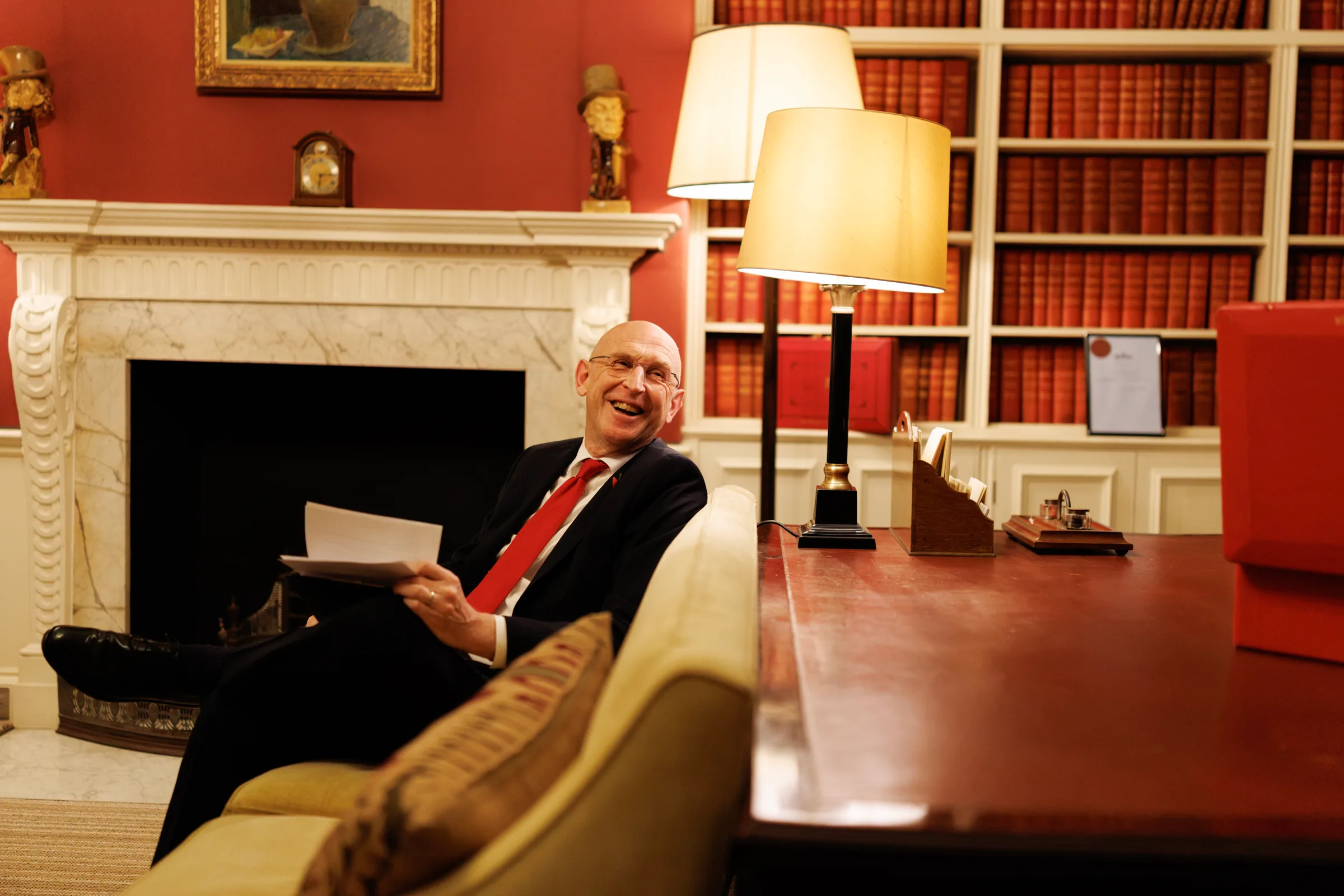
John Healey, the Chancellor, announced today that standing charges will be removed from household gas bills for around 23 million homes in 2027 "or as soon as possible after", hours before he is due to deliver his first Budget in the Commons at around 12.30pm. The typical gas standing charge costs about £108 a year. Under the reform, that fixed fee does not disappear: the underlying network and system costs it pays for remain, and they will instead be recovered through the price of each unit of gas consumed. The Treasury estimates that around 60 per cent of households, those that use relatively little gas, will save an average of £45 a year. On the Government's own estimate, the remaining four in ten are expected to pay more.
That is a redistribution between households, not a cut in the cost of energy. And it is separate from the other number in this story: Cornwall Insight's forecast, published on 30 September and still the consultancy's latest, that the price cap will rise by 16 per cent in January, from £1,723 to £1,999 a year for a typical dual-fuel household on a direct debit tariff, an increase of £276. That figure is a forecast, not a confirmed bill: Ofgem will set the January cap in November, and the £1,999 is an annualised figure for a typical household, not what every home actually pays. The two measures are also calculated on different bases and take effect on different clocks. The £45 saving, for those who get it, does not arrive until the reform is implemented in 2027 or later. The forecast £276 increase would take effect on 1 January 2027, before the standing-charge reform is implemented.
A forecast, not a settled bill
The scale of the January move matters because it will shape household finances before any of today's announced relief takes effect. Martin Lewis, who met the Chancellor in Number 11 this morning, told his followers that the January rise amounts to 27 per cent compared with January this year, and that he pressed Mr Healey on whether the Budget would intervene on it. "He told me I'd have to wait for the Budget, but reading between the lines, yes, there will be an announcement today," Mr Lewis wrote.
The pressure is compounded by a second expiring measure. The temporary removal of 5 per cent VAT from electricity bills, worth about £45 a year to a typical household, runs out on 31 March. Under the Government's own policy paper, the zero rate applies to household electricity in Great Britain from 1 October 2026 to 31 March 2027, after which the 5 per cent reduced rate returns; gas bills remain liable to VAT at 5 per cent throughout. Unless the Budget extends or makes permanent the electricity VAT cut, that saving disappears in the same spring that the standing charge reform is meant to begin.
Who benefits, and who may pay more
Whether a household wins or loses under the new structure depends on how much gas it burns. Mr Lewis estimates the dividing line falls at around 12,500 kilowatt hours of gas a year, with roughly 60 per cent of households below it and 40 per cent above. That threshold is his estimate rather than a published Treasury number, and the final distribution cannot be known until Ofgem sets the revised tariff structure and the implementation arrangements are established. What is not in dispute is the direction: households that cannot easily reduce their gas use, including larger families, people in poorly insulated homes and those who need heating to manage a health condition, face higher unit-rate costs.
Dr Craig Lowrey, principal consultant at Cornwall Insight, put the trade-off squarely. "Scrapping the gas standing charge from as early as 2027 is a broadly progressive move that may help lower-income households who tend to use less energy," he said. "There are trade-offs, however, as the money still has to be recovered." Higher unit rates, he warned, mean "people in badly insulated homes, larger families or those who need to keep the heating on to manage a health condition, could end up paying more. Some of them are the same vulnerable households this policy is meant to help, so making sure that they see the intended benefits of this change will be essential."
Claire Moriarty, chief executive of Citizens Advice, told BBC Radio 4's Today programme the change "could be positive" but "does come with some risks", particularly for people in poorly insulated homes, adding that "the devil is in the detail" and the policy "needs to be accompanied by targeted support that takes account of people's circumstances". Helen Miller, director of the Institute for Fiscal Studies, said the Government faces "a real challenge" in deciding "who to help and who's going to pick up the tab".
The Treasury's answer so far is that ministers will set out "targeted mitigation for a small number of households" in due course. Simon Francis, co-ordinator of the End Fuel Poverty Coalition, said the reform would bring "real relief" to low-consumption households and could stop prepayment customers "debt building up in the summer months", but that "millions of households won't see a saving", leaving ministers with "serious questions to answer" about how vulnerable high-users will be protected, and that support "must be in place before this change happens".
Mike Rouse of Great British PAC criticised the policy as a redistribution of costs rather than a reduction in the underlying price of energy.
"Abolishing the gas standing charge and loading it onto the unit rate does not make gas cheaper. It moves the same cost onto heavier users such as larger families and older houses. Extracting more gas from the North Sea would cut the underlying bill, instead we get a rearranged invoice for Budget day."
Britain's domestic gas production operates within an internationally traded market, meaning that any effect of increased North Sea output on household bills would depend on wider wholesale prices and market conditions.
Electricity: a promise without a timetable
Mr Healey told Mr Lewis he will talk to Ofgem about removing standing charges from electricity bills as well, but that this is "trickier" and will take longer. No timetable has been published. Electricity standing charges are substantially higher than gas, not least because of the cost of maintaining the grid, so the households most exposed, including the millions who heat their homes with electricity, are being asked to wait on a commitment with no date attached. Reporting by The Times that green levies will be moved off bills and into general taxation remains, for now, a report rather than a confirmed Budget measure.
The Prime Minister, Andy Burnham, called the abolition of gas standing charges a matter "of basic fairness and giving people more control over their bills". It was Mr Burnham who asked Mr Healey and Energy Secretary Miatta Fahnbulleh last week to examine abolishing the charges. Mr Healey declared that his Budget will "draw a line in the sand on an energy policy that has failed British billpayers for years". A fair test of that claim is not the £45 average for 60 per cent of homes. It is whether the January rise is met with real support, whether the mitigation for high-need households arrives before the reform does, and whether the electricity commitment acquires a date.
The tax rises already legislated and announced
Whatever the Chancellor announces at 12.30pm, household budgets already face a queue of tax increases set in train by Rachel Reeves, Mr Healey's predecessor, at her Budget on 26 November 2025. Some of those measures are now law; others are announced policy still working through Parliament. None has been reversed by the Burnham government.
Three are enacted. Finance Act 2026, which received Royal Assent on 18 March 2026, extends the freeze on income tax thresholds to April 2031, a policy the previous government had set until 2028 and which Labour has now lengthened by three years, dragging millions of workers into higher bands as pay rises. The same Act legislates the two percentage point increase in income tax on savings and property income, taking the rates to 22, 42 and 47 per cent from April 2027, and confirms that from 6 April 2027 most unused pension funds and pension death benefits will be brought within inheritance tax for the first time.
Four more are announced policy, not yet law. From 6 April 2027 the cash ISA allowance for the under-65s is due to fall from £20,000 to £12,000, with the overall ISA limit unchanged; the Government published detailed anti-circumvention rules in June, but the change awaits implementation (the Treasury factsheet sets out the design). From April 2028, homes in England valued at £2 million or more face the High Value Council Tax Surcharge of £2,500 to £7,500 a year; the consultation closed in July, the Valuation Office Agency is still conducting its valuation exercise, and the Office for Budget Responsibility expects around 156,000 properties to be caught in 2028/29 (the House of Commons Library briefing details the policy). Also from April 2028, electric car drivers are due to pay 3p per mile and plug-in hybrid drivers 1.5p under the new electric vehicle excise duty; the Commons Library confirms that legislation "has not yet been introduced", with draft clauses published in July for the upcoming Finance Bill. And from April 2029, salary-sacrificed pension contributions above £2,000 a year are due to attract employer and employee National Insurance (the Government's policy paper confirms the design).
Set against that queue, a £45 average saving for those who use the least gas is not breathing space. It is a rounding error on a rising bill.
What the opposition says
Sir Jeremy Hunt, the former chancellor, told Sky News he expects "smaller, populist measures designed to play well on social media but in the end not things that are going to solve these big problems that we face as a country", naming defence spending, welfare reform and energy costs as the tests by which Mr Healey should be judged.
Danny Kruger, for Reform UK, welcomed the move but told GB News it "doesn't go nearly far enough", arguing his party's proposals would cut £250 from household energy bills against savings "unlikely" to exceed £50 from today's announcement. Andrew Griffith, the Conservative shadow chancellor, said the Chancellor "must stop maxing out the nation's credit card, tackle the out-of-control welfare bill and address rising global threats", adding that Mr Healey "must resign" if the Budget fudges defence spending rather than properly funding 3 per cent of GDP by 2030.
A government cannot measure the success of its energy policy by announcing a modest average saving while leaving unanswered questions about rising winter bills, the households that lose from the reform and the wider pressure of taxation. The test of Labour's energy policy will not be the £45 saving announced before the Chancellor stood up in the Commons. It will be what households actually pay when winter bills arrive, whether those who need the most heat are protected, and whether the Government's promises of relief survive the arithmetic of the family budget.