
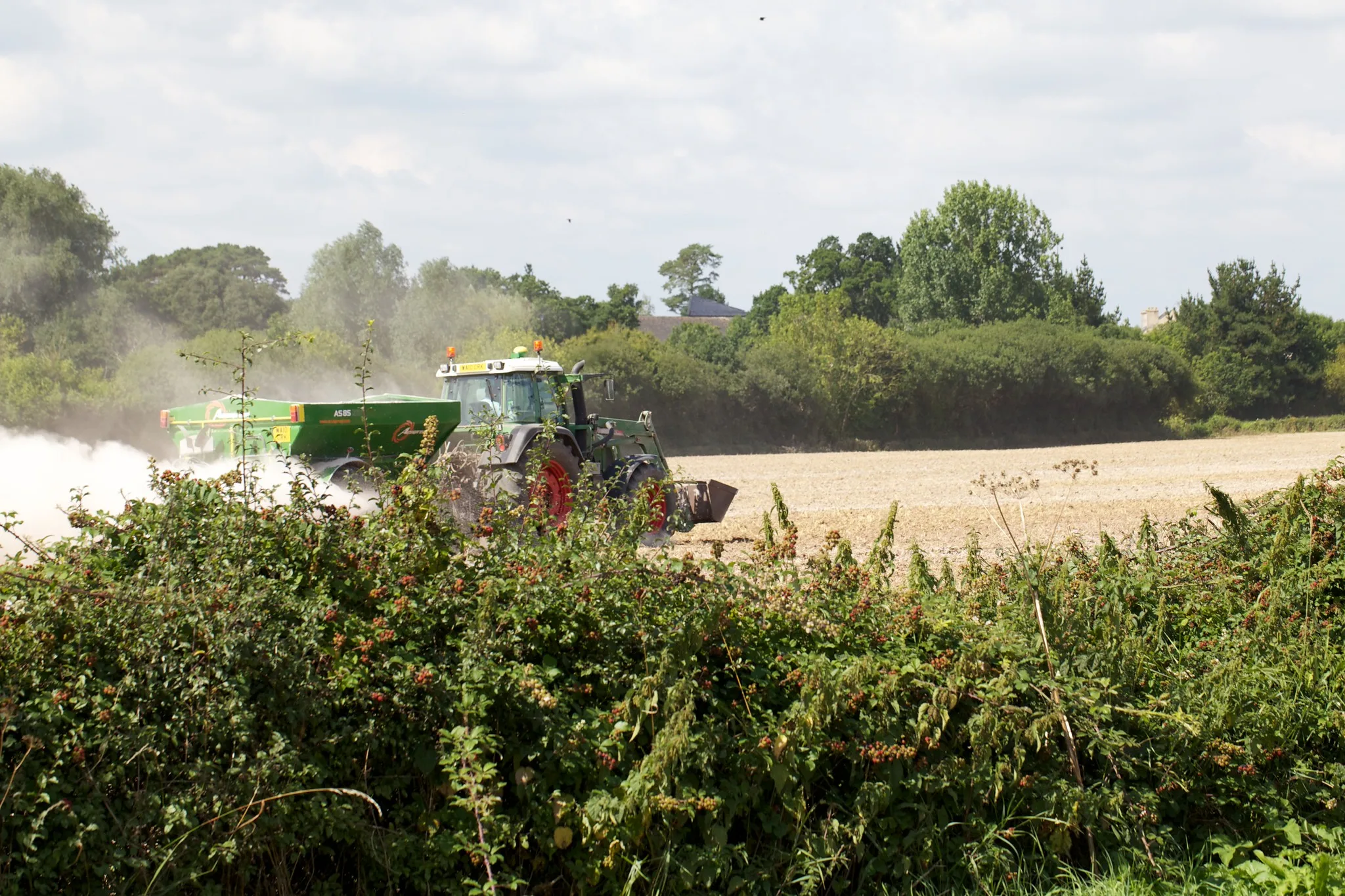
Farmers face a doubling of fertiliser prices when a net zero border tax is introduced in January, research suggests, in a move critics say amounts to surrendering control of British policy to Brussels all over again.
British farmers are braced for a punishing new levy on imported fertiliser after the Government confirmed it will press ahead with a carbon border tax that mirrors measures already imposed by the European Union, despite warnings that the industry is enduring its worst harvest on record following a summer of relentless drought.
The National Farmers' Union (NFU) has called on ministers to delay the introduction of the Carbon Border Adjustment Mechanism (CBAM), which Labour plans to bring into force from January 1, 2027. According to the Government's own consultation response, the scheme will place a carbon price on imports of aluminium, cement, ceramics, fertiliser, hydrogen, and iron and steel, a list that reads as though it was lifted directly from the EU's rulebook.
That is, of course, precisely the point. The CBAM forms part of Labour's so called Brexit reset, under which Britain would once again tether itself to European environmental policy, including plans to link the UK's emissions trading scheme to the EU's. Six years after the country voted to take back control, farmers fear that the practical consequence of that vote is being quietly dismantled, with regulations conceived by unelected officials in Brussels being copied wholesale into British law.
Research warns prices could double
The scale of the threat is laid bare in academic research published in the Journal of Agricultural Economics, which found that comparable measures could double the price of mineral nitrogen fertiliser and cut farmers' incomes by up to 8 per cent.
"Higher prices are projected to reduce demand, leading to a 21.4 per cent decline in domestic production and a 37 per cent reduction in imports," the paper warned. "The results indicate that the combined effect of phasing out free allowances and implementing CBAM will double mineral fertiliser prices."
The findings matter acutely for Britain, which relies heavily on nitrogen based fertilisers and no longer produces them domestically. When the UK scheme begins, farming businesses will initially benefit from "free allowances" covering a portion of imports, but, exactly as in the EU, those allowances are set to be phased out over the following decade. By the mid 2030s, every tonne of imported fertiliser will carry the levy.
The NFU has warned the measure will immediately add up to £70 a tonne to the cost of fertiliser "at a time of huge inflationary pressure". According to the Agriculture and Horticulture Development Board, imported ammonium nitrate, the most commonly used fertiliser in the UK, is already trading at £462 a tonne, with nitrogen prices up sharply since conflict in the Middle East disrupted shipping through the Strait of Hormuz.
The experience on the Continent offers a grim preview. In a joint statement, 12 European food associations warned that the EU's carbon tax would raise fertiliser prices by as much as 30 per cent, an increase that would hit British farmers directly, since the UK imports large quantities from Europe. Egypt has meanwhile replaced Russia as a major supplier following the invasion of Ukraine, leaving the supply chain dangerously concentrated.
"Postpone and review"
Paul Tompkins, the NFU deputy president, said: "Fertiliser is an essential input for farmers as they produce the nation's food. Yet it is no longer made in the UK, leaving us with no choice but to rely on imports.
"Adding a CBAM to fertiliser as it arrives at our ports means adding to the costs and growing pressures farm businesses are already under, not least from the relentless dry weather and drought we have seen in recent weeks.
"Putting this extra cost on fertiliser could also have implications further up the food chain, potentially impacting consumers.
"The best option would be for government to postpone CBAM and conduct a market review next year. The recent extreme weather has outlined the importance of strengthening the resilience of our domestic food production.
"That must be the priority, rather than introducing measures that could place yet more burden on farmers' and growers' ability to produce food for 29 million households."
Earlier this year it emerged that officials had wanted to suspend the levy for fertilisers but were facing resistance from the Treasury. Asked about the issue in June, Dame Angela Eagle, then the farming minister and now the Environment Secretary, insisted the scheme would go ahead. "The Government remains committed to implementing CBAM from Jan 1," she said in a written parliamentary answer, adding that "it is expected that initial liabilities arising from the CBAM will be modest".
The Conservative response
Claire Coutinho, the shadow energy secretary, said: "Farmers work day and night and in all weathers to put food on our plates. They have no choice but to buy fertiliser, yet experts say the fertiliser tax will increase prices by as much as 25 per cent.
"It is unthinkable that the Labour Government are going to burden farmers with yet another tax after all they have been through. All this will mean is more family farms going under and higher food prices for consumers. The Conservatives have a fully funded plan to axe the fertiliser tax and abolish the carbon tax entirely to save British industry."
A government spokesman said: "CBAM will have a limited impact on prices for British farmers over the next few years and will not add anything like £70 to the cost of a tonne of fertiliser. It will ensure that highly traded, carbon intensive imported goods face a comparable carbon price to that paid by British companies producing the same goods. We will continue to engage with sectors and assess the operation of CBAM once it is implemented."
A question of sovereignty
Beneath the dispute over figures lies a more fundamental argument. Brexit was won on the promise that Britain would make its own rules, set its own taxes, and answer to its own voters. A carbon border tax, designed in Brussels, timed to Brussels's schedule, and justified by Brussels's net zero doctrine, is a strange way to honour that promise. If ministers truly believe the levy is right for Britain, they should be prepared to defend it on its merits, to delay it when the evidence demands, and to remember that food security for 29 million households is not a line item to be traded away in pursuit of closer alignment with the EU.