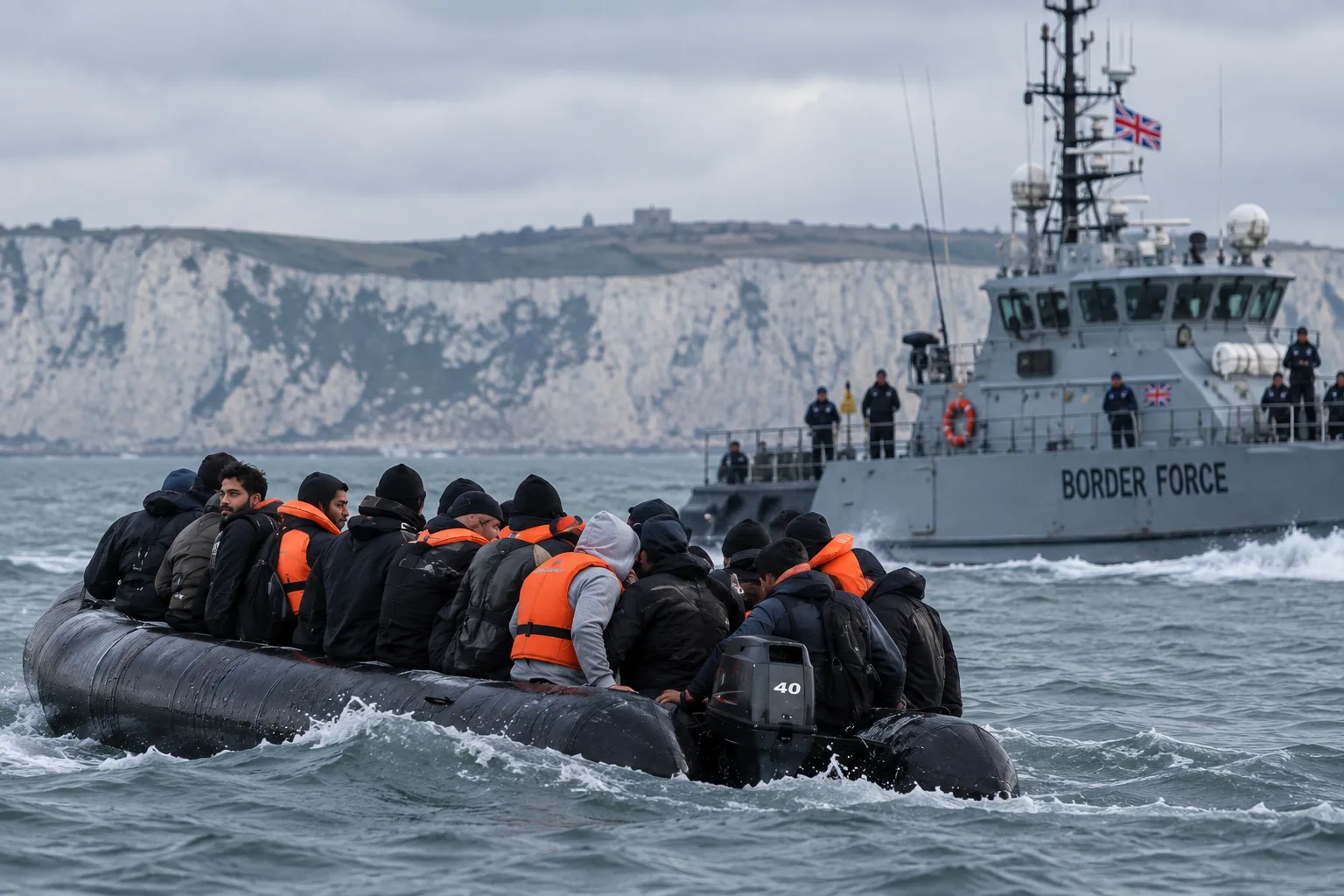
Britain has spent £78 million returning 1,400 Channel migrants to France under the Government's 'one in, one out' deal, at an average cost of £56,000 a head, Shabana Mahmood has told MPs.
Under the arrangement, launched last summer, France accepts migrants who crossed the Channel illegally in exchange for a similar number of asylum seekers who have passed security and eligibility checks being flown to Britain. The £78 million bill covers detention, security and legal costs, as well as the cost of bringing eligible asylum seekers from France to the UK under the reciprocal side of the agreement.
The French signalled this month that they want the pilot to end when it expires next month, and to replace it with a Europe-wide returns agreement. Negotiations are continuing, with the Home Secretary seeking an extension beyond 1 October.
Giving evidence to the Commons Home Affairs Committee, Ms Mahmood was responding to Robbie Moore, the Conservative MP for Keighley and Ilkley, who questioned the deterrent effect of a scheme that has moved 1,400 people while 28,000 have crossed the Channel since it began 11 months ago.
Eleven months on, the balance sheet reads 1,400 returns against 28,000 crossings.
Ms Mahmood said there was some evidence the deal was putting people off, with charities and NGOs reporting migrants "not getting on boats because they think there is a chance of being accepted through the one in, one out deal". "I think it is having some effect," she said, noting that £56,000 per migrant was comparable to the taxpayer bill for housing an asylum seeker in a hotel for a year.
She accepted, though, that the numbers remained "still relatively small", because the pilot had been designed to prove that such a deal was workable. "It's not been without its challenges. Obviously, the numbers are still relatively small, and what has been more operationally difficult is to scale up very large numbers of removals every week into the French system," she said. "[It's] operationally difficult for them as well as for us, and there's constraints on both sides on things like detention."
The Home Secretary also conceded that take-up of the offer of up to £40,000 for asylum-seeking families to leave Britain had been "relatively small". Under the pilot, migrants were offered £10,000 per person, capped at £40,000, to return home within seven days, and around 150 families were involved in the initial trial.
She argued the payments could still offer value for money, since they are cheaper than an enforced removal or the £150,000 it costs to accommodate a family of four in a hotel for a year. "If you're a failed asylum-seeking family, what you're trading off is an offer of £40,000, which will help you resettle back in your country of origin, versus access to free healthcare and education for your children," she said. "We're trying to assess what people respond to, and you're trying to assess behavioural changes. I think it's right to have trialled something different to see if we can break the log-jam on the removals of failed asylum-seeking families."
Ms Mahmood said the Government was "pursuing with interest" EU-led plans for return hubs in third countries, to which failed asylum seekers could be moved if Britain cannot return them to their home countries. Italy, Germany and Denmark are among the countries exploring the initiative.
By mid-September, provisional figures showed Channel crossings this year were down by 44 per cent compared with the same period in 2025, with 17,425 people reaching Britain by small boat since the start of the year. Ms Mahmood attributed the fall to internationally co-ordinated operations to disrupt the people-smugglers' boat supply routes and to more French officers on the beaches. Separately, the UK and France have agreed a £662 million, three-year enforcement package, running from 2026/27 to 2028/29, which funds additional French police patrols and surveillance on the coast.
Great British PAC CEO Claire Bullivant said:
“British taxpayers are entitled to ask what on earth they are getting for their money. We are spending around £56,000 for every person returned to France under a scheme which, by design, also brings eligible asylum seekers from France into Britain.
“After 11 months, around 1,400 people have been returned while tens of thousands have crossed the Channel. Even the Home Secretary admits the numbers are relatively small and that scaling the scheme up has proved operationally difficult.
“Britain needs a system that actually deters illegal crossings, removes those with no right to remain and restores control of our borders. Spending tens of millions of pounds shuffling relatively small numbers of people backwards and forwards across the Channel is not a serious long-term answer.
“The Government should stop measuring success by how much money it spends and start measuring it by results. British taxpayers deserve secure borders, effective removals and value for money.”
The Government argues the pilot has proved that a returns route can work, while ministers point to wider UK-French enforcement as one reason crossings have fallen. The committee nevertheless heard that around £78 million has so far produced 1,400 returns under the scheme.
The question now is whether a system costing around £56,000 for each person returned can operate at the scale required to make a serious dent in Channel crossings.