
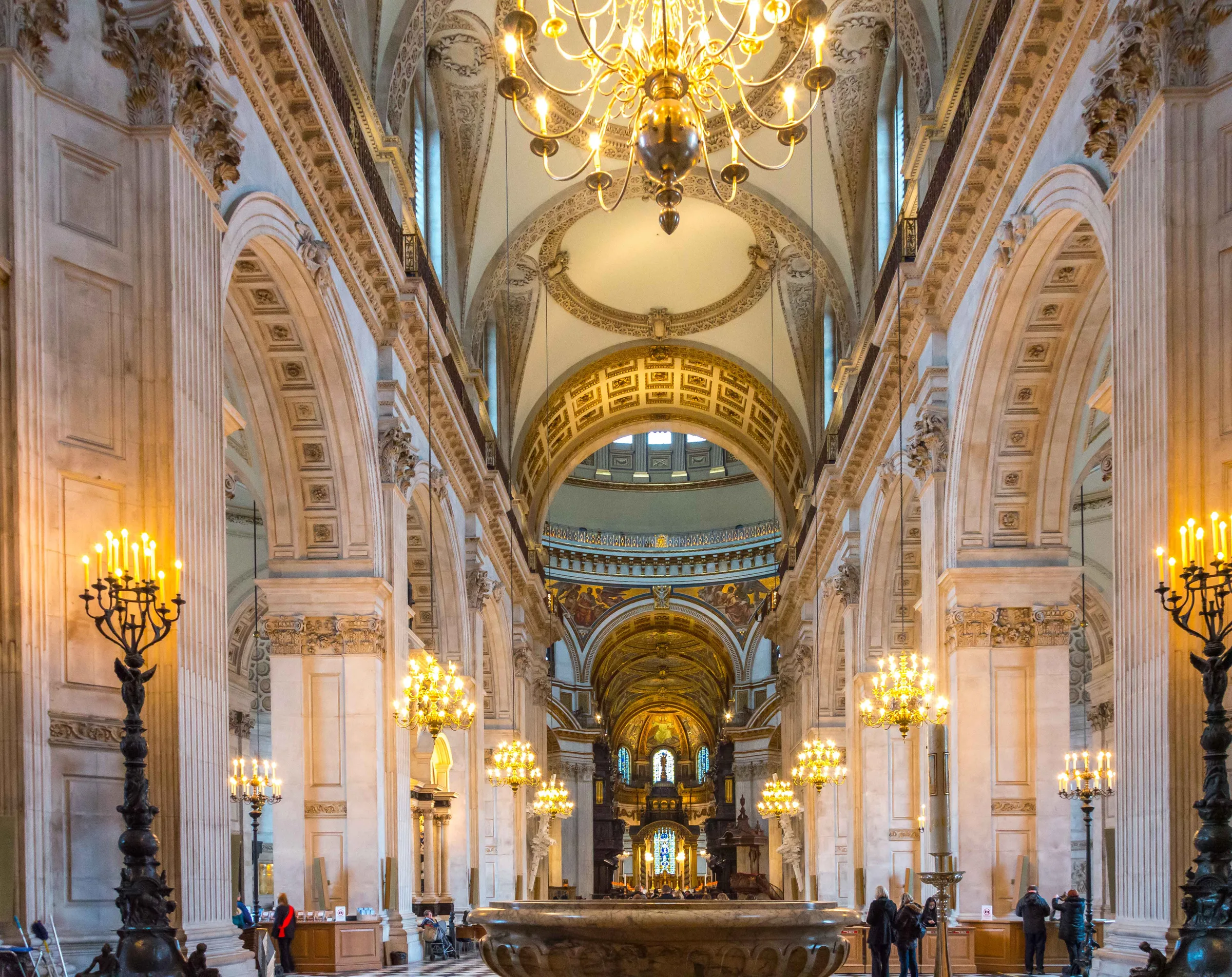
St Paul's Cathedral has signed a four-year deal with Fabric, the Farringdon nightclub, to stage concerts inside the building where Horatio Nelson is buried. The first event is booked for 29 October, and no artist has yet been announced.
The arrangement makes Fabric the cathedral's exclusive partner for such events until 2030. St Paul's insists the concerts will not be club nights and will be entirely seated, in the main space beneath the dome. At the start of each performance, the canon of the church will tell ticket-holders that they must remain seated.
Not everyone shares the cathedral's enthusiasm. The plans have been likened to "dancing on Nelson's grave" by the admiral's surviving family and devotees of the Trafalgar hero, and Peregrine Hood, a descendant of Nelson's elder brother and president of the Nelson Society, was blunt. "Is nothing sacred any more?" he asked. "What a sad reflection on where spiritual integrity and Christianity are today. St Paul's Cathedral positioning itself in this way is deeply depressing."
Hood said the offence went well beyond his ancestor. "This extends far beyond Nelson. St Paul's is one of the great sacred spaces of Christianity and a place of enormous significance to our national life and history." He added: "Nelson came from a family steeped in the Church, and perhaps it is this misuse of a holy site that would have caused him even greater unease than the prospect of dancing on his grave."
Nelson's body came home from Trafalgar, where he died in 1805, and was buried in the crypt with full state honours in 1806. He lies alongside his second in command, Vice-Admiral Cuthbert Collingwood, the cathedral's architect Sir Christopher Wren, the painter JMW Turner and the Duke of Wellington.
The cathedral sees the concerts as part of its mission to open its doors. Sandra Lynes Timbrell, director of visitor engagement, said she hoped a "carefully curated programme of exceptional concerts" would draw people who had never visited before and "showcase world-class talent and create unforgettable experiences for audiences within one of London's most iconic spaces". Fabric's co-founder Cameron Leslie called the deal "an extraordinary and unexpected coming together of two very different parts of London" and said the club wanted to create something "genuinely special and befitting of this incredible space". The organisers say the programme will feature artists from different musical backgrounds and disciplines whose work responds to the cathedral's distinctive atmosphere, acoustics and architectural heritage.
Concerts at St Paul's are not new. It has staged performances since the 1950s, with artists including Paul Robeson and, in recent years, RY X in 2024 and Patti Smith in 2025. Fabric has been helping to stage such shows since 2024. What has changed is the formal, exclusive arrangement, which runs to the end of the decade.
Fabric's own history has also become part of the criticism surrounding the partnership. Islington Council revoked its licence in 2016 after two 18-year-olds died in separate incidents that year after taking drugs at the club, and after the council found what it described as a culture of drug use at the venue. The club reopened in January 2017 under new conditions agreed with the council and the Metropolitan Police, including a higher minimum entry age and tighter security. The cathedral, however, says the St Paul's concerts will be seated and will not resemble club nights.
The row is not confined to St Paul's. Canterbury Cathedral faced similar criticism in 2024 when silent discos earned it the label "rave in the nave"; a petition against them collected more than 1,600 signatures, warning that the events "will not bring young people closer to Christ" and suggest that "entertainment deserves our attention more than God". Silent Discos in Incredible Places, which organised the Canterbury events, has advertised similar evenings at Beverley Minster and at cathedrals in Sheffield, Hereford, Chester, Ely, Salisbury, St Albans and Truro.
The theologian Jacob Phillips, a professor at St Mary's University, Twickenham, and a self-described veteran of the rave generation, argued in The Telegraph that dance music does not belong in St Paul's. Life for his generation "didn't bring the redemption it promised", he wrote, and the scene became overshadowed by violence and drugs. Gavin Ashenden, a former chaplain to Queen Elizabeth II, was more direct, calling the partnership "a sign of degraded apostasy which is a betrayal of all the faithful Christian people who said their prayers there".
The Mayor of London, Sadiq Khan, welcomed the deal. "Fabric. St Paul's Cathedral. Name a more iconic duo," he posted on X.
The reaction also invites a wider comparison over how sacred spaces are used for entertainment. Would the same enthusiasm greet a major nightclub promoter staging concerts inside one of London's mosques? There is no suggestion that such an event is planned, but the comparison reflects a wider argument over whether places of worship should be treated differently from other cultural venues.
Criticism from Anglican figures
Among those criticising the arrangement is the Confessing Anglican Church, which declared: "We will not sit silently by while the Anglican faith is stripped of its identity."
Richard Thomson, National Director of the Great British PAC, was equally critical:
"St Paul's is not a nightclub. It is a sacred place of worship, a monument to our history and the resting place of some of Britain's greatest national heroes.
Turning it into a venue for Fabric makes a mockery of our heritage, our culture and our history as a Christian country.
Those in power seem increasingly embarrassed by the very traditions that made Britain what it is.
Our heritage is not something to be commercialised or 'modernised' into relevance. It should be respected, protected and passed on.
Is nothing sacred anymore?"
St Paul's insists the concerts will be entirely seated, with a canon reminding ticket-holders to remain in their places. Nelson refused to leave the quarterdeck at Trafalgar. He will now be expected to sit through four years of Fabric.