
Shadow defence secretary says "Labour's lies" exposed after UKSA rules that the former prime minister's £270bn claim was "incorrect and misleading"
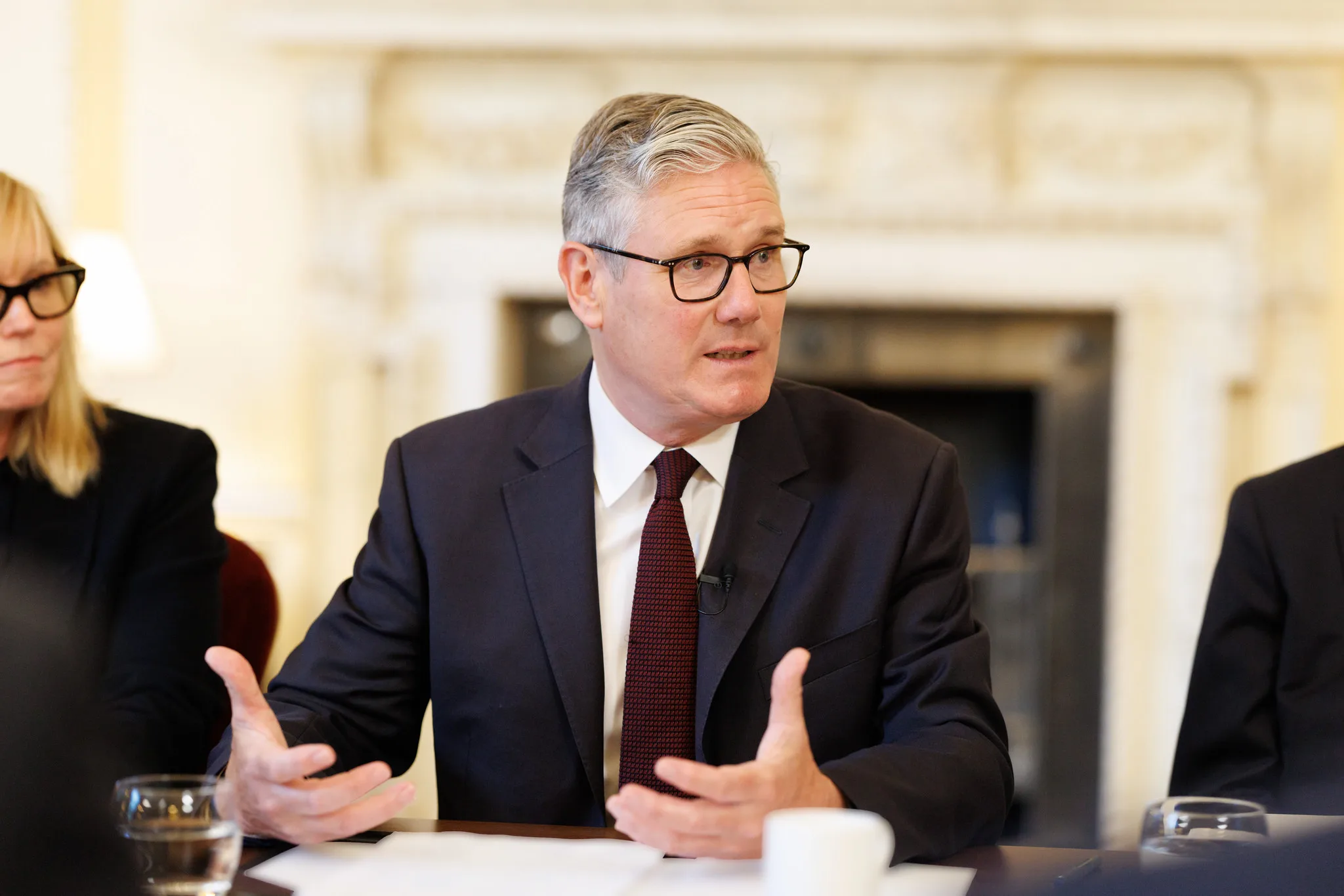
Sir Keir Starmer misled Parliament over the scale of the Government's defence spending increases, the UK's independent statistics watchdog has ruled, in a damning intervention that raises fresh questions about the former prime minister's willingness to stretch the truth on matters of national security.
In a letter published on Tuesday, the UK Statistics Authority (UKSA) confirmed that a claim made by Sir Keir before the House of Commons liaison committee in March, that the Government would spend "£270bn more on defence than we would otherwise have done" over the course of this parliament, was "incorrect and misleading".
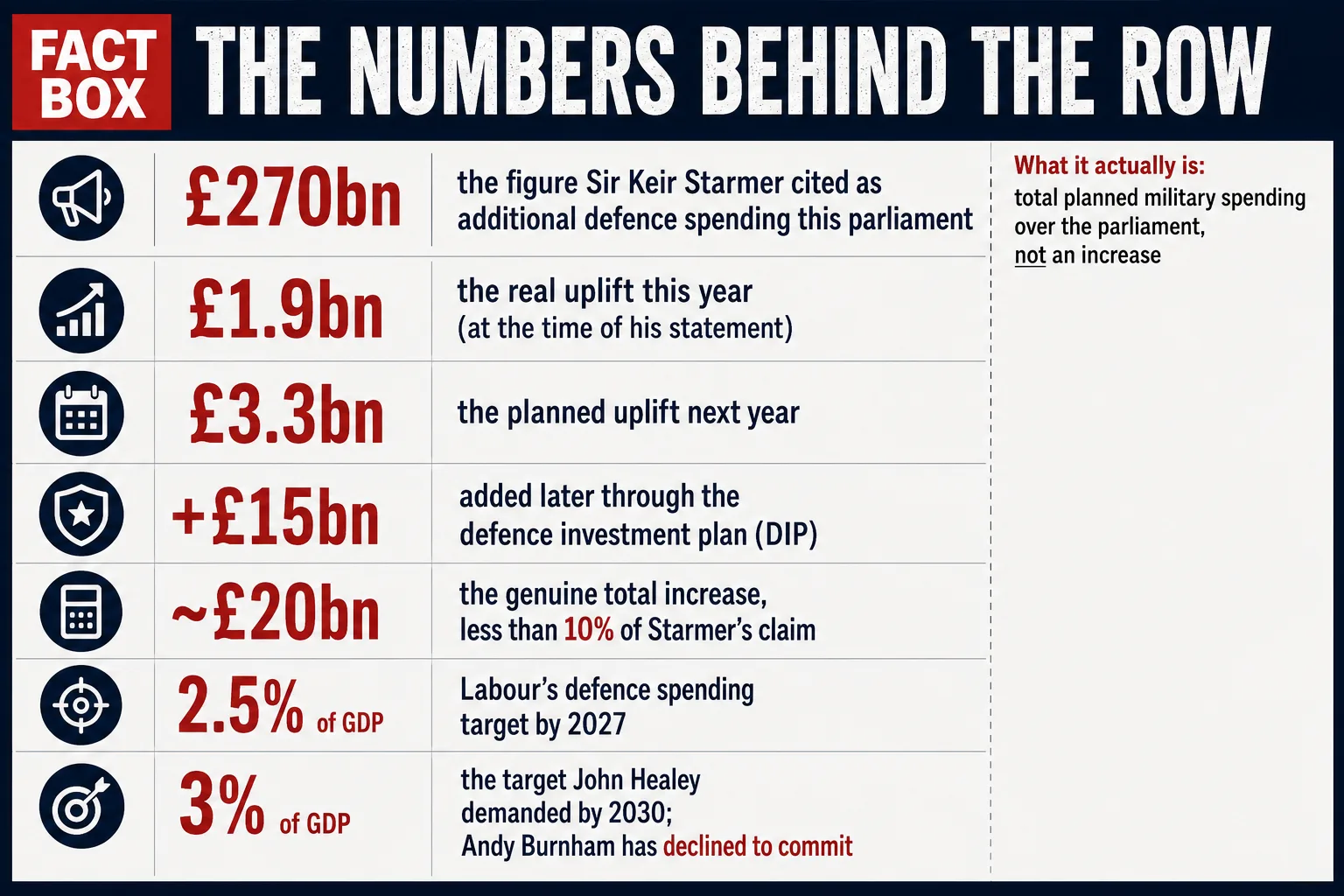
The figure, far from representing an increase, was in fact the total planned expenditure on the military across the entire parliament. The actual uplift in defence spending at the time Sir Keir made his claim was a fraction of the number he presented to MPs: £1.9bn this year and £3.3bn next year, before the publication of the Government's defence investment plan (DIP).
Even after Labour added a further £15bn through the DIP, the total increase stands at roughly £20bn, less than 10 per cent of the figure Sir Keir quoted to Parliament. The discrepancy is not a rounding error or a matter of presentation. It is a misstatement of more than £250bn, delivered under parliamentary scrutiny, on a subject that ministers themselves describe as the gravest challenge facing the country.
Complaint triggered formal investigation
The watchdog's intervention followed a formal complaint by James Cartlidge, the shadow defence secretary, who challenged not only Sir Keir's testimony but also a tweet by the Wales Office making the same claim, and statements issued to the media by the Ministry of Defence in which the £270bn figure was repeated.
Penny Young, the UKSA's interim chairman, confirmed the findings in a letter issued on Tuesday. She said her team had raised the matter directly with the MoD, which had since "taken steps to ensure that future communications use precise and consistent language when presenting defence spending figures".
Ms Young added: "Statisticians at the MoD have told us that analysts have spoken about the misleading wording with their communications colleagues, to ensure accurate communications on defence spending are used going forward."
The admission is significant in itself. It implies that within the MoD, the professional statisticians responsible for the numbers were aware that the language being used by ministers and press officers did not accurately reflect them, and that the correction flowed from the statisticians up to the communications teams, rather than the other way around.
What Sir Keir actually said
The offending statement came during an appearance before the liaison committee in March, when Sir Keir was asked directly about defence spending. He replied: "We have already committed to 2.5 per cent [of GDP] in 2027, and we will hit that. That means that, in this parliament, we will spend £270bn more on defence than we would otherwise have done."
The two halves of that answer sit awkwardly together. Moving defence spending from roughly 2.3 per cent of GDP to 2.5 per cent by 2027 is estimated by most analysts to cost in the region of £6bn a year at that point, a substantial sum, but one that bears no mathematical relationship to £270bn of additional expenditure. To arrive at the larger number, one must count the entire defence budget, every ship, soldier and shell already planned, as though it were new money conjured by the Government's decision.
The question that now hangs over Sir Keir is whether he understood this. Either the then prime minister did not grasp the difference between a total and an increase, a troubling possibility in itself for a leader making the case for rearmament, or he understood it perfectly well and chose a formulation designed to inflate his record. Neither explanation reflects well. The figure was not a slip of the tongue: it was deployed in a prepared committee appearance, repeated by the Wales Office on social media, and used in MoD statements to journalists, suggesting a coordinated line rather than an off-the-cuff error.
Fact Box
"Labour's lies completely exposed"
Mr Cartlidge was characteristically blunt in his response. He told The Telegraph: "Labour's lies on defence spending have been completely exposed. The independent UK Statistics Authority have confirmed that it was 'incorrect and misleading' for Labour to claim defence spending was increasing in this way.
"With the threats we face, this is totally unacceptable. The new Prime Minister needs to get a grip of defence, and he must start by being straight with the public about exactly when and how he is going to spend 3 per cent of GDP on our Armed Forces."
His reference to "the threats we face" points to the wider context that makes the affair more than an accounting spat. Britain's defence establishment has warned repeatedly that the armed forces are hollowed out after decades of underinvestment, with the Army at its smallest size in centuries, and ministers across the political spectrum have accepted that spending must rise towards 3 per cent of GDP in response to Russian aggression and instability elsewhere. Presenting the existing budget as new money does not buy a single extra frigate.
The ministerial code question
Under the ministerial code, ministers are required to ensure that any statements made to Parliament, whether in the Commons chamber or before select committees, are accurate. The code is explicit: it is of "paramount importance that ministers give accurate and truthful information to Parliament, correcting any inadvertent error at the earliest opportunity. Ministers who knowingly mislead Parliament will be expected to offer their resignation."
The UKSA is careful to note that it does not regulate ministerial conduct and will not rule on whether the code has been breached. That judgment belongs elsewhere. In any case, Sir Keir is no longer a minister, and is therefore unlikely to face formal disciplinary action. He will, however, face sustained pressure to correct the parliamentary record, the minimum step the code envisages for an inadvertent error, and one he has so far not taken.
A deeper row over defence under Labour
The affair lands in the middle of a long-running and increasingly bitter dispute over defence spending within Labour itself. Andy Burnham, who replaced Sir Keir as prime minister two weeks ago, has declined to commit to spending 3 per cent of GDP on defence by 2030, a target that had been demanded by John Healey, his Chancellor, during Mr Healey's own tenure as defence secretary.
Mr Healey resigned in June after Sir Keir refused to enshrine the 3 per cent figure in the defence investment plan, arguing that Labour's failure to increase military spending sufficiently would put the country at risk. His resignation letter, and his subsequent elevation to the Treasury, have made the trajectory of the defence budget the defining test of the new government's credibility.
Against that backdrop, the UKSA's ruling is politically corrosive. It suggests that when Labour's defence record came under pressure, the instinct of its most senior figures, including the then prime minister, was to reach for a bigger number rather than a better argument. Sceptics will note the pattern: a target for 2.5 per cent with no fully costed path, a refusal to commit to 3 per cent, and a £270bn claim that dissolved into less than £20bn of genuine new money once the statisticians examined it.
An MoD spokesman said: "We have previously acknowledged this phrasing and took immediate steps to ensure it was not replicated."
For critics, that acknowledgment will sound thin. The question is no longer whether the wording was wrong, the statistics authority has settled that. The question is why the prime minister of the day said it, why his department repeated it, and why the record has still not been corrected. On defence, of all subjects, Parliament and the public are entitled to numbers they can trust.