
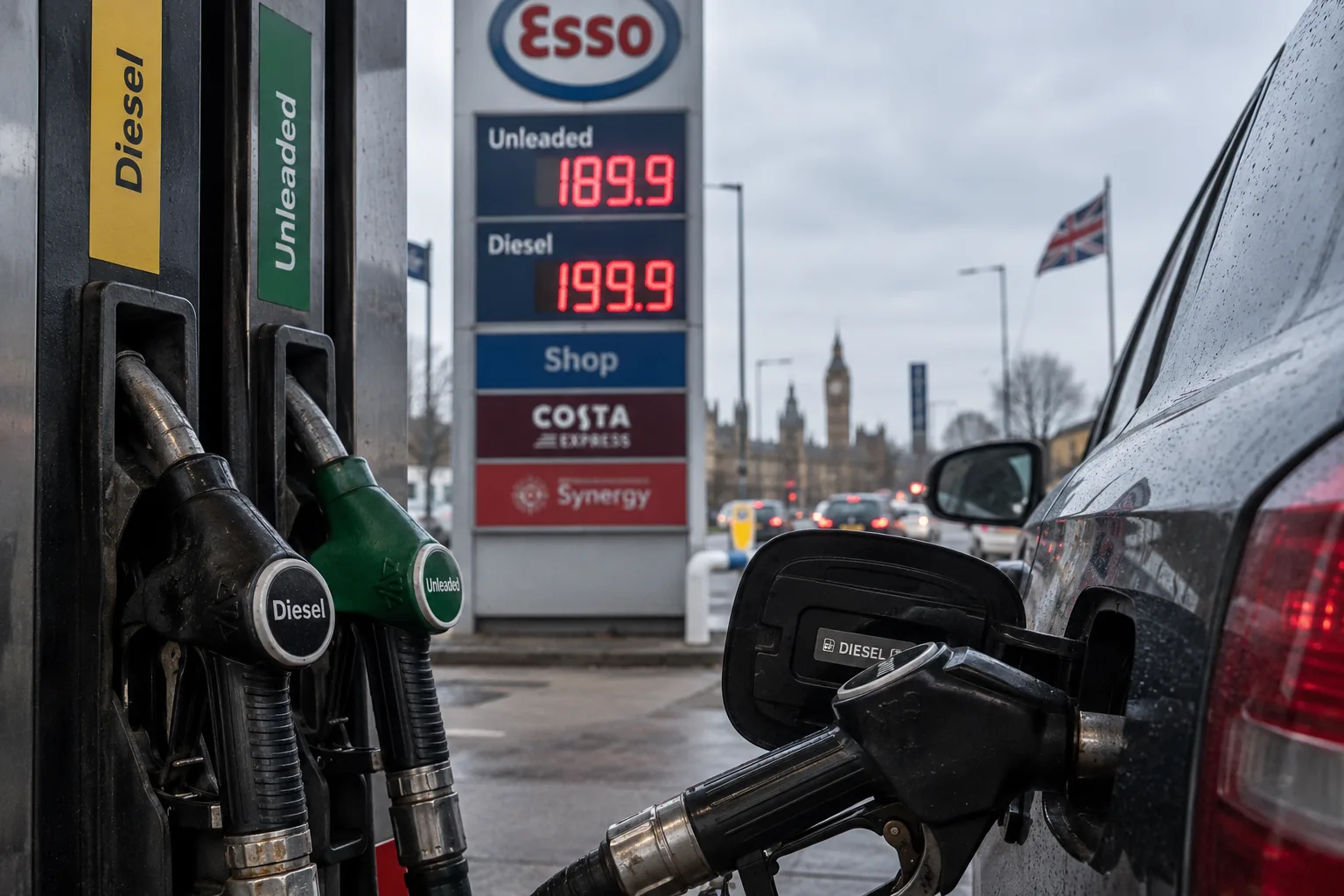
Forecourt tracker Fuel Finder puts the average at 195.1p, with nearly 900 stations selling at or within a penny of £2. If supplies fail, rationing and priority-only pumps are already in the plan.
The national average price of diesel has never reached £2 a litre in Britain. On current form, that could change within weeks.
The RAC put the average at 191.69p on Monday, a nudge past the 191.54p high of 15 April. By Tuesday it had reached 192.86p, and the forecourt tracker Fuel Finder now puts it at 195.1p, with supermarket diesel at around 191p. That is up more than 50p since the end of February, a rise of around 37 per cent in seven months. Some 236 stations already sell above £2 and a further 633 have parked at 199.9p, the highest they can go and stay under it. Together that is about one in ten of the national network. Trackers logged almost 35,000 diesel price increases this month alone. The average is now closer to £2 than to the 142.38p drivers were paying in February.
The record itself is 199.05p, set on 25 June 2022. "The average price of diesel may be on the way to overtaking" it, said Simon Williams, head of policy at the RAC. "With oil well over $100 a barrel, there's no end in sight to high pump prices and the pain it brings to drivers who depend on their vehicles." Petrol, at 170.54p by Tuesday, remains about 21p short of its own record of 191.53p.
The latest surge has been driven by disruption in the Gulf. The conflict in the Middle East has damaged refineries and disrupted shipping through the Strait of Hormuz, the chokepoint for much of the world's oil, and drone strikes have hit pipelines in Saudi Arabia. The kingdom's East-West pipeline, a 1,200 kilometre export route that bypasses the strait, was shut after an aerial attack this month, although Washington's energy secretary says it should be back online within days. Wholesale diesel has climbed more than 12p a litre this month.
Pump prices trail wholesale by about a fortnight, so much of the latest crude spike, which took Brent past $108 a barrel before easing back to around $104, is still working through. On the industry's usual rule of thumb, every $10 on a barrel adds roughly 7p at the forecourt. Retail margins have been running below their six-month average, according to industry price data, leaving forecourts little room to absorb the extra, so the cost passes through quickly. Rod Dennis, for the RAC, urged drivers to shop around rather than be caught out.
The pain will not stay at the pumps. "The vast majority of vans and heavy goods vehicles run on diesel," said Tina McKenzie, national chair of the Federation of Small Businesses. "Higher diesel prices will mean higher prices for all kinds of goods and services, sooner or later." She said more than half of small firms now cite fuel as a driver of cost rises, double the level a year ago.
There is also a plan for what happens if this stops being a price crisis and becomes a supply one. The Government's National Emergency Plan for Fuel allows ministers to ration fuel sales and shorten forecourt opening hours, and to reserve designated filling stations for priority users, among them ambulances, fire engines, police vehicles and food distribution. In March, The Telegraph reported that speed limits and longer delivery hours were part of the same contingency work. None of it is in force. The plan exists so that if the tanks run low, the state decides who fills up and when.
Even if the market steadies, January is coming. The 5p fuel duty cut has been extended until 31 December. Under the current legislative position, duty on petrol and diesel rises to 55.95p a litre from 1 January, before returning to 57.95p in March. The Government has said final rates will be confirmed at Budget 2026. Forecasts from suppliers and analysts for the January energy price cap, which Ofgem has yet to set, range from nearly 18 per cent in E.ON's estimate to as much as 30 per cent on EDF and Bloomberg numbers, a jump that would add more than £400 to a typical annual bill. Economists have warned the rise could push headline inflation back past 4 per cent.
Other governments are not waiting. Poland is reviving a 60 per cent windfall tax on oil companies' excess profits, with the proceeds meant to push pump prices back down, though the bill remains bogged down after the president referred it to the country's constitutional court. Prime Minister Donald Tusk has pointed to strong second-quarter results at the state-controlled Orlen as justification. Warsaw has already spent 4.7 billion zloty holding prices down and cut fuel VAT from 23 to 8 per cent. In Germany, Economy Minister Katherina Reiche has proposed temporarily cutting VAT on fuel from 19 to 7 per cent as the government looks for ways to ease record pump prices. Britain has so far announced no comparable windfall tax or new pump-price subsidy.
Richard Thomson, National Director of Great British PAC, said:
"Diesel is hurtling towards £2 a litre. Energy bills are set to soar by as much as 25 per cent. And what is the Government's answer? Higher fuel duty and plans for rationing.
This is not incompetence. It is the deliberate impoverishment of the British people.
Families and businesses are being forced to pay for a failed energy policy. Cut fuel duty. Abandon Net Zero and put the British people first."
Relief may come, eventually. Demand usually drops off after the summer driving peak, and if crude slips back towards $80 a barrel, some of that would feed through to the forecourt before winter. The RAC, for one, wants the cut extended rather than left to lapse. But that case depends on Gulf diplomacy and on how quickly Saudi Arabia can restore its damaged East-West pipeline.
The present record was set in June 2022, a few months after Russia invaded Ukraine. The next one is now within sight, a few months into a different war.